Second Level Replace Rushes to Defend Mobile QBs

By Ryan Lucchesi
Defensive Coordinator
Muskego High School (WI)
Twitter: @CoachLucch


People often ask what is the most challenging offense to defend. Our response would commonly be the one with a mobile QB that can impact the game both in the design but most dangerously in the improvised run game. The ability to extend plays, challenge rush lane discipline, and evade rushers can be problematic for every level of the defense.

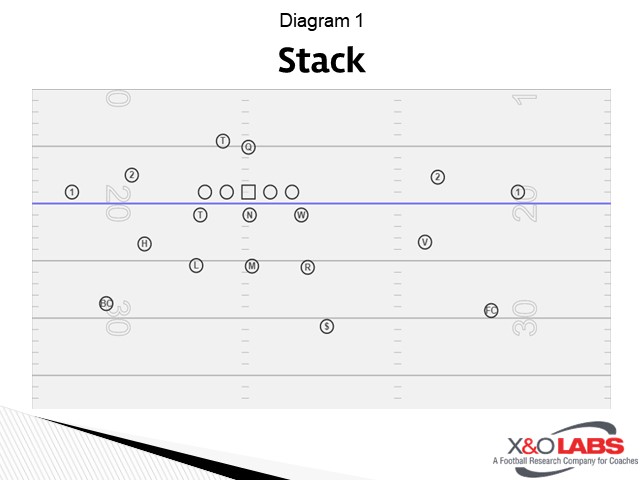
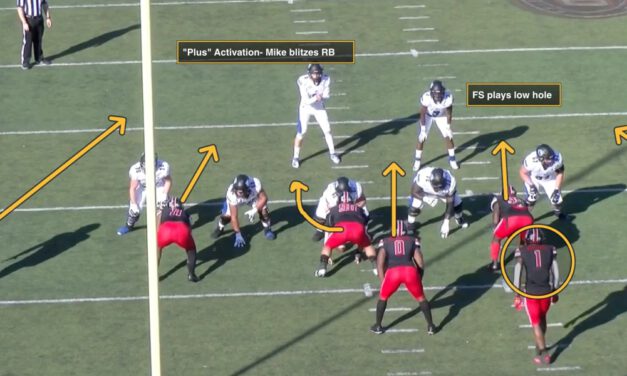
We operate from a 3-3 Stack base defense. We are not a huge blitz team. When we pressure, it is normally sending 4 and will rarely, but occasionally, bring 5. Historically, we have relied on quality rush lane discipline from our D-Line and blitzing players to keep QB’s contained. We have also emphasized coaching up our MLB to be an effective Spy / quasi 4th rusher against QBs that are running threats.

During a game in the middle of our season, we came up short in our objectives. We allowed a QB to beat us consistently with his legs. Most of the time for crucial 3rd down conversions. Other times, it was on 2nd downs that created more manageable 3rd down opportunities for the opposing offense. We struggled to execute what we have in previous seasons. We needed an adjustment to put our kids in the best position to be successful.


Implementation:


2nd Level – Inside Linebackers

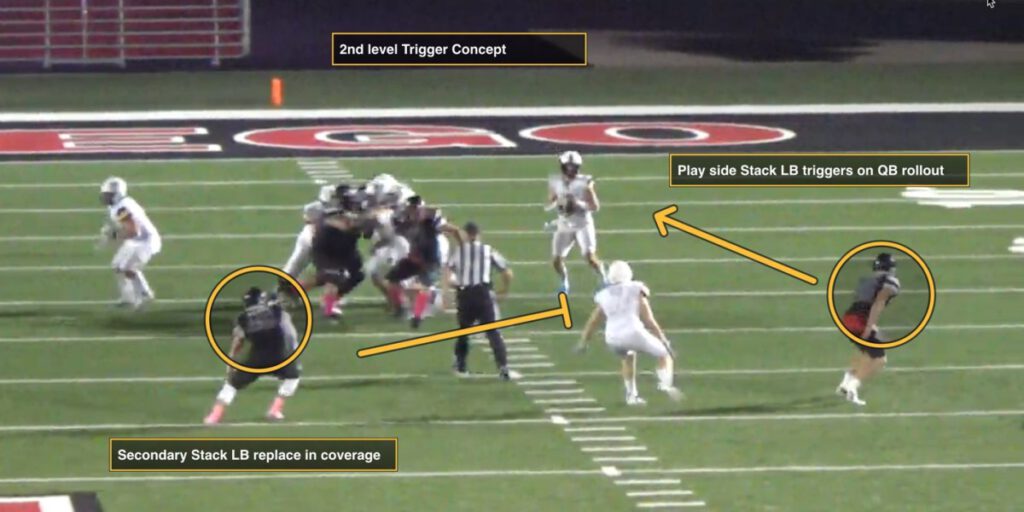
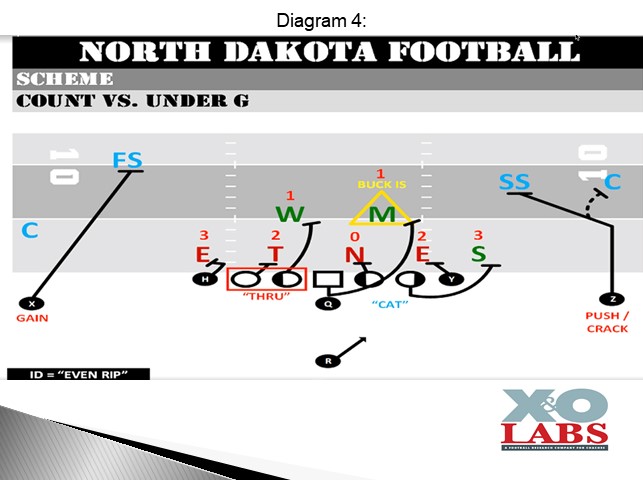
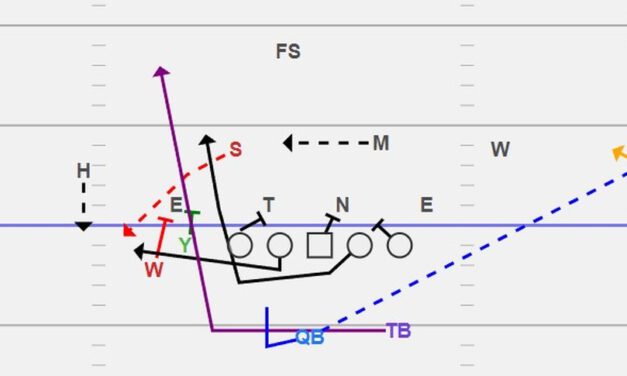
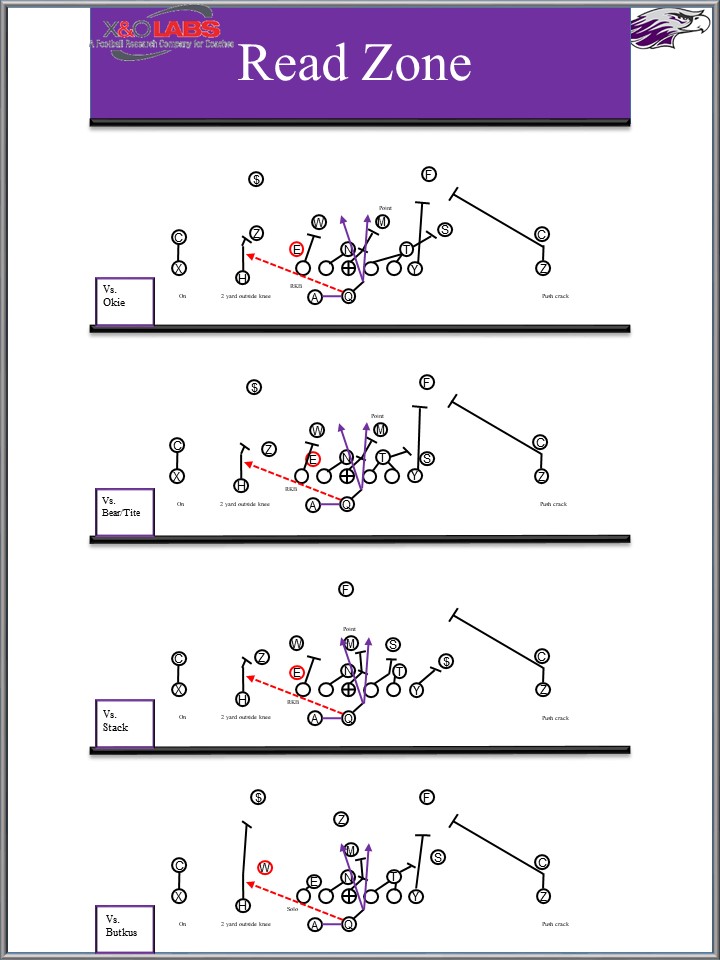
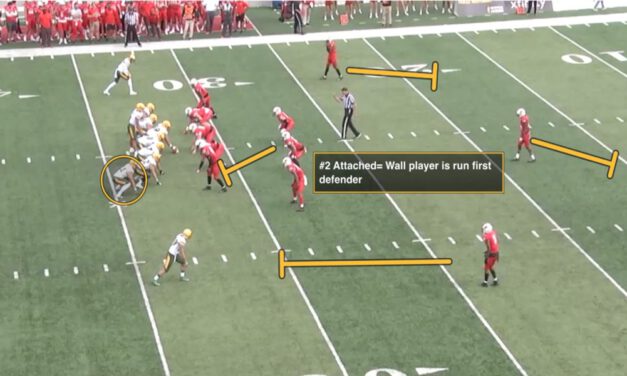
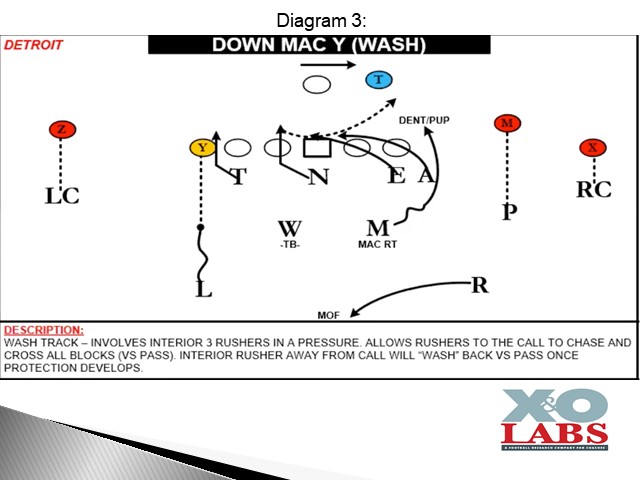
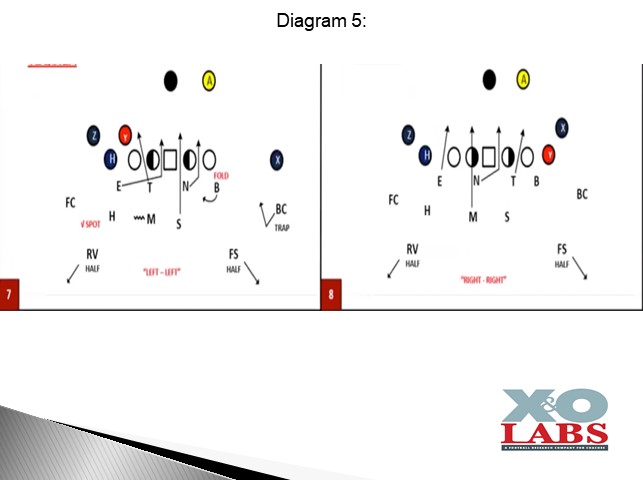
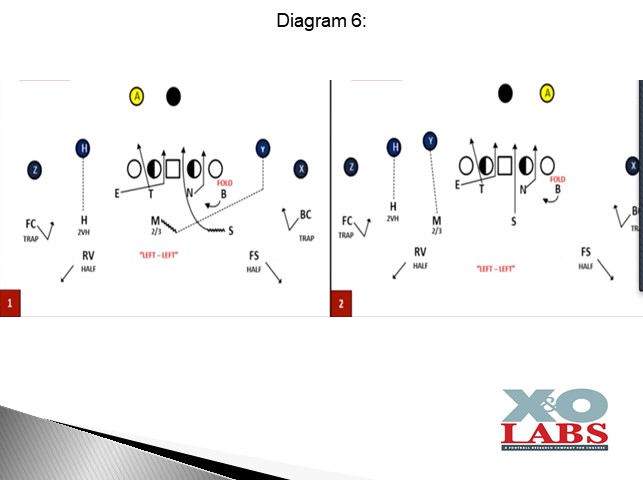
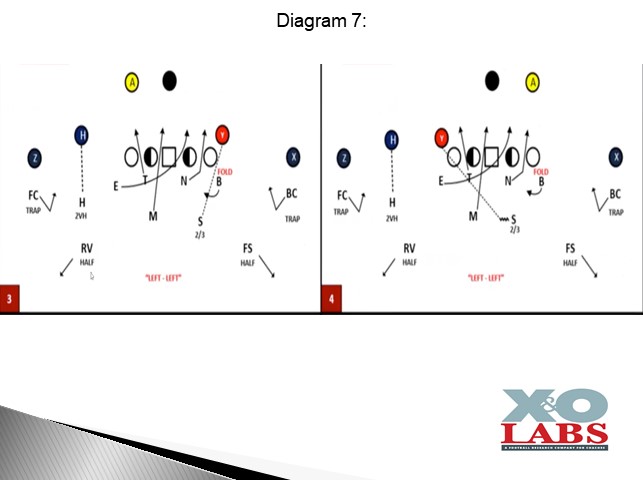
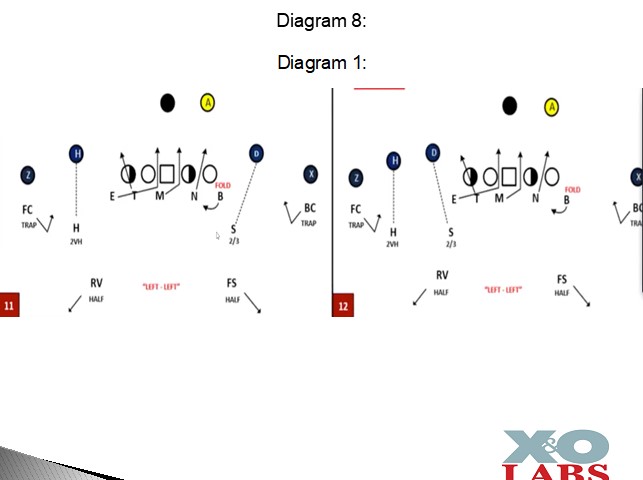
The primary focus of this article is solving these problems created by a mobile QB with our 2nd Level Trigger concepts for our Inside Linebackers. We will briefly touch on some games that we will play with our D-Line as well. As far as our 2nd level goes, the focus turned from solely having the MLB be the player responsible for QB scramble, and the other two Stack LB’s became major focal points.

Read More

Coaching the Third and Fourth Puller in Multiple Gap Concepts

By Tyler Schneider
Offensive Coordinator & Quarterbacks
Bixby High School (OK)
Twitter @tschneider1014


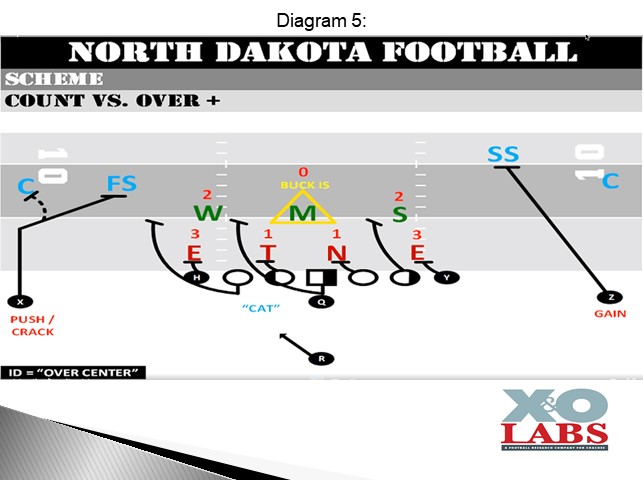
For the last 5 or 6 seasons, our run game has morphed from predominately zone schemes to nearly all gap schemes. This started as we were facing multiple fronts and the team we knew we would have to beat was doing very different things on defense. Standing everyone up, blitzing 4 to one side, walking the entire defense around pre-snap, lining up the entire defense at 5 yards, etc., etc. So as a response to this we started “blocking down and kicking out” more. We feel that with a block-down kick-out mentality we can block more fronts without changing many rules for the kids. Initially, we were getting to this look with split zone schemes. We decided that if “pulling” one player and moving a gap was good, maybe pulling two would be better. We installed G/Y Counter first and soon after G/T counter. By this season we have been running our counter schemes for a few years and the kids have a good understanding of our play design. With the idea that pulling one was good and pulling two was better, we asked ourselves “what if we pull 3?” So, during the 2021 season, we added a tag to our counter schemes that would allow for us to add a third puller.


Coaching Points:

The following coaching points are for our Counter plays. We run counter a variety of ways and in doing so teach it as a “First Puller”, “Second Puller” and at times a “Third Puller” play. The ability to run this scheme against any front as well as a tempo play are big reasons we like these counter schemes.

QB: In our offense, our gap scheme runs can be both QB read to run options or QB read to throw RPO options. It depends on how we call the play. The play call will alert the QB as to how we will be blocking the scheme and how he will be reading the play. In this write up we won’t go into the details of our QB reads.

TB: In any of our gap scheme runs we are coaching our back to get into the line of scrimmage as to be inside of the kick-out block from our first puller. We want our back to run with an inside-out mentality, getting vertical into the line of scrimmage as quickly as possible.

Center: block back on the first backside lineman. the first step is lateral step aiming at the outside foot of his target. the second step is aiming at the near foot to protect against an inside slant. Head in front to stop penetration, near hand far chest plate with heavy backside hand to force the target out and up the field.

Frontside First Block Down: Declares kick target for the first puller via code word, if he has an inside threat in an odd front he will use IZ steps to block down if the lineman slants out he will bypass the end and climb to the first backer in his path. If he has no inside threat he will slow play and take a 6-inch step checking the kick target for an inside slant, if he stays outside he will climb, if he plays inside he will pull him across and the kick target becomes the next outside player. In an even front, he will take power combo steps with the covered lineman to the backside linebacker.

Frontside Second Block Down: block back/down in an odd front on the first inside lineman. the first step is lateral step aiming at the outside foot of his target. the second step is aiming at the near foot to protect against a play side slant. Head in front to stop penetration, near hand far chest plate with heavy backside hand to force the target out and up the field. In an even front, he will take power combo steps with the play-side uncovered lineman to the backside linebacker.

Backside First Puller: Trap pull: The first step opens his hips and squaring his shoulders to the kick target, the second step clears the center and gets the puller into the line of scrimmage to handle a kick or log scenario. The aiming point is the inside shoulder of the target, head in front, heavy upfield hand, working his hips upfield on contact forcing the defender up the field.

Backside Second Puller: Square pull: The first step is a back step that gains depth and stacks behind the inside foot. the second step is a lateral step into a crossover run keeping his shoulders square to insert vertically on the play side backer. His aiming point is head up if the LB plays heads up or backside he will get a vertical push and pin him inside, if he plays over top he will treat it as a second kick aiming point becomes the same as the first puller.

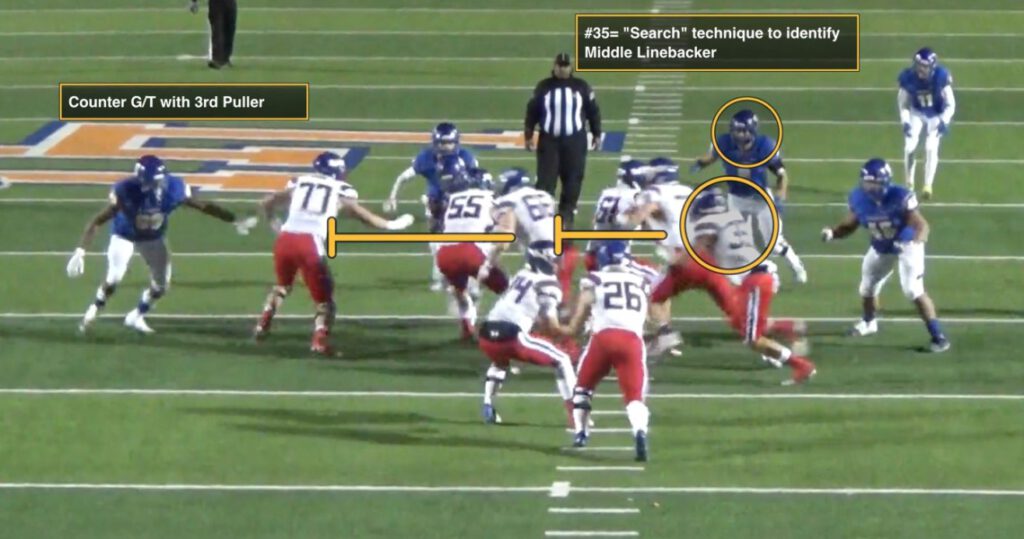
Backside Third Puller: We treat our third puller as the “extra” guy. We coach them up on who could be the unblocked defender, but we also want them to understand they are a cleanup block. As they are pulling we coach an “eyes inside” approach and if nothing shows find the near safety. This year we had three senior tight ends, so we would go into who we expected to be the extra defender for the 3rd puller. Oftentimes it is the backside inside LB, but you would be surprised how often they get caught in the trash of the down blocks. So we teach him eyes inside so he is looking for that defender, but if no one shows he knows he can work up to safety. He also knows that he is the clean-up guy, if we miss a block somewhere he should help fix it.

Backside Fourth Puller: On the few occasions we pulled a fourth player, we just stressed that he was the extra guy, have eyes inside and clean up any unblocked defenders you find. if nothing shows he is to look outside for a folding defender.

The rest of this report focuses solely on how Coach Schnieder and the offensive staff teaches the third and fourth puller to identify and block extra run fitters in gap schemes.

Read More

3-Deep, 2-Under Pressure Packages from 3-High Alignments

By Mike Kuchar with Wallie Kuchinski
Defensive Coordinator/Outside Linebackers Coach
University of St. Thomas (MN)
Twitter: @kuchinski8


If you know anything about the defensive system being used at the University of St. Thomas, then you know how much defensive coordinator Wallie Kuchinski loves to heat up the quarterback. For over a decade, Coach Kuchinski has built and continually evolved the Tommie’s brand as a pressure outfit and in its inaugural ’21 season at the FCS level was no different. The Tommies posted a 7-3 record and a top 5 finish nationally in team passing efficiency defense. They did so by relying on pressure, limiting offenses to under 18 points a game. Quite impressive, considering facing all new opponents.

Part of that success is credited to Coach Kuchinski’s diverse package, which includes two-high sims, one-high sims, fire zones, man-free pressures and the hot pressures that are detailed in this report. The last time X&O Labs worked with him, he was majoring in 3-Deep, 3-Under fire zone coverage that he used on nearly 95% of pressure downs. While this scheme held up in the run game, he found that the coverage was vulnerable in the RPO game, and the man-like coverage structure didn’t quite hold up against the upgrade of offensive personnel at the FCS level. Plus, well-coached offensive lines rarely have issues holding protection against five-man rushes.

So, this season shifted his mindset into utilizing more “hot pressure” (3-Deep, 2-Under concepts), which gave the allusion of man coverage by bringing six defenders who were able to play with more zone eyes on the quarterback. But while many coaches utilize these pressures from two-high structures, the difference in using a three-high structure allowed seam defenders to play from the top-down alignments with a better vision on the QB. It was a final down call for Coach Kuchinski who liked it more in pass-heavy downs (3rd and 6+) than anything else. And he complimented the scheme with pure Tampa coverage from 3-high alignments to protect the flats.

While this scheme wasn’t the top pressure package in the Tommies system- three deep sims took home that honor- these were “call it, run it” pressures and held up against any formation and in any ball location, particularly in the low red zone. And the one-high post-snap finality meshed with the rip/Liz match and man-free principles in Coach Kuchinski’s menu. “When you send five and play four under, you have to scheme things up correctly to get a rusher free,” Coach Kuchinski told me. “But when we bring six, we are getting a guy free, and we don’t have to play man coverage behind it.”


UST’s “Nickel” Personnel Structure:

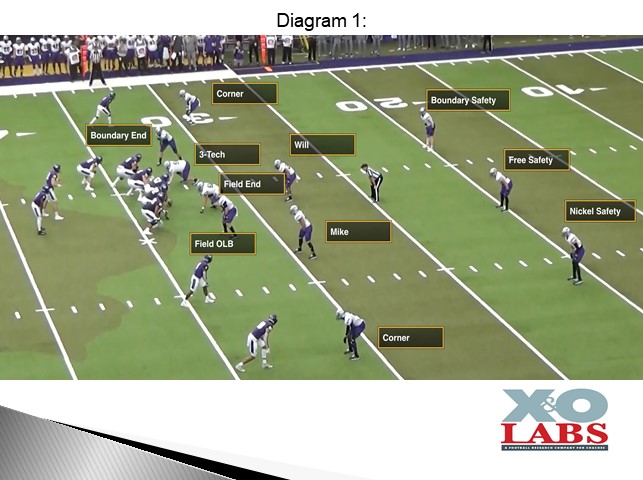
The advent of 11 personnel offenses has caused Coach Kuchinski to play his Odd front, Nickel defense now in over 70% of all downs. But while he calls it “Nickel” personnel, essentially, it’s a two-down structure, field, and boundary defense that utilizes the following personnel:

  • 2 Interior Defensive Lineman– Nose and Tackle, who can be interchangeable
  • 2 Defensive Ends – These are more linebacker personnel types that will play to the field and boundary on the line of scrimmage in this package.
  • 2 Linebackers– Sam (strong-side outside linebacker) and Will (weak side inside linebacker)
  • 2 Corners
  • 3 Safeties– The Nickel Safety is the field safety, the Free Safety is the middle safety while the boundary safety aligns to the short side.


The Field End is more of a field outside linebacker type while the Boundary End resembles a stand-up pass rusher. In his three-high alignments, the Nickel plays to the field, the Free Safety is the middle safety, and the boundary safety aligns to the short side of the field.


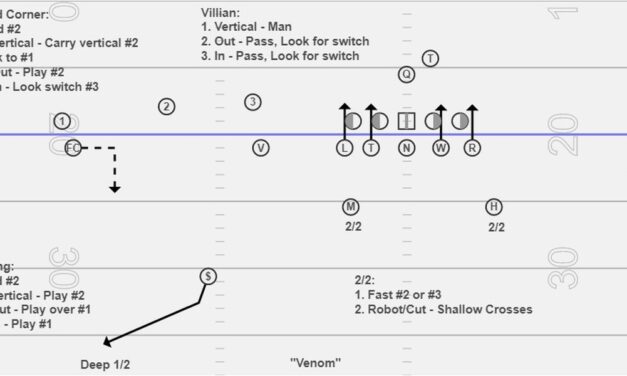
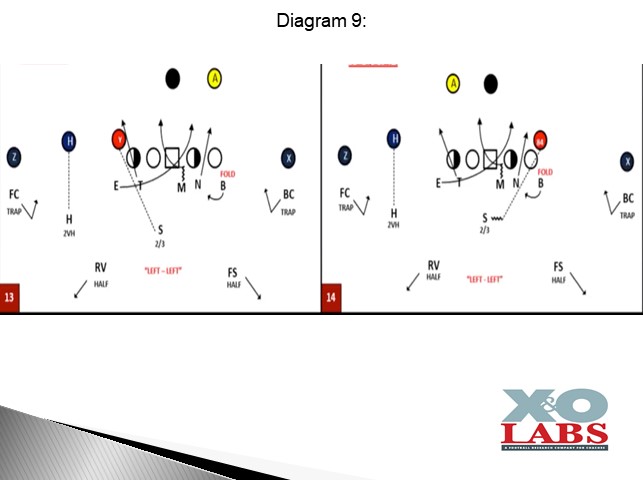
The rest of this report focuses solely on the one pressure pattern Coach Kuchinski uses in his hot pressures system and how he teaches the back end to drive on routes that can be problem areas.

Read More

Play Side Build-Ins to Protect Pin and Pull

By Mike Kuchar with Joe Pawlak
Offensive Line Coach
University of North Dakota
Twitter: @pawlakjoe


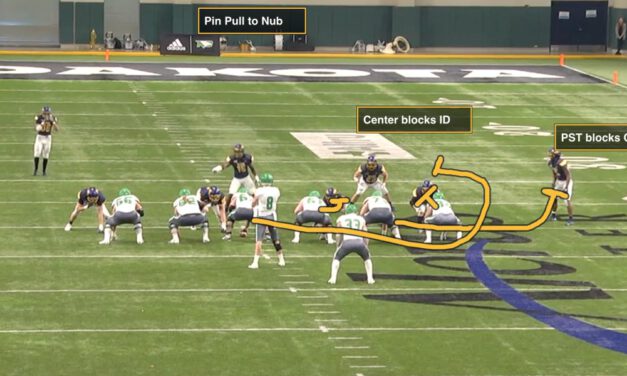
At North Dakota, the pin and pull concept was established out of necessity. With two athletic tackles and an all-conference Center, the Fighting Hawks could body people up on the perimeter. They also had an experienced back who was able to make one cut and get north to south in a hurry with an immediate entry point. The scheme provided a complementary rhythm to an outside zone scheme where there could be various entry points. The line and back combination helped produce 184 yards a game on the ground and the pin and pull was a big reason why. But in 2021, the injury bug infected the Center position, limiting that player’s ability to pull. The staff didn’t want to abandon the concept that garnered so much success, so under the direction of offensive coordinator Danny Freund and offensive line coach Joe Pawlak (a former lineman himself), the offensive staff were forced to be creative in how they designed the concept. This report will focus on how the offensive staff built-in play marriages at the line of scrimmage to combine its pin and pull with gap schemes. “It became a great complement to power,” Coach Pawlak told me. “You’re showing an inside downhill run action but then you’re bouncing it outside. These things helped us.”


Base Pin and Pull Identification and Rules:

North Dakota calls its base pin and pull scheme “18/19.” Coach Pawlak teaches the play like a true outside zone scheme, where non-pulling linemen are asked to reach their play side gap defender. That includes a play-side Guard against a first-level B gap defender. “To me, it’s an easy block for a 3-technique to reach that B gap defender than for a Tackle to pin it,” Coach Pawlak said. “Oftentimes the Tackle gets beat over the top and that dents the play. We can always get beat inside because we’ll be on the edge already. But we can’t get beat over the top.”

Quite simply, if you’re covered reach the play side gap. If you’re uncovered, pull.

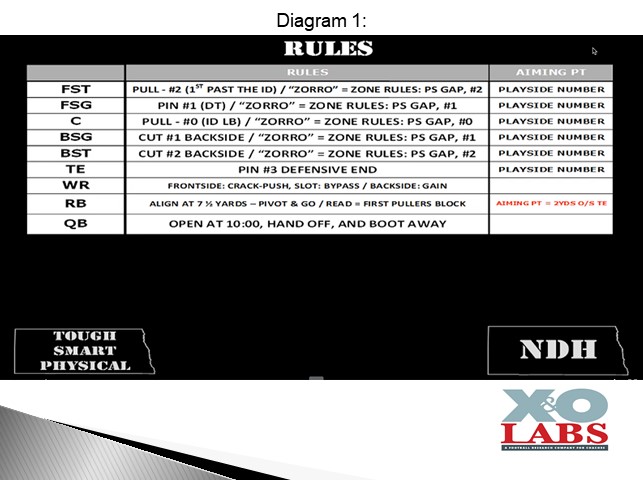
The base rules of the concept are below:


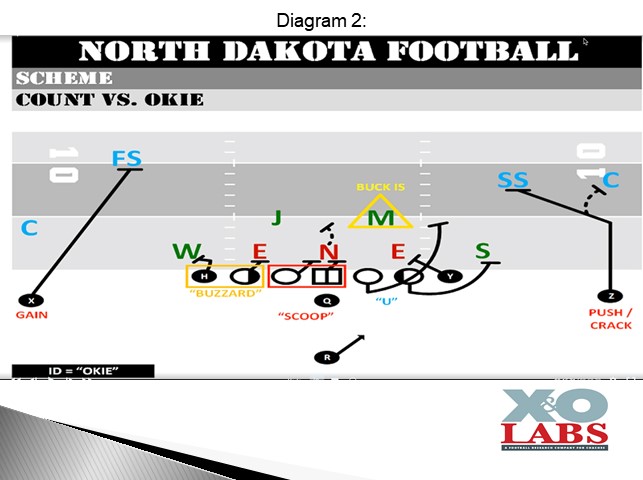
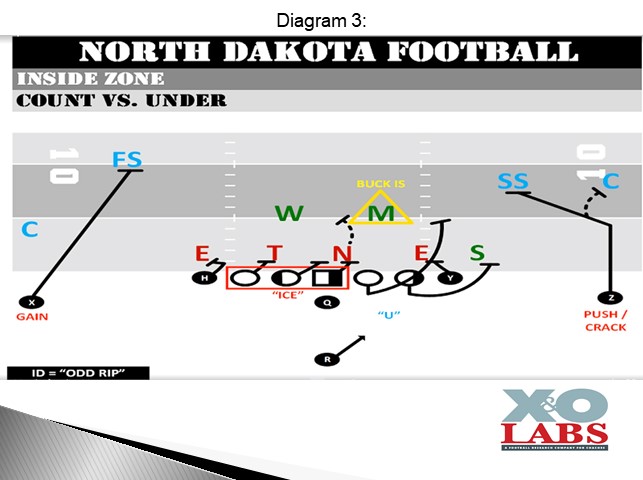
In either case, the objective is to get the play side Tackle and Center out. Who they block will depend on the front, but the first puller is responsible for the first defender past the identification while the second puller is responsible for blocking the identification. In North Dakota’s framework, in a two-linebacker box, the play side linebacker is the ID, while in a three-backer box the middle linebacker is the ID. Coach Pawlak wants his Center to pull as much as possible. “If you have a fast flow downhill defender, we try to cut him down,” Coach Pawlak told me. “If he’s setting the edge, we try to reach his play side armpit and stay up. We only cut downhill defenders.”

Below is the various identification communication Coach Pawlak and the staff use to block pin and pull based on the various fronts it sees every week.


The remainder of this report will focus solely on the build-ins North Dakota uses to maintain leverage play side in its Pin and Pull concept.

Read More

Merging Odd Stack and Bear Installs with 3-Deep Rotational Coverage

By William Reiss
Defensive Coordinator
Lackawanna College (PA)
Twitter: @ReissBill


At Lackawanna College, our goal every year is to lead or be at the top of every NJCAA statistical category. We accomplish this by building an identity for our defensive players. As part of our identity as a defense unit, we strive to be the best at tackling, rushing the passer, and creating turnovers in the NJCAA. We game plan every week to create negative plays. This helps us achieve our game goals of not allowing the opposing offenses to cross our goal line, NO MATTER WHAT, and to get the ball back for our offense in the absolute best starting field position.

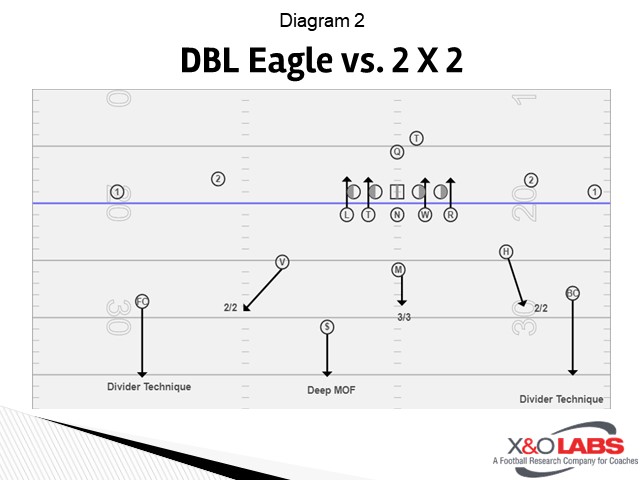
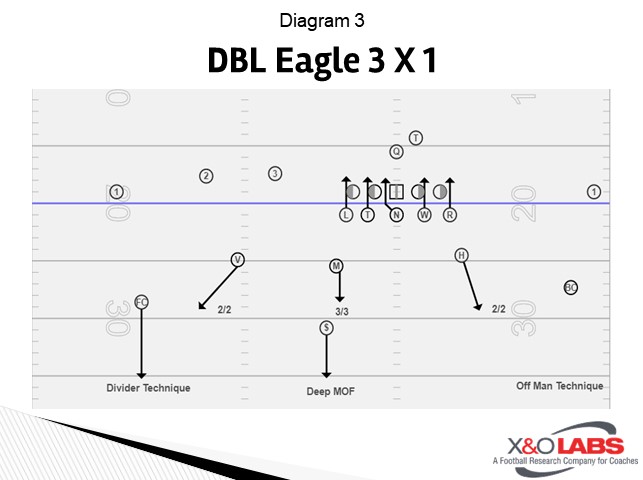
We are a multiple-front defense.  Our two main fronts are DBL Eagle/Bear and the Odd Stack front. We install the fronts with two things in mind. We want to keep personnel changes to a minimum and we CAN NOT get over-complicated when installing coverages.

When installing the DBL Eagle/Bear Front Defenses, you need to:

  • Establish force type and run fits
  • Create a numbers advantage
  • Install a game and stunt package
  • Formulate coverage scheme with run fits and game/stunt packages in mind


Installation #1

In our first installation, we install our Odd Stack Cover 3 defense and DBL Eagle 3 Over/3 Under and Cover 1 defense at the same. Our Cover 3 and 3 Over/3 Under concepts are the same, except in 3 Over/3 Under; we are defending with 6 defenders, instead of 8 like in Cover 3.  The Odd Stack and DBL Eagle fronts are our identities. If we were to build a house, those two fronts would be our foundation. All the blitzes, games, and coverage variations are the walls, windows, roof, and door.


Odd Stack Cover 3


Position Alignment Responsibility
Tackle 4 or 5 B or C Gap
Nose 0 Either A Gap
Whip 4 or 5 B or C Gap
L 50, 30, 10 Run: Gap in accordance w/ DL

Pass: 2/2 (Reading #2 Zone 2)

M 50, 30, 10 Run: Gap in accordance w/ DL

Pass: Spy or Drop

R 50, 30, 10 Run: Gap in accordance w/ DL

Pass: 2/2 (Reading #2 Zone 2)

Hero I/S or O/S Lev. #2 Run: C or D Gap

Pass: 2/2/1 (Reading #2 Drop Zone 2 then 1)

Villain I/S or O/S Lev. #2 Run: C or D Gap

Pass: 2/2/1 (Reading #2 Drop Zone 2 then 1)

Boundary Corner 1X7 – 10 Divide 1 & 2 Run: Insurance

Pass: Divider

Field Corner 1X7 – 10 Divide 1 & 2 Run: Insurance

Pass: Divider

$trong Safety 10 – 12 MOF Run: Alley

Pass: Deep MOF


Double Eagle Cover 3


Position Alignment Responsibility
Tackle 3 B Gap
Nose 0 Either A Gap
Whip 3 B Gap
L 5 or 9 Run: Gap in accordance w/ DL

Pass: 2/2 (Reading #2 Zone 2)

M 50, 30, 10 Run: Gap in accordance w/ DL

Pass: Spy or Drop

R 5 or 9 Run: Gap in accordance w/ DL

Pass: 2/2 (Reading #2 Zone 2)

Hero I/S or O/S Lev. #2

Away  from 3X1 Closer to Box

Run: C or D Gap

Pass: 2/2/1 (Reading #2 Drop Zone 2 then 1)

Villain I/S or O/S Lev. #2

Away  from 3X1 Closer to Box

Run: C or D Gap

Pass: 2/2/1 (Reading #2 Drop Zone 2 then 1)

Boundary Corner 1X7 – 10 Divide 1 & 2 Run: Insurance

Pass: Divider

Field Corner 1X7 – 10 Divide 1 & 2 Run: Insurance

Pass: Divider

$trong Safety 10 – 12 MOF Run: Alley

Pass: Deep MOF


The remainder of this report focuses solely on how Coach Reiss and the staff at Lackawanna Junior College merges Double Eagle and Bear Fronts with a rotational coverage to keep two linebackers in the core.

Read More

6 and 7 Man Add-On Pressures From 3-High Looks

By Mike Kuchar with Chris Kappas
Defensive Coordinator
Austin Peay University (TN)
Twitter: @CKappas


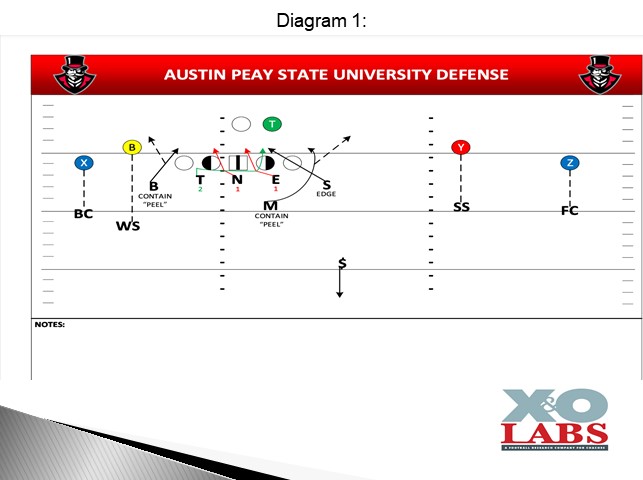
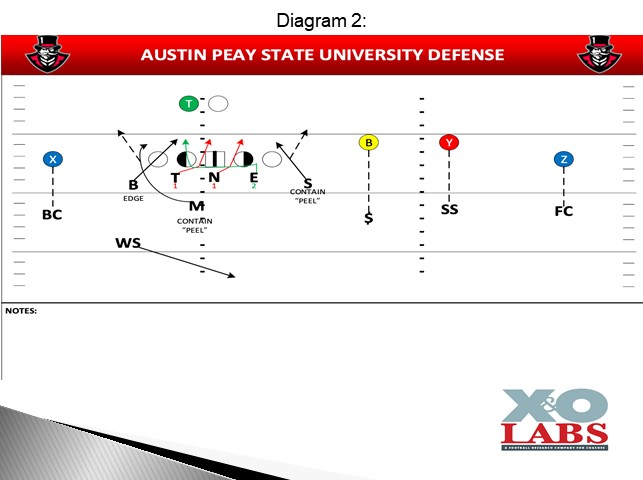
As a 3-3 stack, hybrid 3-4 outfit, Austin Peay University prides itself on getting the best skill players on the field defensively. But, the best skill defenders don’t always equate to efficient blitzers. That lack of skill set influenced many of his calls in the previous year by choosing to be conservative and not pressuring the quarterback. “It costs us some games,” he admitted. So last off-season defensive coordinator Chris Kappas meticulously went about revamping his pressure system to be more aggressive. He dabbled in the three-deep, two-under hot pressure world but instead decided that pure man pressures made things easier to get lined up and keep track of receivers post-snap.

By the following season, he completely flipped the script. The result was an efficiency rating of 66% in six-man activations and 70% in seven-man activations. Sure, they gave up some big plays in the process but according to Coach Kappas, the risk was well worth the reward.   “We won because we were more aggressive and made stops, turnovers, or negative plays when we needed to,” he said.


Governor Personnel:

Like most three-down outfits, the Governors play with a strong end, Nose, and Tackle upfront. Its back seven consists of the following:

  • Sam– Strongside inside LB
  • Mike– Weak side inside LB
  • Strong Safety– Strong side outside LB
  • Bandit- Weak side outside LB
  • Weak Safety- Boundary Safety
  • Spur- Nickel to field or Middle Safety


Activation Design:

Essentially, there are three variants of man pressures in the Governors defensive system:


Pure Six-Man Activations– This is the jumping-off point for Coach Kappas’s man pressure system. Here he will play with a high-hole defender and rush six in a true man-free coverage concept.


Six-Man “Plus” Activations- These are what Coach Kappas calls “plus” pressures, which is tagged to the traditional five-man rush patterns. This now activates the Sam, Mike, and Bandit in the pressure and converts from cover one to cover zero by rushing six and putting the post defender on the running back. The post safety becomes the low-hole defender if the running back blocks.

Read More

Attaining Numerical Advantages in C Gap Pin and Pull Runs

By Terry Kent
Offensive Coordinator, QB/RB Coach
Plainfield Central High School (IL)


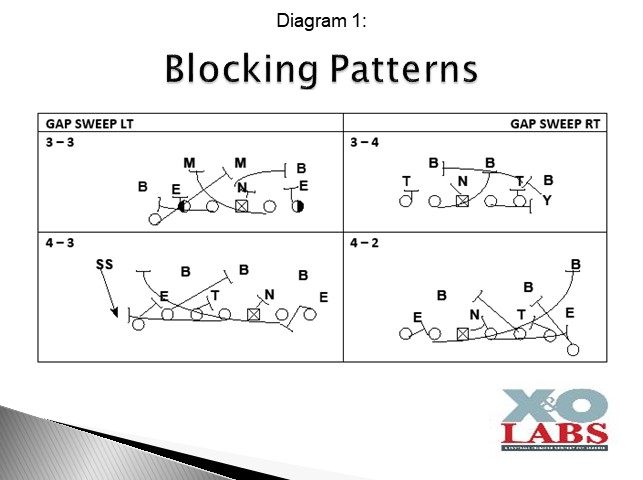
Teams that I have coached have always had a run-first philosophy. We have run both Zone and Gap schemes, depending on personnel. I started running “Buck Sweep” 5 years ago since our Head Coach was a huge proponent of the play. The beauty of the play is that it gives the defense the illusion of running wide, but the combination of in (gap) blocks along with the pulling G’s creates a very effective scissors effect that creates large off-tackle holes. You must spend time on the timing between the pulling G’s and the TB’s path. This play depends on the success of 3 blocks: the TE’s block, PSG kick out, and BSG seal pull to LB. If all three of these players stay on their path, the play becomes very hard for a defense to stop. When combined with play-action (RPO) and various formations, this becomes a very difficult play to consistently stop. I have run the play out of many personnel groups, but will always have at least one tight end. We have run this play out of 12 and 13 personnel packages. In this report, I will try to document the various ways we have run the play, including some potential passes. I will also address how defenses have tried to align to stop it and what it opens up.


Coaching Points:

The basic rule for this play is that both Guards will pull, with the play side Guard kicking out the EMLOS and the backside Guard (BSG) skip pulling up to the play side LB. All play side linemen and Tight end will block the first man to their inside. The Center will block back to cover for the backside pulling Guard and the backside Tackle will “Seal the B-gap” to prevent any backside run-throughs. The only exception to these rules is the Center blocking frontside vs a 0-shade or 1-technique. We have tried having the Center and PSG exchange assignments, but while this worked on paper, we always had pulling issues with the Center. Play side receivers will stalk block the MDM (most dangerous man), while our backside receivers will either run a bubble or backside quick game route (hitch, slant, fade). The QB always has the option of throwing the ball backside if we have a numbers advantage. We don’t throw this enough.

We have run this play out of a variety of formations, but this report will concentrate on four formations in 2 personnel groups:

12 personnel: 2 X 2 with TE/WB
  3 X 1 with TE/WB
11 personnel: 3 X 1 with TE
  3 X 1 closed with backside TE


We teach our offense by breaking down each position’s responsibilities, regardless of play and alignment. For example, our backside WR’s will always run a bubble/now screen if there are 2 receivers, or the single receiver will run what we call a money route: hitch, slant, or fade. We try to teach our QB to take advantage of any numbers advantage that we may have. We have thrown bubble screens even though the Gap Sweep play was the play call. In addition, by having our WR run a route instead of automatically blocking, I believe he keeps the DB’s and OLB’s more focused on stopping the pass, instead of getting a quick run read and pursuing the play. We can tag the run play and indicate to the QB to look to throw first.

Our linemen are taught blocking concepts, so they are not required to learn the individual plays. The blocking concept is a part of all run calls. This is either signaled in by a coach or communicated to the line by the QB. In the plays above, Gap Sweep Lt is learned by the offensive line as “Paul,” while Gap Sweep right is “Peter.” We do this so we can run the play with multiple ball carriers, but the line only has to know their concept.


Blocking Rules for Peter / Paul:

Y: Gap block 1st threat to inside. May double team with OT vs 5 – technique. Never block anyone outside of you.

PST: Gap block 1st threat to inside. May double team with TE vs 5 – technique in an odd front.

PSG: Pull & kick out EMLOS

C: Cover for pulling BSG. Exception: vs play side 1 – technique or Shade, step play side and reach block DT

BSG: Skip pull to play side LB

BST: Seal B – gap. Cut off any backside flow if no one threatens your B – gap.

WB: Gap block 1st threat to inside. May double team with TE vs 6 – or 9 – technique.
Never block anyone outside of you.

QB: Catch snap, step back 1 step, place ball in TB’s stomach, and ride him for two shuffle steps. After handoff takes 1 – 2 steps into the line or fake backside throw. Pre-snap Numbers advantage for bubble or money.

TB: Open step, ride with QB, threaten defense wide (3 – 5 steps). Plant outside foot and make a sharp 90 degree cut inside of PSG kick-out block.


The rest of this report will focus solely on how Coach Kent and his staff gain numerical advantages in the pin and pull concept.

Read More

Middle Runner Personnel and Technique in Tampa Sims

By Mike Kuchar with Ron Roberts
Defensive Coordinator
Baylor University (TX)
Twitter: @CoachRonRoberts


During the Covid shortened 2020 season, Ron Roberts spent much of his time researching how he can continually tweak the extensive creeper system he brought with him from Louisiana. While single high pressures were sound against the run, it left vertical seam routes vulnerable- despite closing the middle post with the backside safety (check our original report in 2019). So, his goal was to build in more two-high looks that can be used situational on third down and could combat his tendency of playing pure man coverage in these situations.  So, he emerged from the lab with what he termed “Tampa creepers,” a three-high coverage pressure that combined four underneath defenders and a simulated rush upfront. With a couple of easy checks, it looks like four pressures but it’s only one.

He liked them so much that he used them on nearly tktk percent of second and long and third downs. It was effective in leveraging vertical routes and forcing the ball underneath where defenders can rally and make plays. The philosophy was that the generated simulated pressure would get the ball to come out faster and force the quarterback to check the ball down. And if you watched them play Oklahoma and Oklahoma State this season, that’s exactly what happened. “I’m not going to call it on 2nd and 3 unless I give you a knuckleball or you’re trying to pick us,” he told me. “I’m calling it on 2nd and long or 3rd and long. Or, when teams are trying to get the back out fast and we have leverage to the flat (with the corner).  We want to hit it and make the ball come out quickly so we can tackle it and get off the field.”


Pressure Patterns:

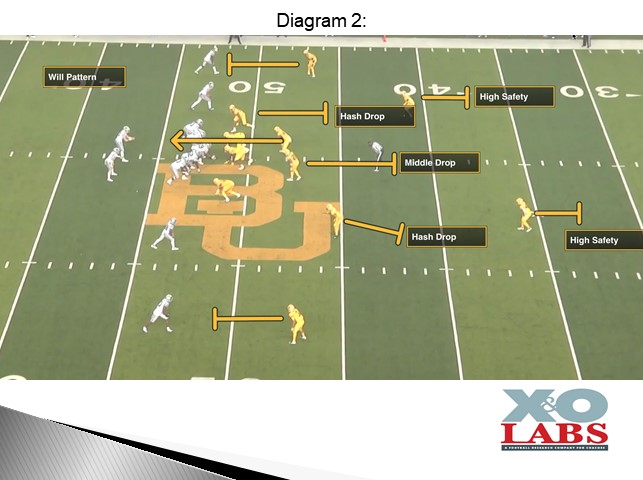
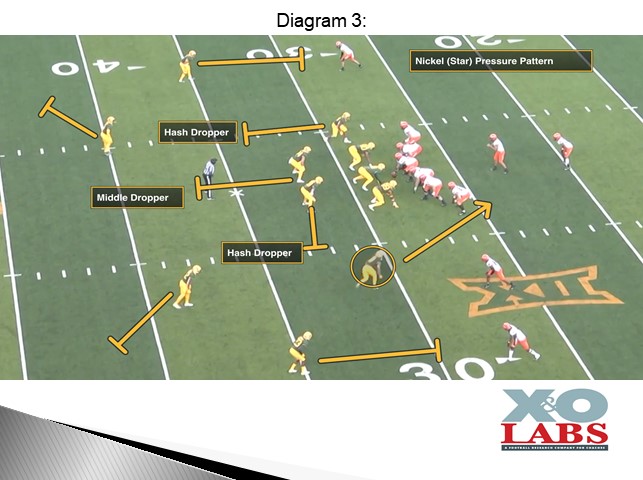
In its simplest form, there are four main pressure patterns in this package, although I’ll tell you Coach Roberts has been continually tweaking them to find alternative middle runners. Essentially, he classifies the coverage defenders as the following (more on the technique later in the report):

  • Cloud Corners (2)- responsible for flat
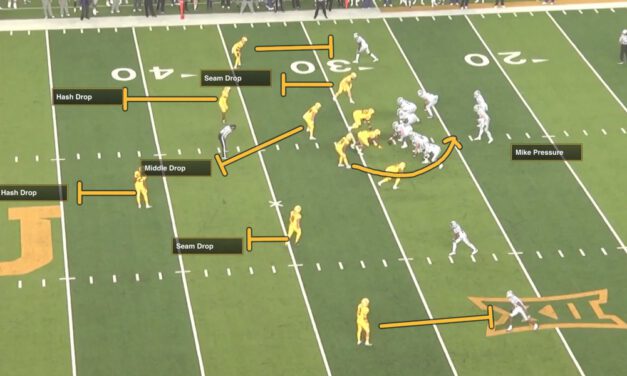
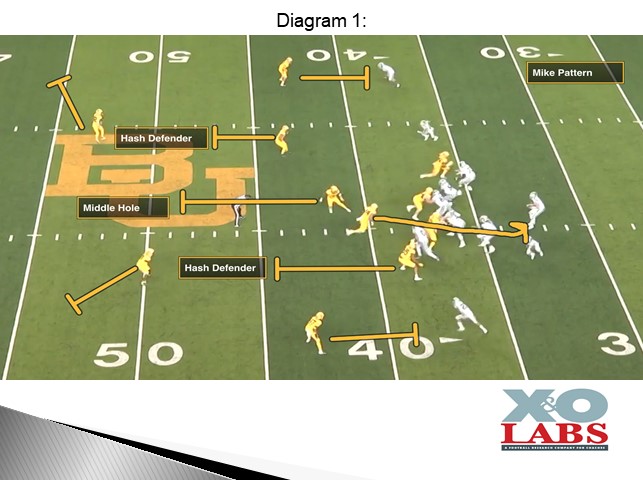
  • Hash Droppers (2)- responsible for #2 in the seam
  • Middle Dropper (1)- post defender
  • High Safety (2)


As of now, these are the Tampa creepers Coach Roberts is using:


Middle Pressure (Mike or Will):


  • Corners are flat defenders
  • FS/WS are high safeties
  • Star (Nickel) and Jack (boundary DE) are hash droppers
  • Mike or Will is the middle hole defender


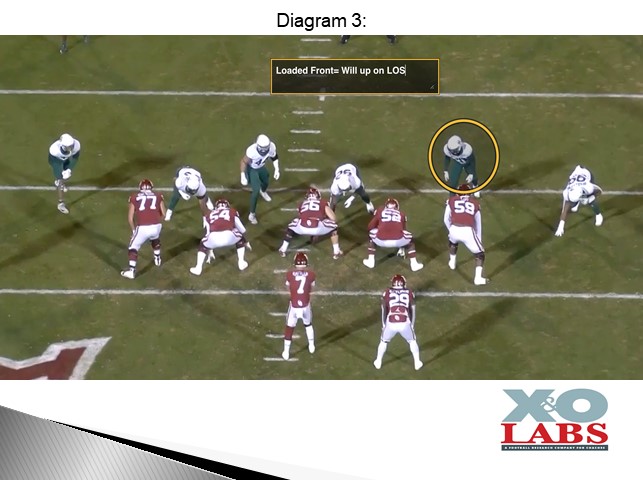
As explained later in the report, both of these two pressures are “checked” pressure based on one specific variable. The Will can even walk up on the line of scrimmage and play the same responsibility based on the call. Coach Roberts calls that a “loaded” front. See the diagram below:


Nickel (Star) Pressure:


  • Corners are flat defenders
  • FS/WS are high safeties
  • Mike and Jack (boundary DE) are hash droppers
  • Will is middle hole defender


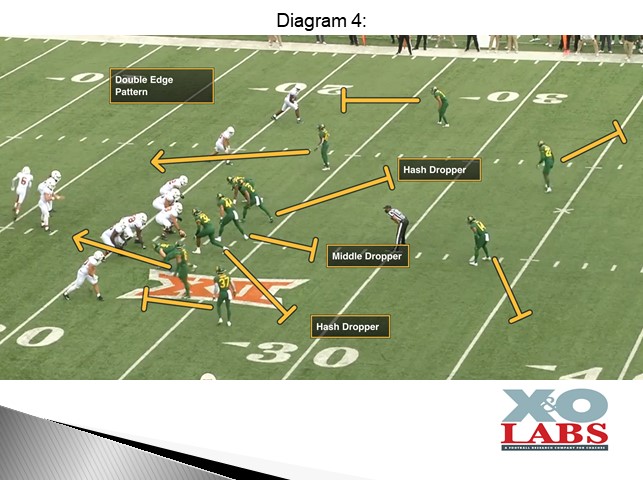
Double Edge Pressure (out of Dime Personnel):


  • Corners are flat defenders
  • FS/WS are high safeties
  • Mike is middle hole defender
  • Will and Boundary end are hash droppers.


Call System:

Even though the patterns seem simple, there needs to be streamlined communication to alert players on who the middle runner is. Coach Roberts will use the following four protocols in calling these pressures:

  • Field Pressure– this would be the Nickel (or Star) pressure to the field
  • Boundary Pressure– this would be the Will pressure to the boundary
  • Passing strength pressure– this will usually be the Mike off the edge to the field
  • Point Pressure: this is checked pressure specific to the protection scheme


While I will not use Coach Robert’s terminology, it’s important to group these pressures in relative families. But you need to distinguish calls based on who the middle runner is. For example, if using “New York” as your base Tampa coverage variant, consider the following verbiages as changeups below:


“Mets”- Anytime where the Mike or Will (M term) is the middle runner. The opposite player is the pressure defender. The front is called.

“Yankees”- Anytime where the Free Safety is the middle runner. The front is called.

“Mug Mets/Yankees”- Tells the Mike or Will to walk up on the line of scrimmage.


Baseball teams can be your creeper pressures, while football teams, such as “Giants” and “Jets” can be base Tampa coverage with traditional four-down rush patterns.

The rest of this report focuses solely on how Coach Roberts can build these Tampa Creepers in to affect protection, including the built-in checks he uses that alter these pressure patterns.

Read More

Identifying and Blocking Pressure in Pin and Pull Runs

By Mike Kuchar with Pat Taylor
Offensive Line Coach
Kutztown University (PA)
Twitter: @CoachTaylor_OL


When the Pin and Pull concept makes up nearly 1/4th of your run game- as it does at Kutztown University (PA)- the focus shifts from learning the scheme to understanding how defenses will fit it. They’ll get a gamut of adjustments, including over-shifted defenses, open side pressure, and alternating fit patterns. This is why offensive line coach Pat Taylor spends more time teaching his unit about reaction rather than scheme. His method of protecting the play is the focus of his report. And it’s been somewhat foolproof. This season the Golden Bears leaned on the Pin and Pull to produce a 7.7 yards per carry average en route to an 11-2 record.


“Open Pull” Technique:

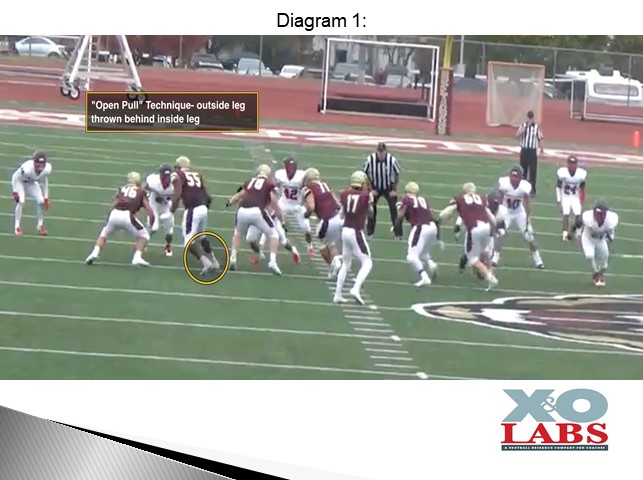
One of the interesting techniques surrounding Kutztown’s scheme is that offensive line coach Pat Taylor chooses not to use skip pull footwork for pullers. It’s a transition he made recently because it’s more conducive to blocking edge pressure. Instead, it’s more open-like footwork where linemen are taught to throw their inside foot behind the outside foot and run full speed. It almost looks like a trap pull. This way against any type of pressure, they are in a position to immediately kick it out.


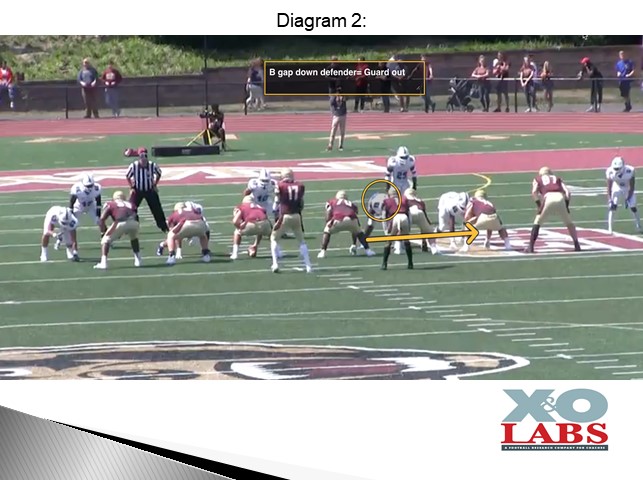
Base rules dictate the first puller to the front side will be either the Guard or Tackle based on the front. For the most part, if there is a B gap first-level defender, the Guard will pull. If there is an A gap first-level defender, the Tackle will pull.


The Center will always be the second puller unless there is a concern about a cross face from the Nose or a shade defender that could not be reached. In those situations, he can tell the backside Guard to go instead. The first puller’s responsibility is to block the alley defender, providing he does not pass up color. The second puller is asked to work to the play side linebacker. “We talk about getting his eyes outside,” said Coach Taylor. The ball carrier stays in line with the second puller, it’s that simple. “We don’t have to make it a perfect block. The running back will make it right. And defensive players have the challenge of trying to fit that.”


Pin Block Technique:

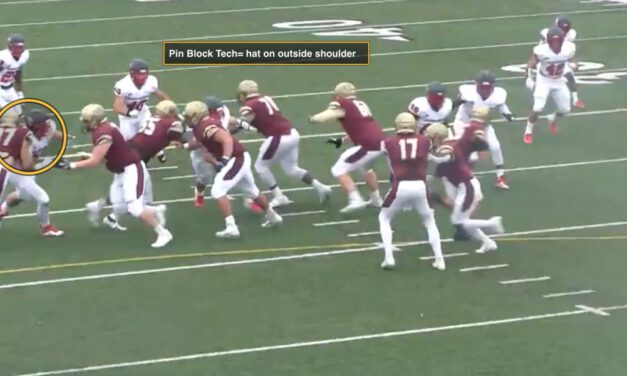
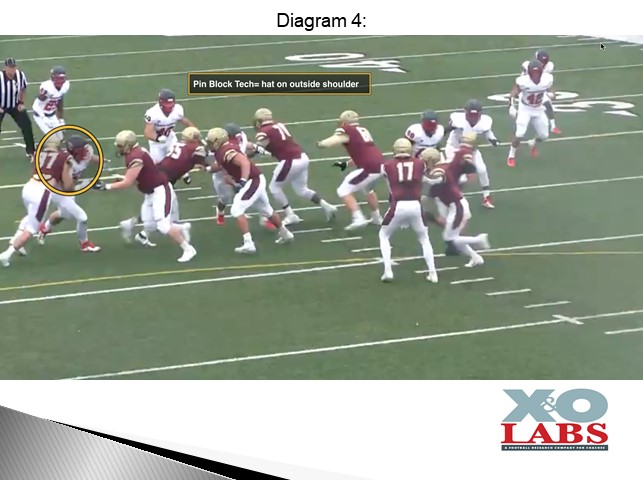
Understanding the pin (or down) block has a lot to do with knowing which tap that defender is responsible for.  For the most part, Coach Taylor teaches a traditional down block with a hat on outside leverage. Against a stagnant front, linemen can be more aggressive because they know where color is. But with so much potential movement, linemen have to be studious in recognizing where movement can occur- this is a focus later in the report.


Even Front:

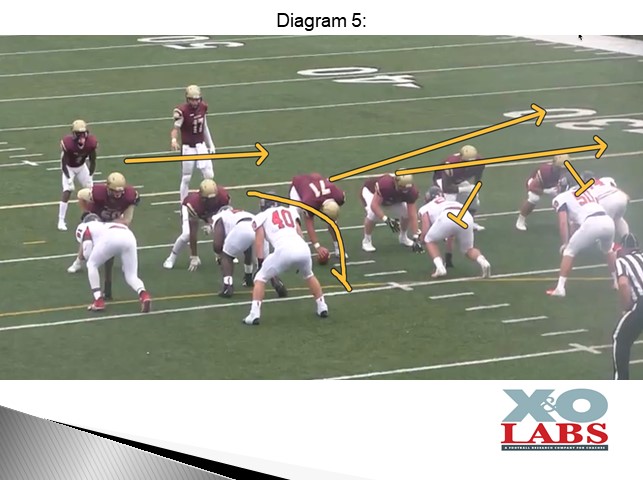
Even front responsibility is quite simple. If the play is being run to the three-surface side (and as stated below it doesn’t have to be), the play side Tackle will block the B gap defender while the play side Guard and Center are out on the perimeter. What Coach Taylor does on the backside of the play is quite interesting, and is something covered later in the report.


Odd Front:

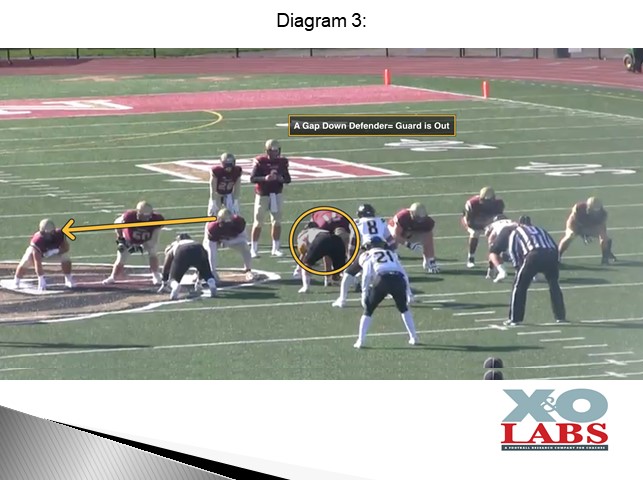
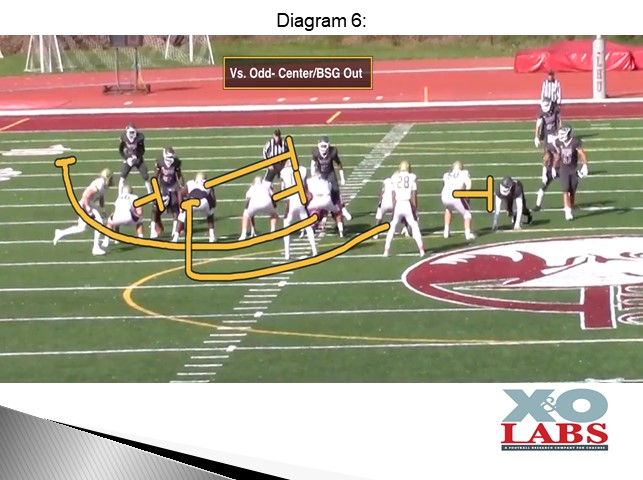
Against any Odd front, Coach Taylor prefers to still get the Center out despite him being covered. He’s comfortable in getting the backside Guard out as well to block the play side linebacker, having the play side Guard block the zero Nose which helps against more athletic Nose techniques. If the Nose is slower, the backside Guard can work to get him reached, which is something covered later in the report.


The rest of this report focuses solely on how Coach Taylor teaches his linemen to identify and combat the common defensive reactions that can completely hinder the concept.
Read More

“Sifts, RKB’s and Veers”: Wisconsin-Whitewater’s BST Technique in Zone Read

By Mike Kuchar with Peter Jennings
Offensive Coordinator/QB’s Coach
The University of Wisconsin-Whitewater
Twitter: @PeteyBananas


Heavy run boxes are commonplace when defending the University of Wisconsin-Whitewater. It’s no surprise considering the Warhawks have been 39-4 the last three seasons, averaging over 200 yards a game on the ground. And as the offensive coordinator since 2020, Pete Jennings had to choose to integrate the QB run game just to add a hat back. Naturally, it came in the form of zone read, a Day 1 install that the entire run game stems off of. All levels of the defense can be read depending on the skill set of the QB. This past season read zone averaged 4.92 yards per carry and was efficient 60.2% of the time it was called. His metric for efficiency is as follows: 1st down, 4 plus yards. 2nd down, split the remaining yardage in half. 3rd down, get the first down. 4th down, get the first down.

But while the responsibility of running the play efficiently lies on the quarterback, the challenge of running the play effectively is entirely placed on the backside Tackle who has to correctly identify the placement of the read defender and the technique needed to block him. Wisconsin-Whitewater can read first and second-level defenders based on the ability under Center. “If you have an elite running QB, you need to put that defensive end in conflict,” Coach Jennings told me. “But you put a lot of stress on those Tackles to be smart and athletic to understand how to release off that 4i. If you can teach those to your Tackles you can have a huge advantage in your run game.”


Tight Zone Scheme:

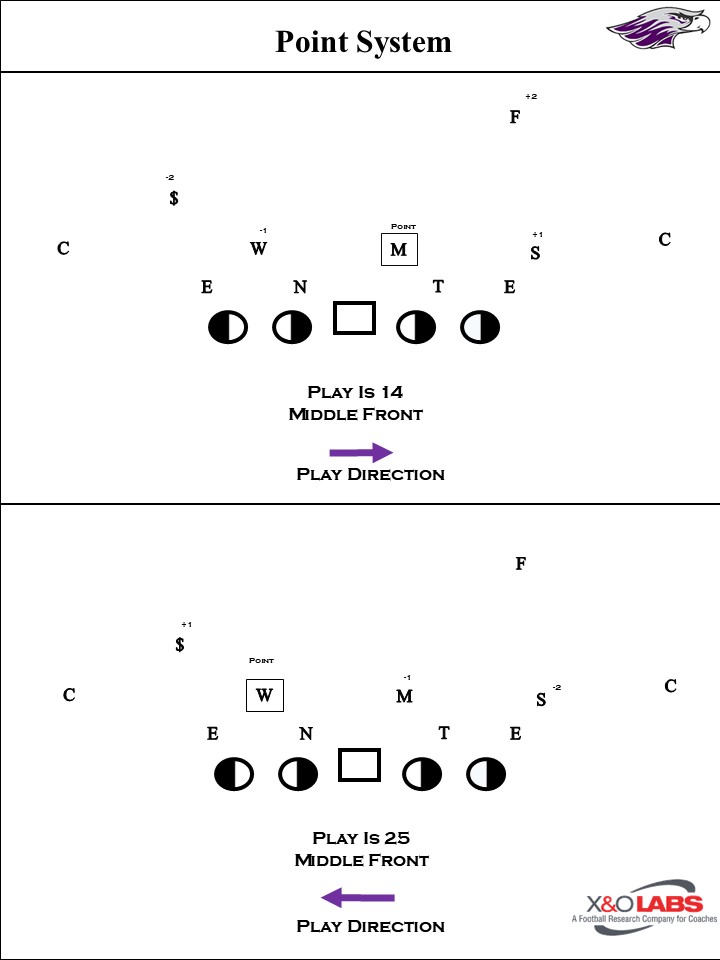
Like the two other programs we profiled recently- Monmouth University and Rice University- the Warhawks teach tight zone as a man concept. The Mike is identified as the point and all combinations work to him. For many of their schemes- both run and pass- they ID the defensive front and the Mike, inside zone is no exception. We can push or pull the point depending on the defensive scheme and or game plan, for the ease of explaining in this article we will say the Mike or “Point” is the middle front LB.
 

“We call it a zone scheme but in our system, it’s really a man scheme,” he said. Coach Jennings did tell me that they will push the point against Odd because they won’t get vertical movement. “Tight zone vs. Odd puts the frontside linebacker in a bind in 50 split but he can get beat,” he said. “He can get stuck in a 50 tech waiting to see if the RB cuts back. The 4i is a two-gap player and if he gets beat the RB can jump cut it frontside.”

The proper step depends on the aiming point. It can be a drop step or a zone step. Whatever step is needed to hit the aiming point of the frontside number. But whatever the front step does, the second step must be in the ground as quickly as possible.


Things to know for the OL:

  1. Point is middle front unless “pushed” or “pulled”
  2. If you are covered assume man
  3. If you are uncovered, make the combo call
  4. Man blocking scheme pre-snap
  5. Zone blocking scheme post-snap
  6. 3-point, slightly staggered stance, must be comfortable
  7. The down hand is side dependent and should carry 30% of body weight
  8. If covered take a “drop step” 2-4 inches gaining depth and width aiming for the bottom of the defender’s frontside number
  9. If uncovered take a “bucket step” 4-6 inches gaining depth and width aiming for the midline of the next play side defender
  10. When in a combo, 2 hands-on, 4 eyes up, do not leave for the LB until you can reach out and touch them, the RB will bring LB’s to your combo
  11. Use “Tip of Spear” when striking. Tip of Spear is a phrase we use to give our guys a visual of their blocking technique. It refers to using the area of the palm where the hypothenar muscles are located, (Area of your palm closer to your wrist) and keeping your thumbs up.
  12. We ask a lot of our tackles, smart, athletic, crafty
  13. In RZ we say backside guard-forward is blocking for the give, Backside tackle back is blocking for the pull


RB Declares the Front:

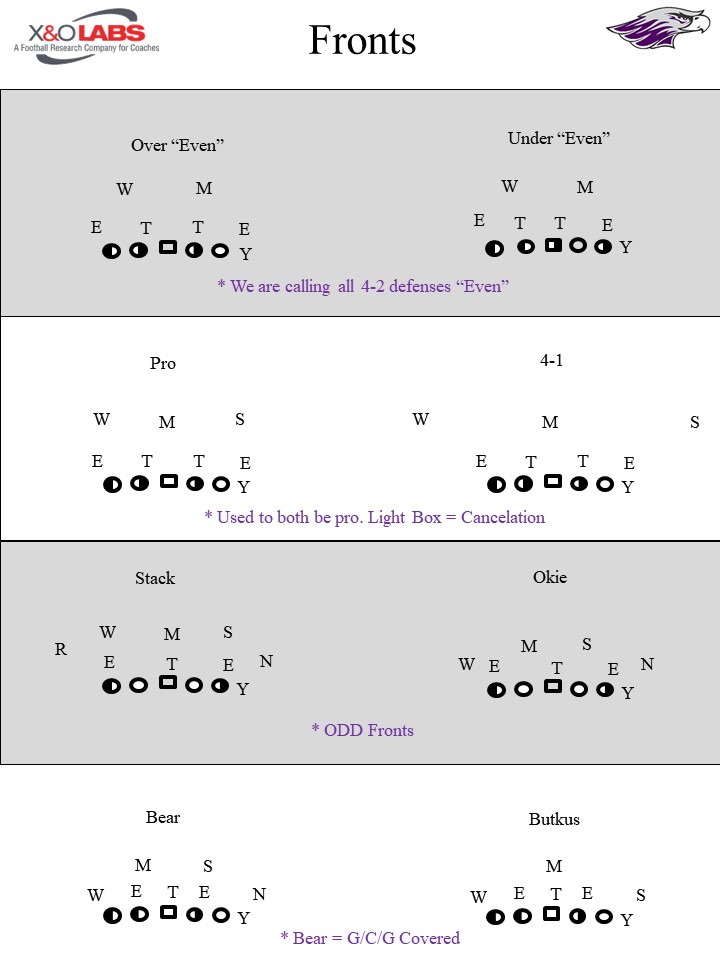
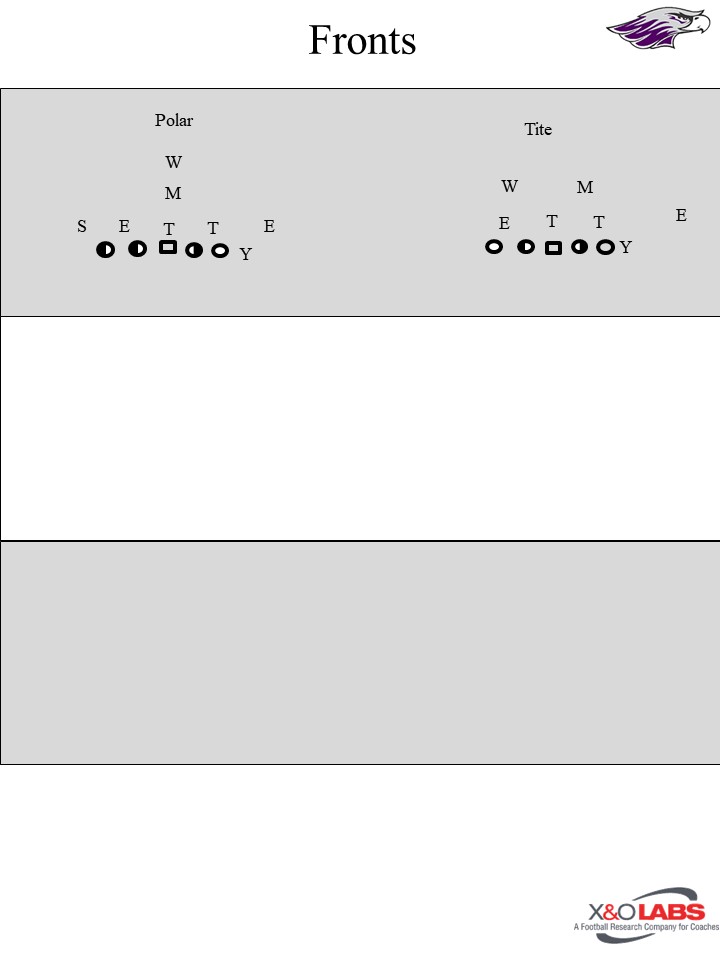
“In our league, we end up seeing a lot of different defensive fronts,” said Coach Jennings. So to try and keep identifying fronts as simple as possible he uses 4 basic families: Even, Pro, Odd, and Bear.


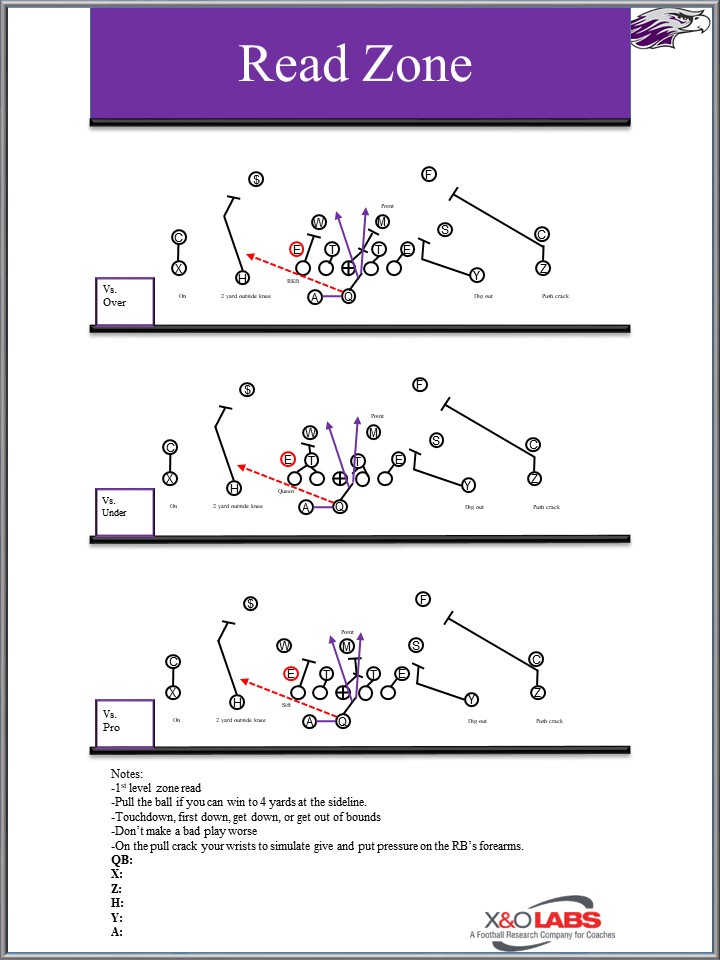
The running back is responsible to identify the front and echo the structure to the wide receivers. That will change the count on the perimeter for wide receivers to block, be it the Sam linebacker, Sky Safety, etc. In the Odd front, the aiming point is the frontside leg of the Guard. In the Even front, the aiming point is the trail leg of the play side Guard. When in Pistol alignments, the play is widened out to the B gap or inside leg of the Tackle. “We just give them a framework and go,” said Coach Jennings. “They need to be responsible for setting up the frontside LB with their path but make a cut off the Guard’s ass on what the Will is doing.”


Slot Receiver Technique:

The slot receiver in zone read is asked to step to the heel of the defensive lineman, rip and put him on his back. When you watch the film it looks like a butt block, but Coach Jennings calls it a “turtle shell”. “We put ourselves between the ball and the defender like a box out in basketball,” said Coach Jennings. “If you watch enough football you watch that slot work his tail off to get on his near shoulder and push the Sam- who can make the play- into the pile.”


Things to know for the WR’s:

  1. Frontside #1 always error on the side of push cracking
  2. Frontside #2 responsible for +1 vs even and +2 vs odd
  3. Backside #2 is always responsible for -2 in some way shape or form
  4. Backside #1 always error on the side of staying on in case there is a pull
  5. Slots have inside legs back, the first step is at the heels of the DL, which will utilize a turtle shell if necessary. The turtle shell is a technique remarkably like a box out in basketball. Clip one should show this nicely. Attack your blocking responsibility flat, rip your outside arm through and box out. Get the defender on your back, aka a turtle shell.
  6. “6-second players, .5 second blockers” this means we don’t need WR’s who block for the entire play. We need WR’s who block for the .5 seconds it takes for the ball carrier to get past the defender they are responsible for. Be patient


Things to know for the QB:

  1. Clear the midpoint of the mesh when necessary to allow the RB to keep his shoulders square
  2. Pull the ball if you can beat your read to 4-yards at the sideline
  3. Touchdown, first down, get down, or get out of bounds
  4. Crack your wrists on the pull, added stimulus to the running back
  5. Even on gives you are responsible to pull defenders, carry out your fake
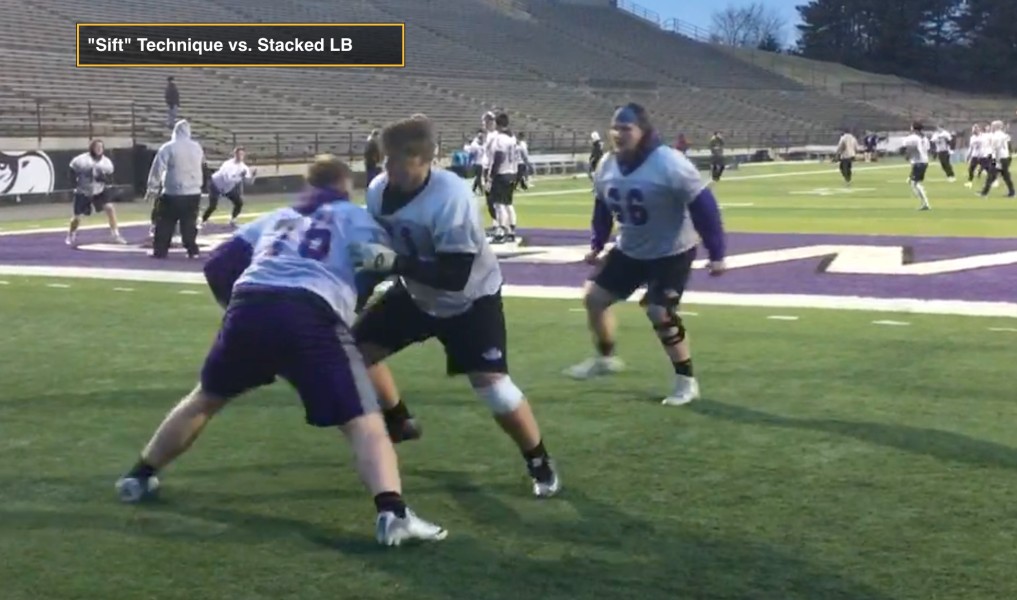
  6. Understand where the -1 is and if we will get a sift by the backside tackle, a sift is for the QB that’s in contact with reading and the Backside OT will sift. If the QB sees, contact between the OT and his read he will give the ball. The sift technique forces the give.
  7. Contact with the read = Give, live to play another down


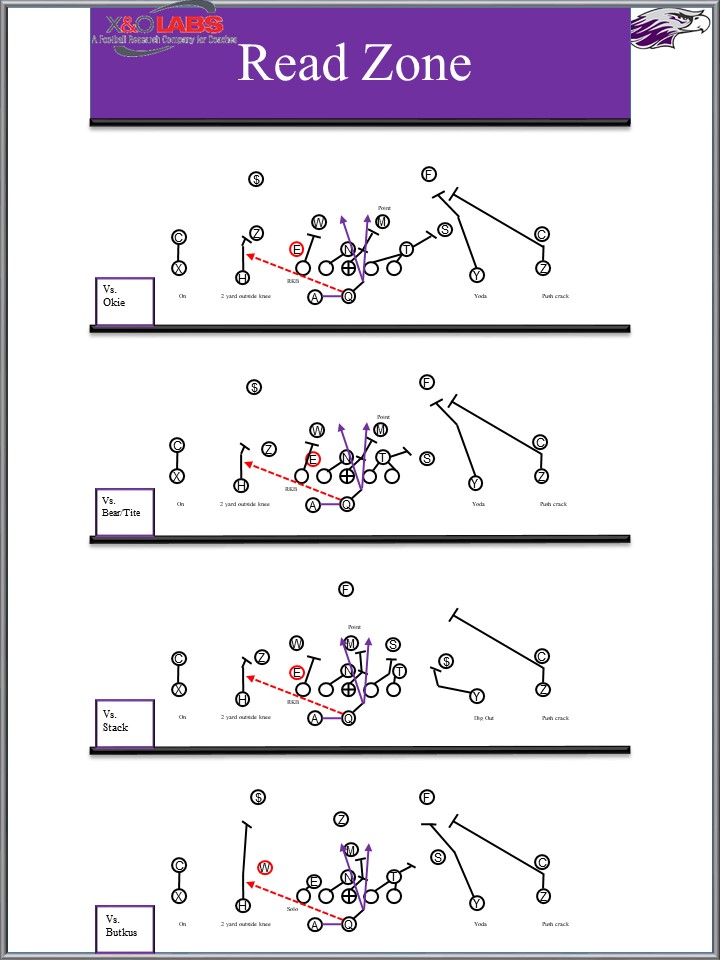
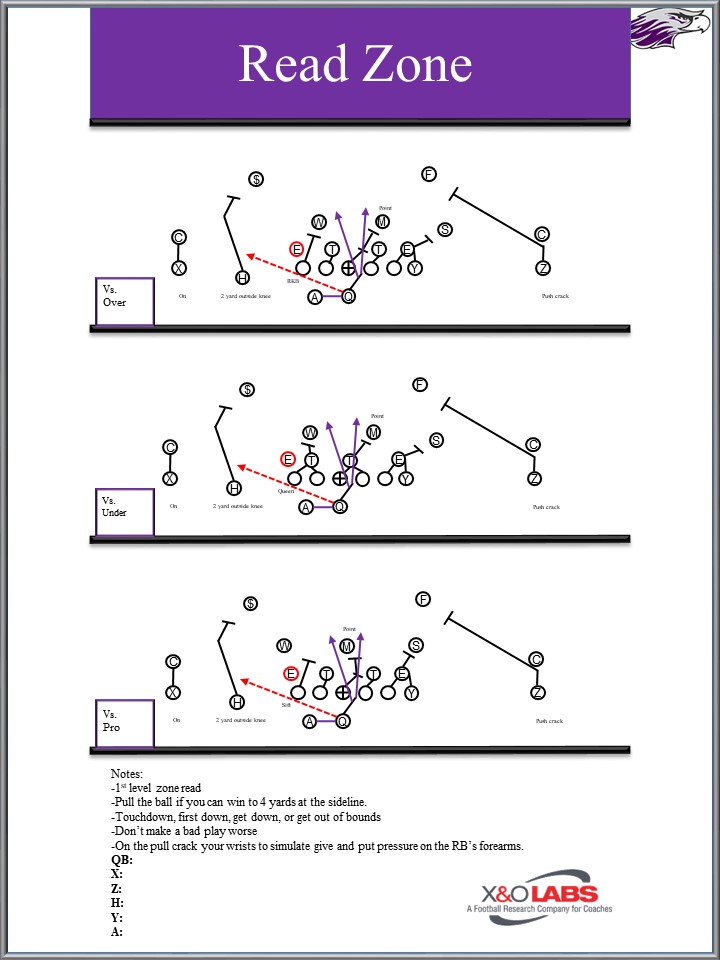
Below are how the Warhawks block each of the following fronts in its zone read concept:


The focus of the rest of this report is solely on how Coach Jennings teaches the backside Tackle to identify and block the “minus one” defender on the backside of the scheme.

Read More

“Face” and “Lever” Concepts in 2-Trap Activations

By Mike Kuchar with Travis Niekamp
Defensive Coordinator
Illinois State University
Twitter: @CoachNiekamp


When RPO’s, smart quarterbacks and four vertical concepts were prying Travis Niekamp and his defensive staff out of the 3-deep, 3-under zone pressure world they had to make some difficult decisions on how they were going to fit the run. He knew that two trap coverage would be sound against heavy personnel run game, but he didn’t want to put too much responsibility on corners to make tackles. After all, this was the Missouri Valley Conference country, where the average ball carrier can tilt the scales over 200 pounds, which is an inherent mismatch for the 175 lb. corners he had in his system.


So, he and his staff decided to do anything in their power to make sure the two best tacklers in his system- the Mike and Will- get as much action as possible. Makes sense. But in four underneath coverage, at least one of those backers had to wall vertical routes by number two. The process he used to train the eyes of those backers to get in pass windows and become active in the run game was of extreme importance. How he did that is the focus of this report.


RPO’s Non-Factors:

Sure, MVC isn’t exactly the Big 12 in the RPO world, but Coach Niekamp did concede that the two-trap system did hold up well against the types of RPO’s in that conference such as slants, glances and bubbles. While it’s not a heavy RPO conference- he says he’ll only see 3-4 concepts per game and he credits the two high look in being able to get color on color (bodies on bodies) in early downs, situations that are most synonymous with RPO’s. The pressure was able to speed up the clock of the QB. “It helps us be aggressive on bubbles,” he told me. “That’s why we went to trap coverage.” With the field activations described below, pressure is right in the quarterback’s face with what he calls a “fence” defender being able to handle anything vertically based on the formation presented.


Base Pressure Patterns:

In its Odd look, Illinois State will rely on two types of pressures- field and boundary. The field variety will take shape in the following patterns:

  • OLB/ILB pressure
  • OLB/Safety pressure
  • ILB/Safety pressure


It’s called “Strike” and is essentially a two off the edge system. Below are the base field activations against two-back formations:


These are coupled with boundary activations, which usually take the shape in the following patterns:

  • Boundary Corner and ILB
  • Boundary Corner and OLB


Coverage Structure:

Predominantly it’s halves coverage to field. In most forms the opposite safety works over the top to the side of the pressure playing a mid-point technique- although that has been altered last spring as I describe later in the report.  He will be asked to handle the vertical of number one. Boundary coverage is going to be some form of quarters or man coverage.

The difference in this scheme is in the play of the corners. As shown in the diagram below, corners to the side of the pressure are secondary contain defenders, not primary contain defenders against the run game. And in the pass game corners will play with inside leverage and read two to one. If two goes out he can be aggressive on it. If both are vertical, he works to sink and protect the hole shot to the field, which in Coach Niekamp’s opinion doesn’t happen very often.


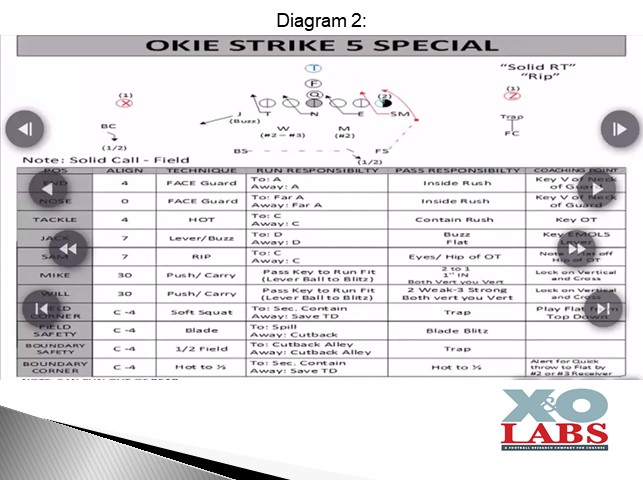
The focus of the rest of this report is what Coach Niekamp calls “face” and “level” technique, which is taught for each defender to cancel gaps up front and keep the ball in the box, not on the perimeter.

Read More

OL Eye Discipline In “No Chase” Tight Zone Principles

By Mike Kuchar with Sanders Davis
Offensive Line Coach
Rice University (TX)
Twitter: @SandersDavis225


The foundation of the Mike Bloomgren school of running the football is built on tight zone runs. It’s something opponents in Conference USA know all too well. Which is why the offensive staff at Rice University will get up to 2-3 reactions each week of how defenses will fit its tight zone run concept- this includes back gapping second-level defenders, 2i technique defenders, and second-level run-throughs. So, it became necessary for offensive line coach Sanders Davis to build in two separate ways to block the scheme; chase and no-chase zone concepts.


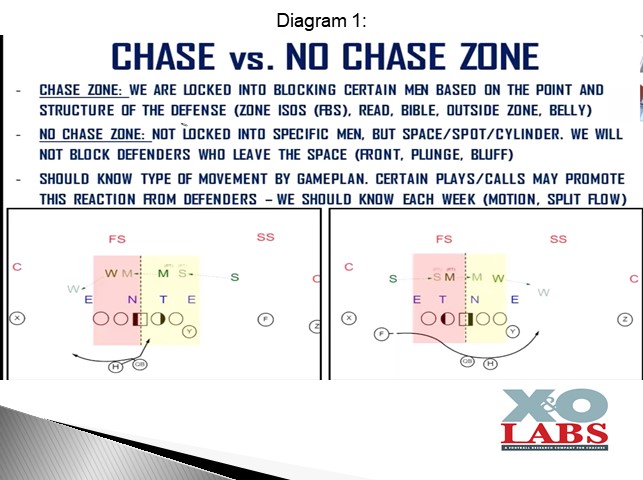
These are defined below:


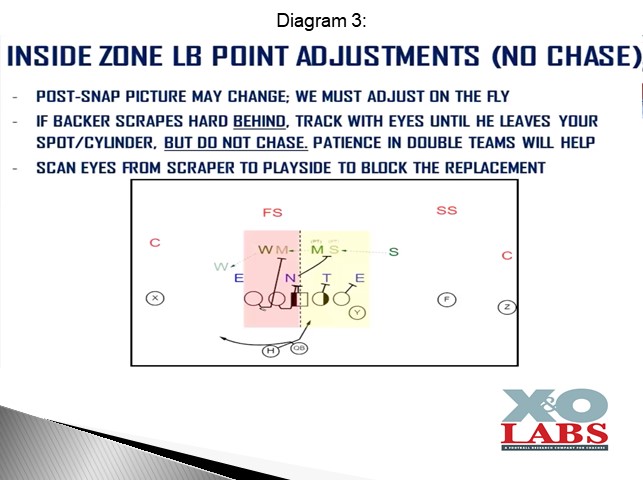
As a point of clarification, “chase zones” consist of concepts like zone read where linemen have to be aware of scrape exchanges by backside C gap defenders. No chase zones consist of concepts such as split zone, zone bluff concepts, and tight zones to an open end with a three-surface backside- all scenarios where second level defenders are expected to fall behind the point. In no-chase zones, linemen are taught to block a spot which helps protect against these back fitters or lag fits most commonly associated with split zone concepts. “If the defender falls behind our double team our eyes snap forward,” he told me. “We snap our eyes forward and block the defender that enters the box.” This report is focuses solely on no- chase zone concepts.

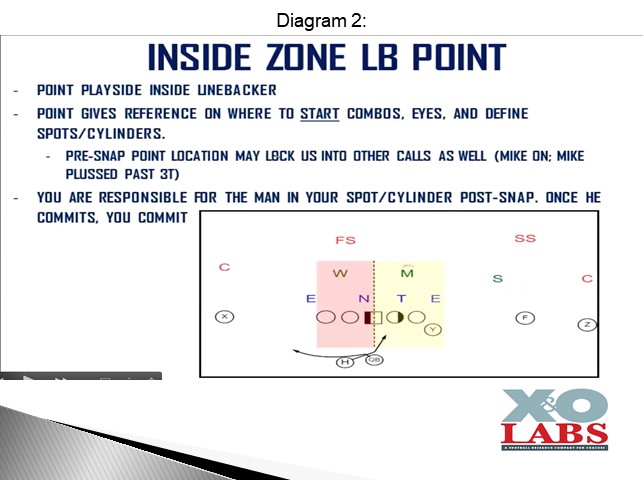
Like most tight zone operations, Rice will identify the point as the play side inside linebacker. Each lineman is responsible for the defender in his cylinder (spot) post-snap. Quite simply, once he commits, you commit. The point clarifies where to start combinations and how to define spots. Certainly, it’s a clear box when there are no fallback defenders.


But most recently, Coach Davis has relied on the “no chase” principle in order to get bodies on bodies up front to create explosives in the scheme. The premise is built around blocking the box, most notably the A gap first, and letting RPO’s and play-action handle the perimeter. The back is not asked to read anything at the second level. It starts with instructing the line to delete the defender that leaves the box and block the guy that enters the box.  “We’ll get 2-3 reactions per week, but if we just teach them how to train their eyes it becomes easy to identify,” he told me. “It’s great against pressure and it helps them just be physical on contact where they can get right into their double teams. Second level defenders struggle to get into fits when they fall back, especially with combinations hitting right into their laps.”


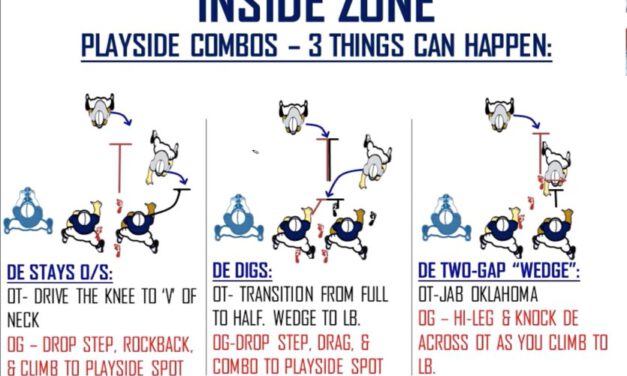
But to hit the play vertically, the point needs to stay the point. It will not get pushed. Otherwise, what’s the purpose of running an A gap tight zone concept? Rice will only vary the point if the point walks up on the line of scrimmage. This would not include an outside backer/Sam or Nickel, which would force targets wider. But when the Mike walks up, communication needs to be made to identify potential movement. In this scenarios, Coach Davis teaches a higher target area to protect against inside penetration. The target now goes from an inside V landmark to a hip or triceps target. “We want to be higher up the field not flatter to create a wall,” he said. “We don’t want them to cross our face. It’s not a flat angle, a higher angle. Now the ball should pipe through the A gap and the back should press it.”


RB Aiming Point:

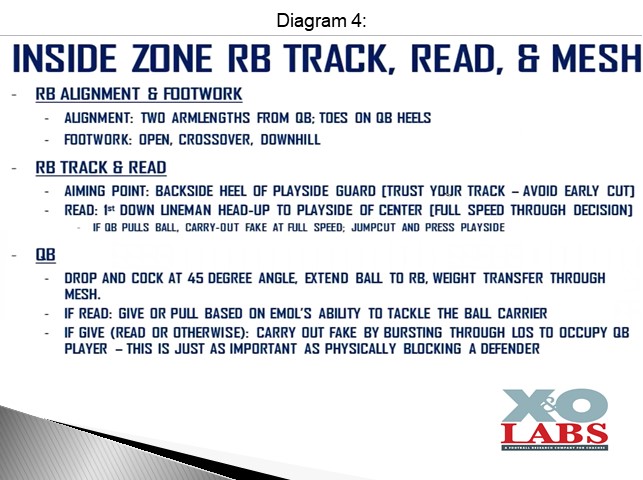
According to Coach Davis, the ideal aiming point for the back is the backside heel of the play side Guard with a read of the first down lineman past the Center. The aiming point is so specific that he’ll often put a quarter on the heel of that Guard and tell them they cannot cut back until they touch the quarter. “He must work to that aiming point before making any cut,” he said. “It helps bait linebackers into gaps and brings them into double teams. If he doesn’t do that, linebackers can fall back to where our combos can’t see them.”

While some coaches choose a tighter aiming point like the butt of the Center, the backside heel of the Guard provides a better opportunity to push the ball out to the play side C gap, getting a back on a back fit safety, where big hits can occur. “We used to use the Center’s crack as the aiming point but the ball always cut back and it got congested,” he said. “Now you’re not as concerned as cutting off on the backside, you’re thinking about getting more vertical.”


How he teaches his lineman to keep tight zone as an A gap track, which includes training their eyes to handle back gapping, as well as 2i/4i techniques, is the focus of this report.

Read More

Buzz to Cut Rotations in 2-Trap Zone Pressures

By Mike Kuchar with Jeff Long
Defensive Coordinator
John Carroll University (OH)
Twitter: @CoachLongJCU


Thanks to current Los Angeles Charger head coach and former X&O Labs contributor Brandon Staley, John Carroll University (OH) defense has had a continual presence on the Division 3 football landscape for years. This year was another solid 7-3 finish with a top 25 ranking in the country. Talking with new defensive coordinator Jeff Long, much of his pressure game was from two-deep, trap coverage. He felt that one-high looks just made things too simple for offenses to recognize. Quite simply, he fell in love with the exotic pressure patterns that can be derived from that coverage. Those patterns are what we will explore in this report.

But what separates Coach Long’s package from what I reported with Indiana is that he will mainly use his trap coverage to the boundary with a multitude of coverage looks to the field. The split safety look was the perfect complement to the 60% middle field closed presentations that John Carroll utilized this season. It was a solid answer against 21 and 12 personnel outfits and were good run/pass pressures as we’ll see on film. Plus, they were very efficient in mid-yardage situations, where each week Coach Long and his defensive staff would build in 1-2 each week.


“Fist” vs. “Front” Structure:

JCU bases out of an odd structure and calls itself a passing strength defense. But how they play that structure is unique. Most Odd outfits put a lot on their hybrid (mainly boundary) defensive end. John Carroll is a bit different in that they will vary his alignment based on the pressure. Coach Long calls this Anchor as a two-point defensive end who is taught to hammer, not spill, everything in the run game. His alignment is varied based on the following:


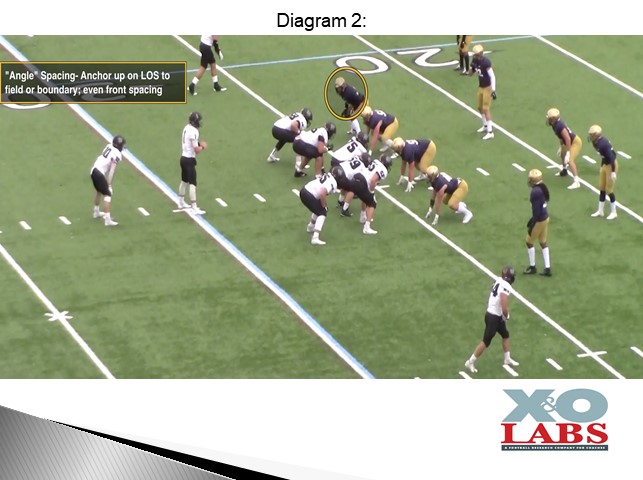
“Angle”– Anchor plays C gap either to field or boundary, opposite DE. Provides for an even front spacing.


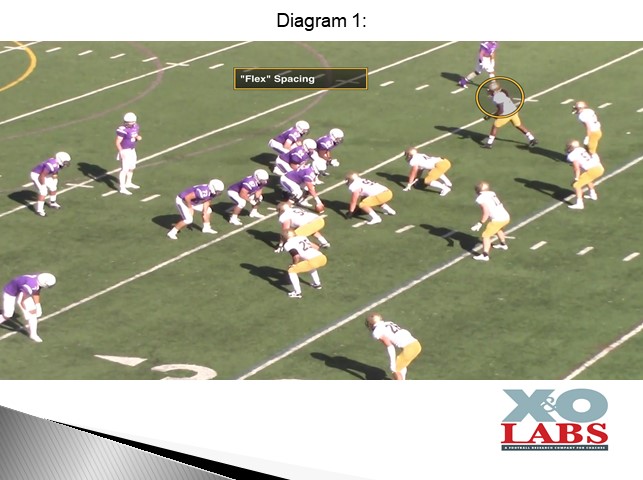
“Flex”- Odd, static look. Can be 4i or 4-techniques. 11 personnel adjustment. Anchor is asked to find a tight end.


The advantage of the JCU defensive system is that it allows that Anchor to align all over the place with simple rules. There is a lot on his plate. Oftentimes, he’s the only player moving. For example, the term “Up,” tells him to go the boundary while the Penny (Nickel) goes to the field. “Down” tells the Penny to find the passing strength with the Anchor to become part of the pressure. According to Coach Long, it can get extremely confusing for coordinators because they cannot track where the pressure is coming from. “It gives you an Okie element based on where the linebackers are but we can twist and knife the front,” Coach Long told me. “The front six is to the boundary but the passing strength gets adjusted. The Anchor is the only defender moving.”

The sample single high pressure is an example of this below:


All that said, one of the things I admired in studying Coach Long’s system is his ability to teach buzz-to-cut techniques from his back end. This means that defenders that can be on the line of scrimmage can work to play the low hip of any receivers in the seam. It’s not easy to do and it takes a lot of practice. Coach Long uses the term, “show buzz but don’t be in a position to get on low hip.” Easy enough, right? It’s something we explore in detail in this report.

Read More

Indiana University’s 2-Trap Simulated Pressures

By Mike Kuchar with Kasey Teegardin
Outside Linebacker Coach/Special Teams Coordinator
Indiana University
Twitter: @CoachTee34


The 2020 season produced a ton of first for the Indiana football program. A final #12 ranking in the AP Top 25 was the first since 1988. It was also the first time in quite a while that the Hoosier defense led the county in takeaways, producing over 2 steals per game. It was also number one nationally in red zone defense, producing a 64% win percentage in that area of the field.  Much of that success was directly attributed to the Hoosiers trap pressure package, which they ran on over 40 percent of snaps. It was built as a complement to change up the looks, and the single high windows that Indiana was using in 2019 on over 87% of snaps. “We were getting killed in the RPO and vertical game,” defensive staffer Jeff McInerney told me. “These sims gave us a way to hang in there against the run and to play better against RPO’s. And that’s why we did it.”

It turned out to be a great look in the red zone and, as detailed below, against condensed formations. “We ran it all the way to the goal line,” Coach Teegardin told me. And since losing defensive coordinator Kane Wommack to the head post at South Alabama- who currently is among the nation’s leaders in red zone defensive efficiency- the Hoosier’s have yet again changed their defensive identity. But last summer I had the opportunity to meet with outside linebackers’ coach Kasey Teegardin to talk specifically about the concept and how he used it to defend the multitude of offenses in the Big 10.


Indiana Personnel:

Husky – Alley player to passing strength (aka Nickel)

Bull – Drop End

End – Big End

Tackle – 3 Tech

Nose – Nose

Stinger – Weakside inside linebacker

Mike – Strongside inside linebacker

Rover – Passing strength safety

FS – Boundary safety

CB’s – Indiana doesn’t rotate its corners. They play both left and right.


Indiana’s trap pressure simulations are categorized by the following:


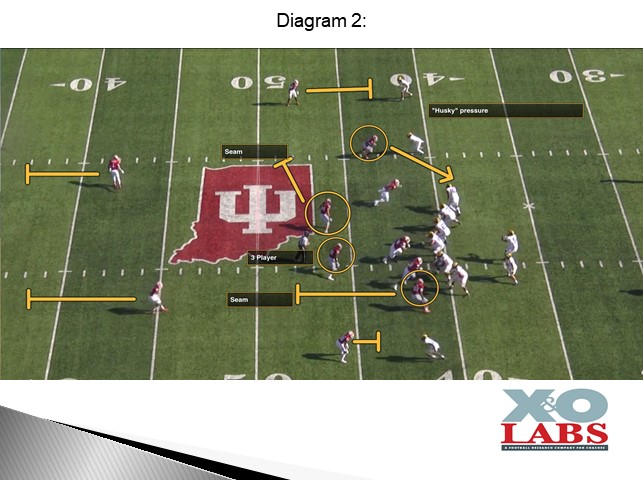
Mike or Stinger Pressure:


Husky (Nickel) Pressure:


They are named after fruits and are built off two common front structures based on the placement of the 3-technique in the Hoosiers four-down outfit.


“Apple”- 3- technique is weak. Tells the 2i technique is in the boundary. Nose must loop for contain when pass develops.

Below are two pictures of either Mike or Stinger Pressure from the Apple front.


“Radish”- Tells the 3-technique to go to the field; Nose must be looper and take the trip for contain.

Below are three pictures of either Mike or Stinger Pressure from the Apple front.


“Melon”- Walks the Mike up as a penetrator and to skin the Nose. It’s a mug look with the intent to steal the Center and Guard.  The Mike takes one up the field and slams into Guard and go up and wrap to steal the Center and Guard. The Tackle is on an automatic wrap.

Below are two pictures of the Mike pressure from the Melon front:


These pressure can all be checked based on “by rules,” either 2×2 or 3×1 formations. In most cases, the Mike pressures in 2×2 and the Stinger pressures in 3×1. Another option is tagging the pressure to the back. All of which is explained later in the report.


Two Deep Pressure Coverage:

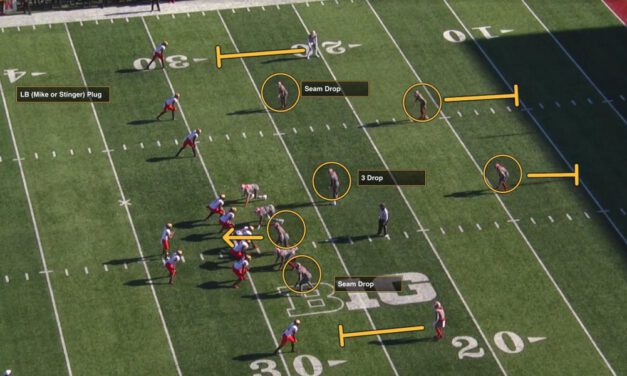
Like all defensive coordinators, we’ll start with the coverage structure. These are two-deep, trap coverage simulated pressures which means that the corners will be asked to play the flat and be in run support. With a four man simulated rush, the seven coverage defenders will lay out in the following progressions:

  • Flat Defenders (2)
  • Seam Defenders (2)
  • Hash Defenders (2)
  • Hole Defender (1)


Of course, who these defenders are will be predicated on the rush itself. As detailed later, the “Bull” or boundary defensive end can often be added to the rush as a fifth rusher based on the formation structure.

The coverage is the coverage, but why these concepts worked so well in 2020 basically comes down to how Coach Teegardin and the defensive staff under defensive coordinator Kane Wommack were able to “steal” defenders in the run game, by alleviating them from pass responsibility. That came in two ways: with pre-snap communication from coverage defenders to trigger blitzes by formation and the post-snap “Center read” principle that was built in for the Mike and Stinger to quickly identify and react off block progressions to get an extra defender in the run game.

The rest of this report focuses solely on these two important distinctions.

Read More

A-Gap Distortion: Man Blocking the Tight Zone Concept

By Mike Kuchar with Brian Gabriel
Run Game Coordinator/Offensive Line Coach
Monmouth University (NJ)
Twitter: @CoachGabeMU


As a high school coach in New Jersey, I’ve been well versed in the success that Monmouth University has had running the football the last several years. Guided by perhaps the longest tenured coach at the FCS level in head coach (29 years) in Kevin Callahan, the Hawks continually are at or the near the top in several offensive categories. And the last couple seasons were no different. The Hawks tight zone concept- the top run scheme in its menu- averaged 7.8 yards per carry in 2019 and 7.6 yards per carry in 2020.

But how they’ve built their tight zone scheme is what makes it so efficient. Back in 2019, the offensive staff under the direction of coordinator Jeff Gallo made a conscience choice to separate the scheme into two separate concepts:

  • Front side exchange (“Atlanta”) which is a wider exchange where the aiming point is the inside leg of the play side Guard. Here the read is defined for the running back with the intention of tracking second level defenders. It’s a zone scheme until leverage (on the point) takes you back.
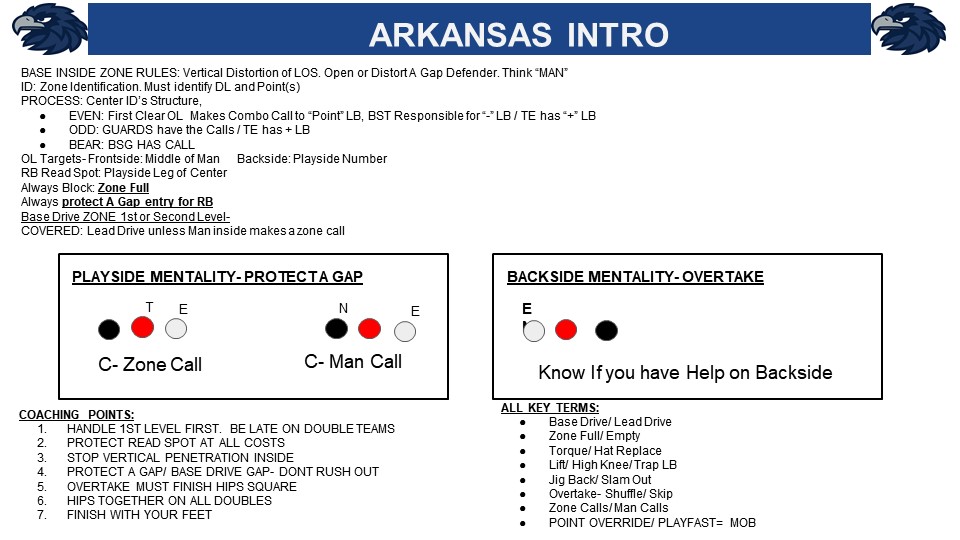
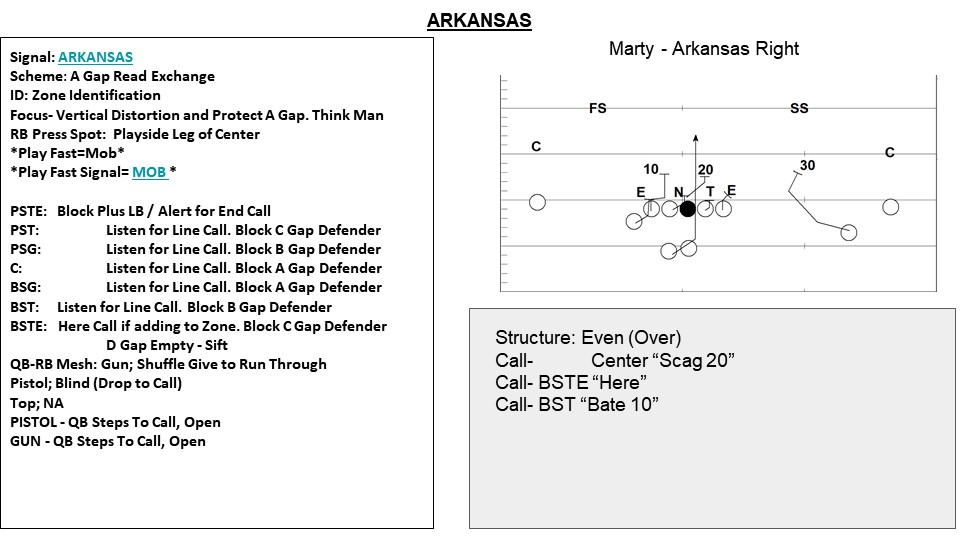
  • Backside exchange (“Arkansas”) where the Center’s leg is the target in a much tighter exchange. The ball carrier gets the ball in the backside A gap but must get to Center’s play side foot as an aiming point until they get a clear read. It’s a man scheme unless the point takes you to a zone scheme.


They’ve made a conscience chose to major in the latter and it’s helped in displacing A gap defenders, which need to be handled in tight zone runs. I spoke at length with offensive line coach/run game coordinator Brian Gabriel about why he’s decided to make the shift. He told me that now he doesn’t ask his linemen to cover defenders up. Instead he defines the gaps for ball carriers. “We’ve gone away from the old school mentality of just covering people up and letting the back run,” he said. “Instead it’s become more of an iso mentality now because it’s all about protecting the A gap and displacing that defender. We don’t emphasize looking at LB’s, those downs (lineman) will get you first. So, now we try to just open gaps.”  He says it’s helped in providing accountability in making the play efficient. “It becomes a missed assignment for the offensive line and not the back,” he said. “We never want to say the back read it wrong. We have to define it for him.”

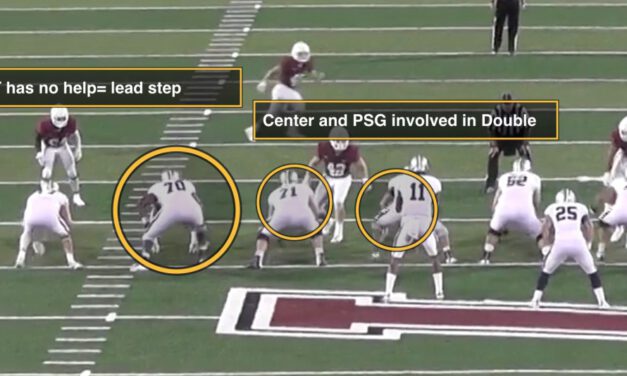
This report focuses on the identification system Monmouth uses to block various fronts in the Arkansas concept and the specific techniques that Coach Gabriel uses to help define those gaps for the ball carrier in its tight zone concept.
Read More