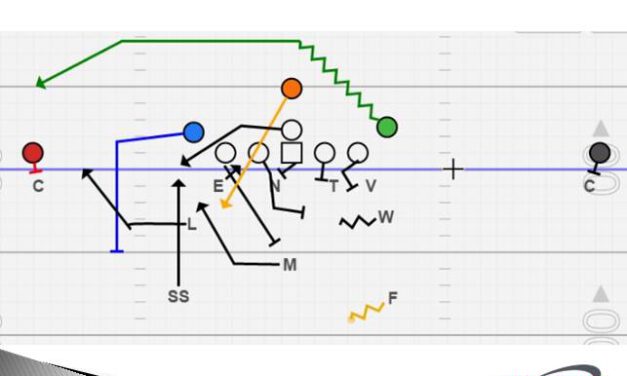



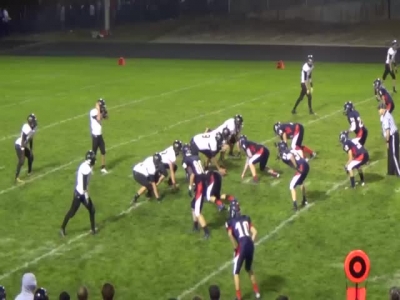
Shotgun Buck Sweep RPO Package
By Eric Davis
Head Football Coach/Offensive Coordinator
Mankato East High School (MN)
Twitter: @davismn6
Introduction:

Like many programs, one of our off-season tasks as offensive coaches is to conduct a thorough efficiency analysis of every scheme we run. Our definition of efficiency is not revolutionary, but here is our definition:
- 4+ yards on 1st Down
- Half the needed yardage on 2nd Down
- Conversion on 3rd Down
Following the 2014 Season, we realized that one of the plays we installed late in the year, the Buck Sweep, was by far our most efficient play at 86% (albeit a small sample size). Since anything over 50% is good and anything under 40% poor, we were ecstatic to see the numbers on the Buck Concept.
Entering the 2015 Season, we made the Buck Sweep one of our staple plays. Thanks in part to some ideas we picked up from xandolabs.com, we added a Run Pass Option (RPO) component to the play and this is an idea we will definitely be expanding upon in 2016. The case for running RPOs off the Buck Sweep include:
- It creates tremendous horizontal pressure on the defense with full flow, including pulling linemen, one way and a potential pass being thrown the opposite direction. Also, we have found that the QB is able to get into a throwing position much easier after faking to a back running a horizontal path on the Buck Sweep than on some of our more vertical run schemes.
- It should NEVER result in an ineligible man downfield if it’s run correctly, due to the fact that your linemen are either pinning or pulling and not (with one exception on one scheme) heading directly downfield for a LB.
- It is a great concept for a program (like ours) that is better at run blocking than pass blocking. Due in part to an increase in RPOs on several of our run schemes, we reduced our sacks allowed from 32 in 2014 to 8 in 2015, including no sacks allowed on RPOs. The concept also allows us to package 2 plays together, which allows us to repeat plays with multiple attack points in our no-huddle and limits the number of plays we need to carry into a game.
One note on the following schemes and concepts: Last year we were inexperienced at QB, so we made the run/pass decision from the sideline, but we may look to put that on the QB in the future.
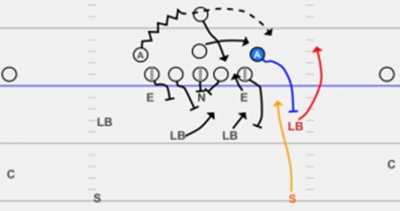
Basic Buck Sweep Schemes
Some of the position labeling in the following diagrams may be confusing. We don’t use traditional X and Z designations. Instead, we have Field (F) and Boundary (B) receivers. We also use what we call Big Field (BF) and Big Boundary (BB) receivers in our compressed formations. These are hybrid players and could be bigger receiver types or extra TEs. It’s a great place to put basketball players who might not be burners, but aren’t afraid to mix it up a little. Our H receiver is a traditional slot type who is our primary fly sweep runner.


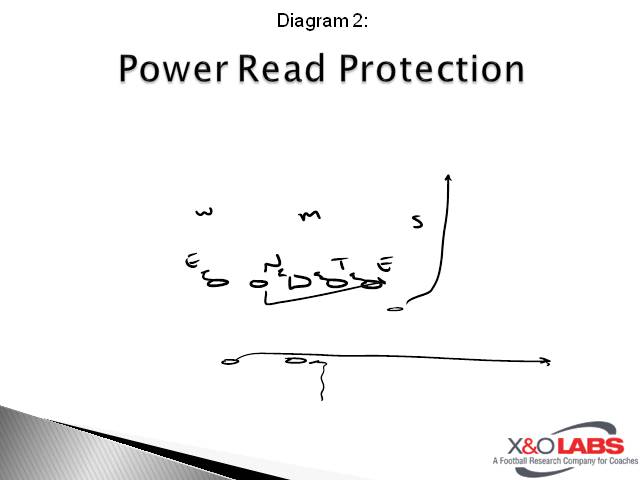
 As part of our multiple spread offense at Catholic High, we incorporate multiple formations and personnel groups to run a base set of plays. One of our most popular running plays is power from a traditional 2×1 set with an H or sniffer back. This past season, we incorporated more speed sweep into our running game as well. When looking to add some play action to our base system, it made sense for us to have a run action pass that looked exactly like our power, power read, or power read sweep. We wanted the concept to be simple for our quarterbacks to understand and versatile enough to attack any coverage. Our answer was a quick game concept that we had already been running. We made adjustments to our basic bubble slant concept so that we could use it in our play action game as well.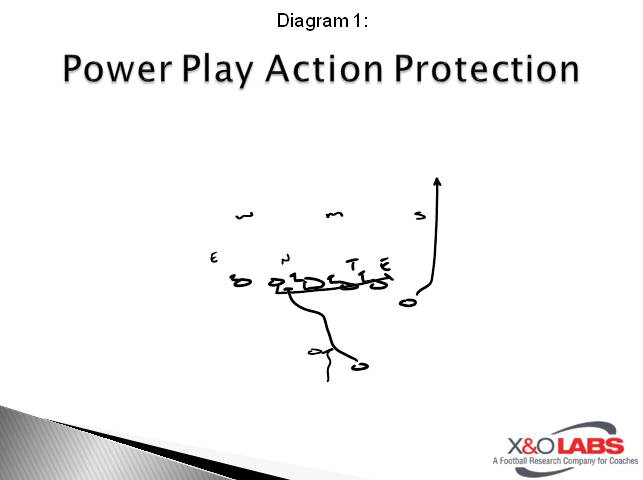
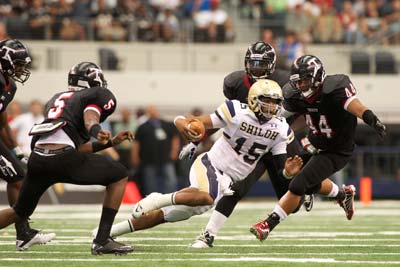
 The buck sweep is one of our top four run plays every year at Shiloh. We run power and outside zone that helps complement this play as well. We always try to put the defensive ends in a bind. We want to show them several different looks throughout the game. On the power, we’ll kick the defensive end out, and then try to get the edge on him and hook him on the buck sweep. Then we’ll also zone him up on our outside zone. We will do all these out of similar formations so that we give the same look.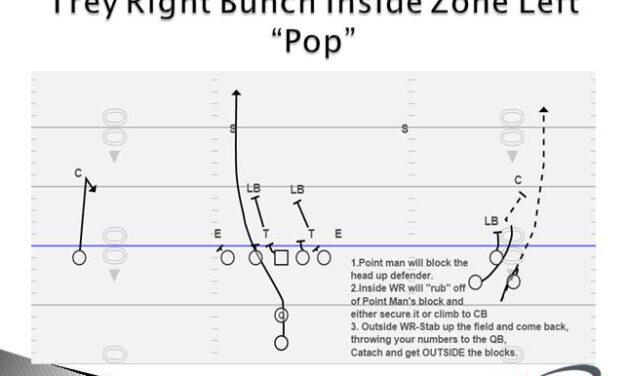
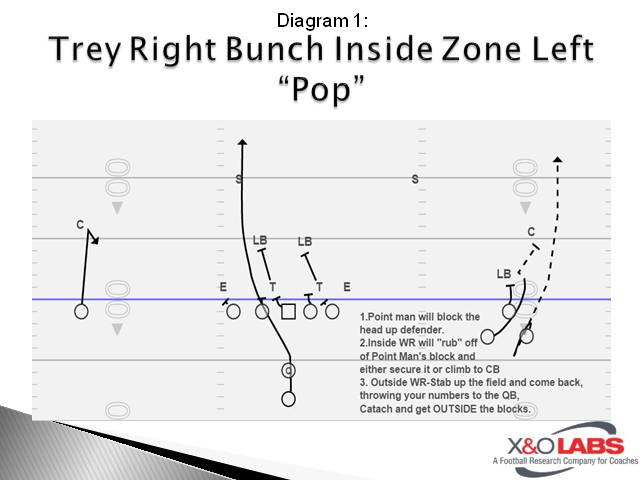
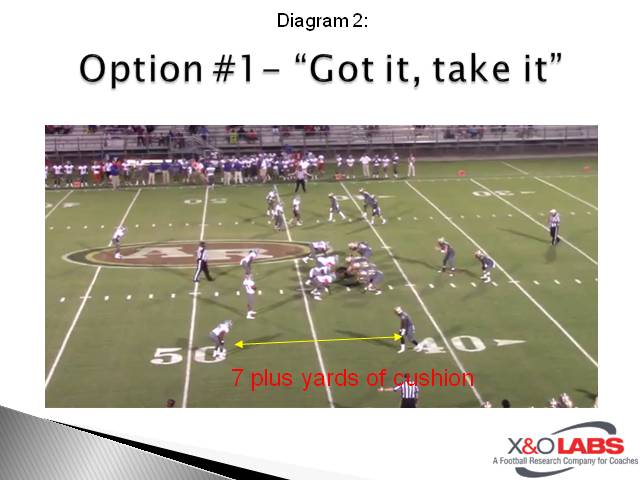
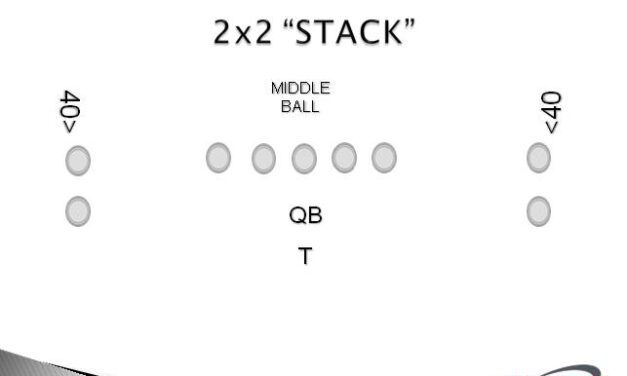
 Our “Stack” and “Stack Extend” concept is something we benefited greatly from in our spread no huddle offense in 2015. The alignment and built-in manipulations (RPOs) packaged with our read game allow us to severely stress safeties and overhang players both pre and post snap.
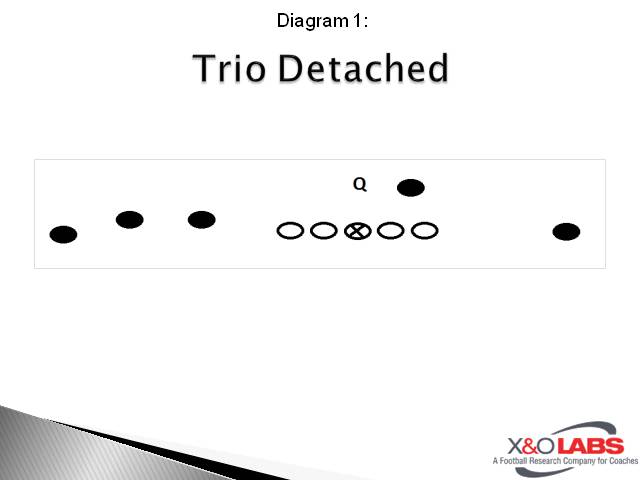
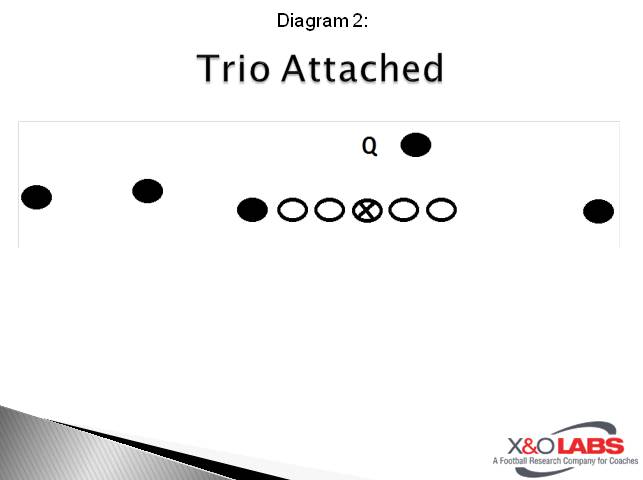

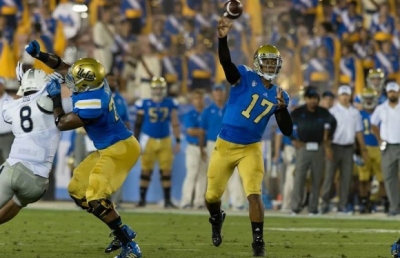
 When we first began conducting research on Quarterback development, we cast our net wide. We wanted to explore every component of the position: exchanges, drops, read progressions, throwing mechanics, etc. What we quickly found is that it be difficult to write volumes on this topic, much less a 10,000-word research report like XandOLabs.com is accustomed to doing. So we decided to subscribe to the “addition by subtraction” methodology by simply honing in our research on what a QB does at the top of his drop. How he gets there is one thing- now what does he do when chaos ensues, and whatever well organized scheme or plan flies by the waste side. Many coaches have told us that the easier part of a QB’s footwork progression is the drop, the most difficult is teaching him to move with the ball post-snap.