



Defending Option and Gap Schemes with the Bear Front
By Kai Smalley
Head Coach/Defensive Coordinator
Snohomish High School (WA)
Twitter: @fbcoachsmalley
Introduction
I have been fortunate enough to play for and work under some great defensive coaches which has helped me develop my defensive philosophy. The first coaching job I received out of college was as a defensive line coach under a coordinator that based out of the 46 Bear. I spent two seasons learning the adjustments and nuances of the defense. Two seasons later, I was hired as a defensive coordinator and I have been using it since. Though it has never been a base defense for my teams, the bear has remained a mainstay adjustment in my defensive playbook. It is always in our spring and summer installations so that we can use it and rep it any time and not have to spend valuable practice time during the season to teach a “new” front.
Adaptability
The architect of the 46 Bear defense, Buddy Ryan, developed it to create an 8-9 man front and outnumber the offense, especially on the strong side of the formation. Originally the Bear was used in 4-3 personnel, since becoming a defensive coordinator I have based out of both even (4-3) and odd (3-4 and 3-3) fronts. Each front allowed me to get to the Bear front. As offenses have evolved the Bear defense has had less of place in most schemes, but we still see plenty of 21 personnel and other run heavy sets that the Bear is designed to stop.
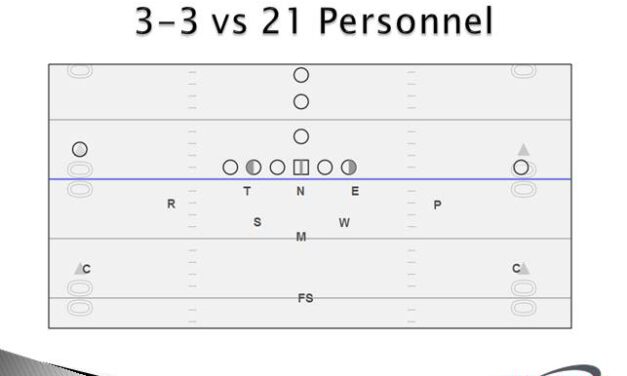
At Snohomish, we base out of a 3-3 stack. Throughout the season, we will see several different offensive schemes, the 3-3 has allowed us to be flexible enough to adjust to the offenses we see. We have found that the 3-3 has been the easiest to shift to the Bear. This is mainly because the personnel and positions allow us to make the correct adjustments without having to teach to many different / new techniques.
Base Alignments for the 3-3 and the Bear
The charts and diagrams below list how we align in both our base 3-3 front as well as our Bear front. The whole purpose of using the 46 Bear is to get 8 or even 9 players in the box to stop the run, so I have listed the base alignment and run fits below.
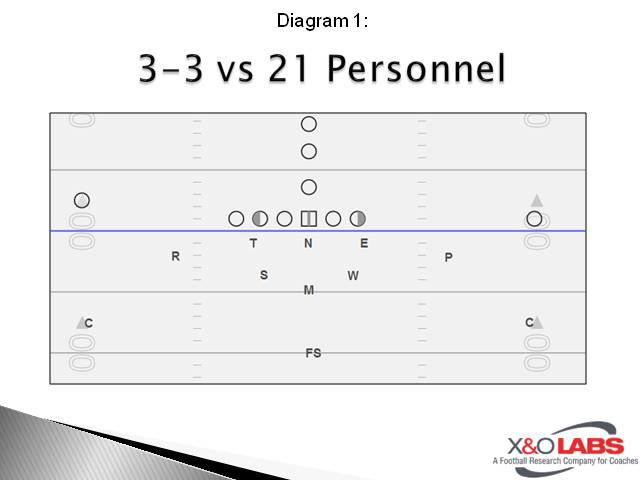
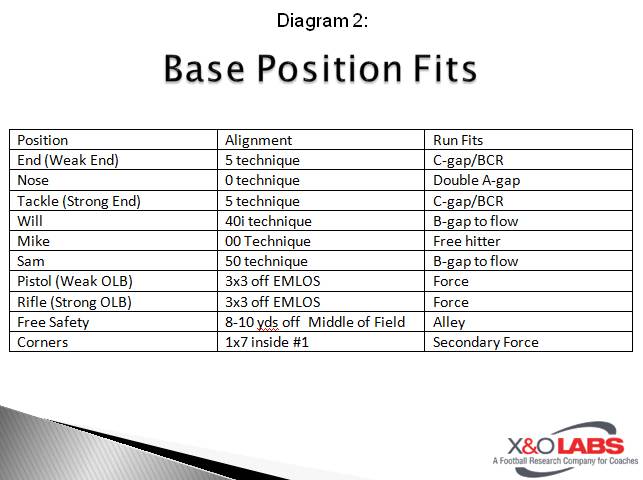
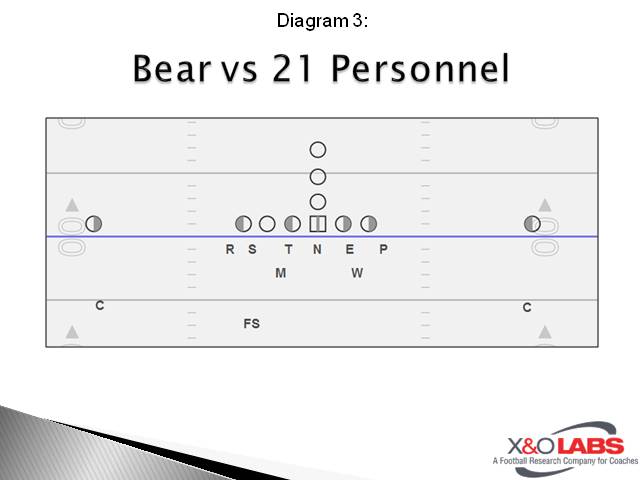
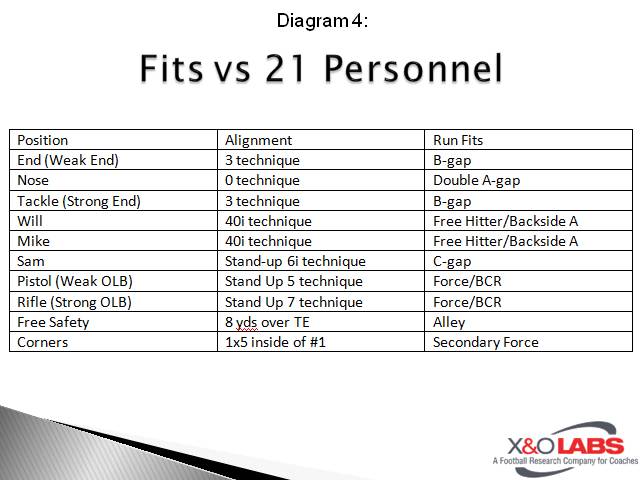
The alignments and assignments are similar for each position which keeps new teaching to a minimum. This allows us to be able to teach the basics of alignment and assignment without having to treat it like a different defense altogether.
- The Tackle and End both practice playing 3 technique players in our 4-man fronts, so their jobs are easy to teach.
- The Nose is always a two-gap player so his job remains the same in both fronts.
- The outside linebackers remain force players, just walked up outside of the offensive tackle to the weak side and the tight end to the strong side. We teach and work on force technique everyday with our outside linebackers in the 3-3, so this is a simple transition.
- The Mike and Will remain inside linebackers. The Mike and Will play a back out to their side. The Mike takes #3 to the strong side and the Will takes #2 to the weak side.
- The Sam, who is usually our bigger, more physical inside linebacker is used as our fourth man when we reduce to a 4-man front. He plays the same way in Bear and is a C-gap player.
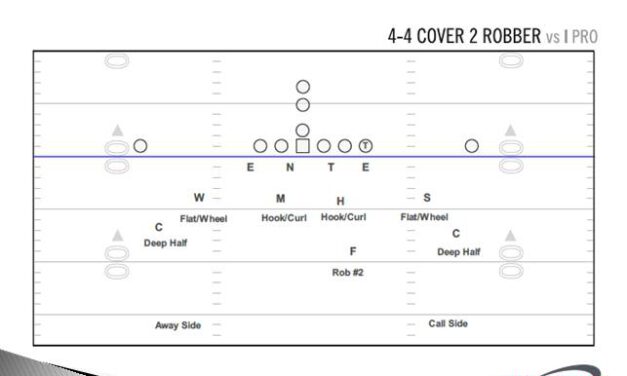
- When we are in the Bear front, we play primarily running cover 0. The Corners are responsible for coverage first.
- The Free is also primarily a pass player, but we will play him closer to the line of scrimmage than normal because we are jamming the tight end on the line with 2 players. This allows him to insert in the run game quicker.
- Our Corners know they have no help and must play tight man coverage.
Keys, Reads and Rules
Defensive Line:
The Nose will play off the block of the center. His job is to never get reached, meaning he will play off the block of the center and work his body into the appropriate A-gap. The backside A-gap can be covered by the backside inside linebacker. He will also be getting double teamed so he must be able to either split the double team or eat up the blocks.
The Tackle and End will play in a heavy 3-technique and key the guards block. They have two rules playing this position:

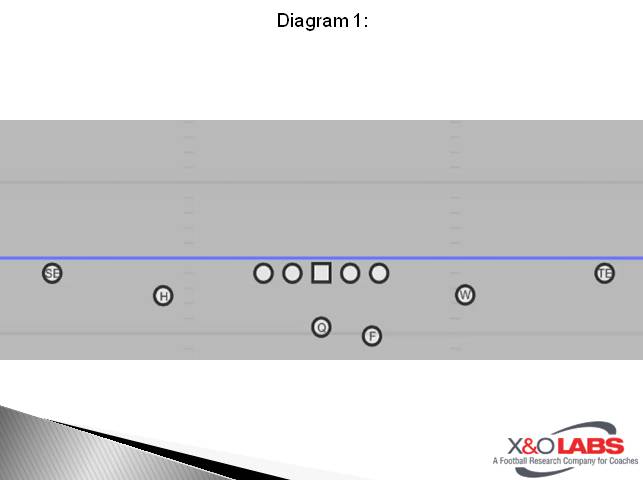
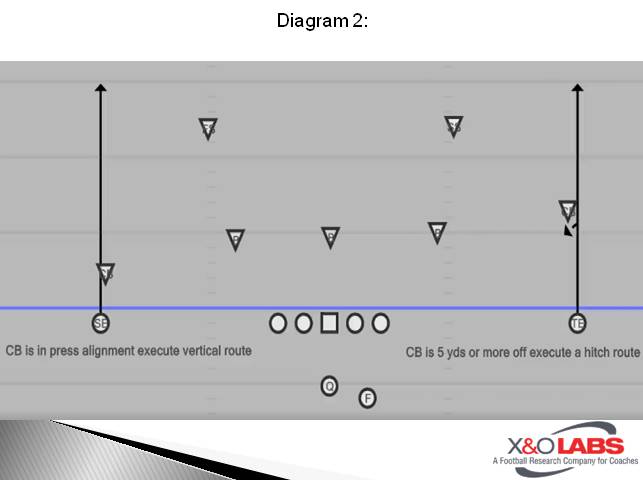
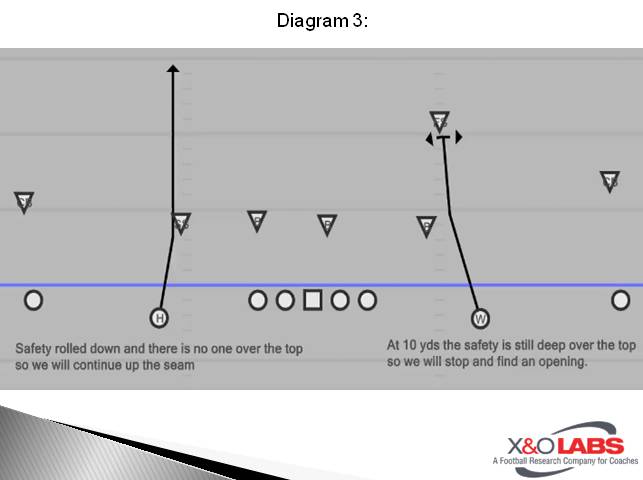
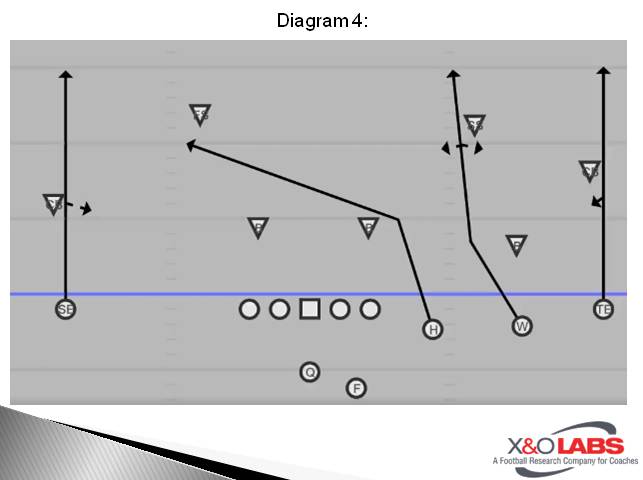
 In today’s game, everybody runs some version of play-action pass to match their desired run game. For us, being an Inside/Outside Zone & Power team, the ability to effectively run our Power Pass has been instrumental in our offensive success. Especially in the red-zone, the Power Pass concept for us is one that we have leaned on a lot for great success throwing the football inside the 30 yard line. Where I think we have done a really nice job over the past 6 years is being able to take whatever it is we are running that week in terms of formations, and fitting our power pass concept to those same looks to better eliminate any tendencies we might show in our formational play calling from week to week. We run Power 3 different ways: 2 Back, 1 Back, and QB power. The trick for us is to be able to install the base concept for our Power Pass in such a way that no matter what the formation we run it out of, our guys always know what the base concept looks like and can adjust accordingly from there.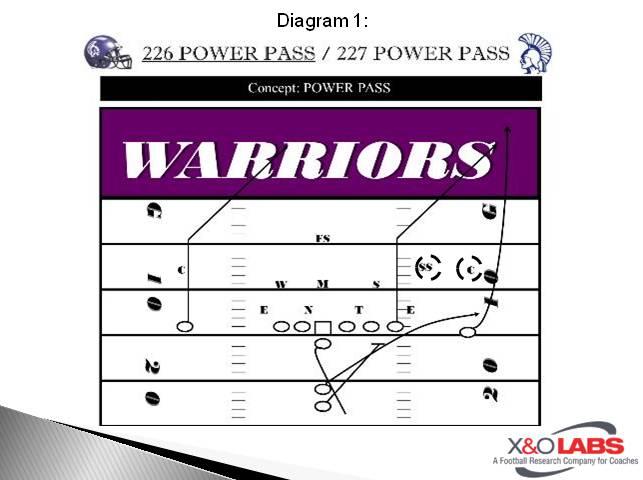
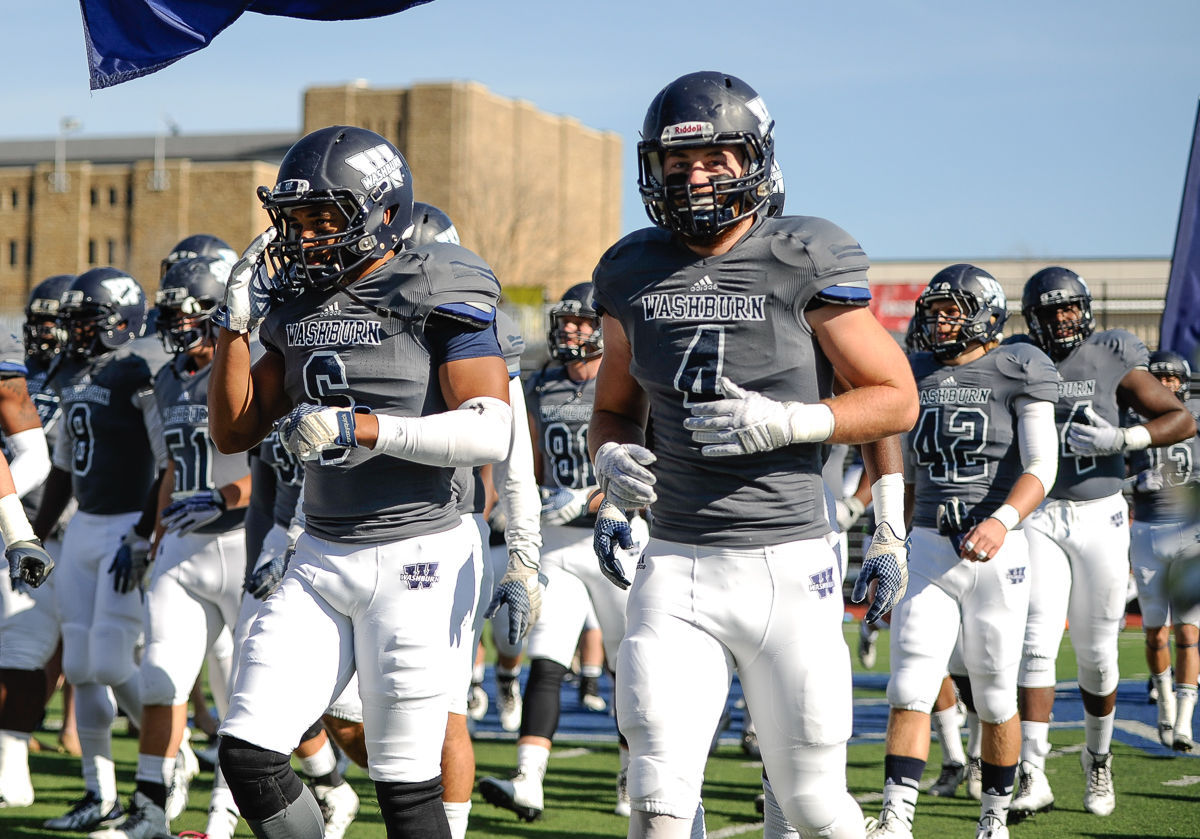 Our coaching staff here at Washburn University believes that special teams can win or lose you two games in a season. This belief held true for us in the 2016 season. It might be a missed extra point, kickoff return TD, or the kickoff team pinning the opponent deep in their own territory, but each unit has a responsibility to the team to win their play and help win the game. As I always tell our special teams units, “field position is the purpose of special teams.” No unit has a greater task of flipping field position in our favor than the punt team.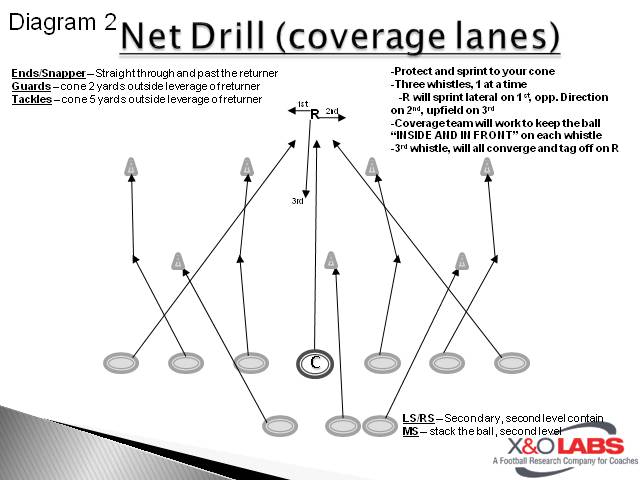
 Introduction: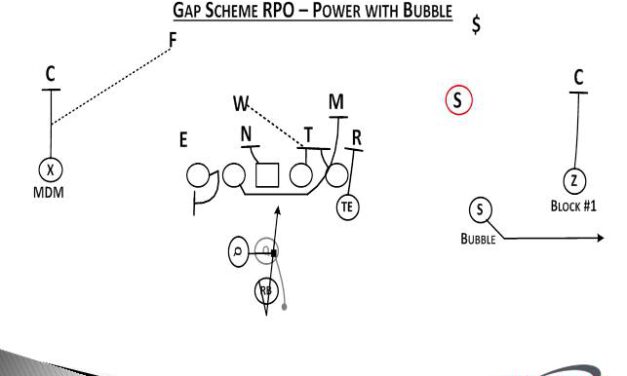
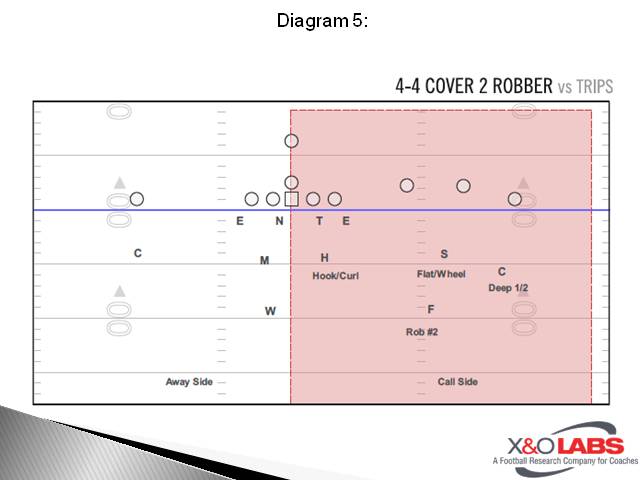
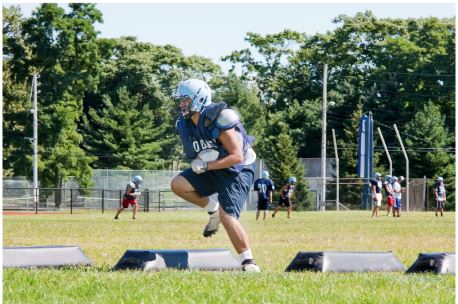

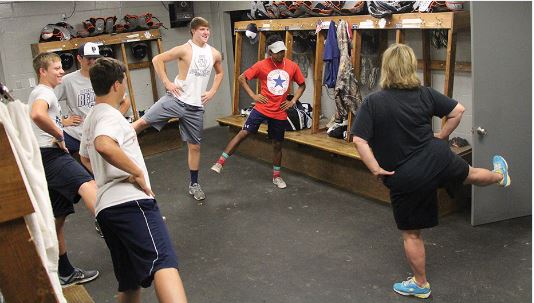 “Our program is spearheaded by our OL coach… our district Strength and Conditioning Coordinator…and myself the head coach. We feel the three of us together bring a varied approach to Strength and Conditioning…[One] Powerlifting, [another] HIIT/CrossFit and Flexibility, and myself the football aspect. This allows us to throw everything on a wall and see what sticks. It allows us to create varied programming based on three fundamentally different strength approaches, but we always make sure that there is on-field application for everything we do.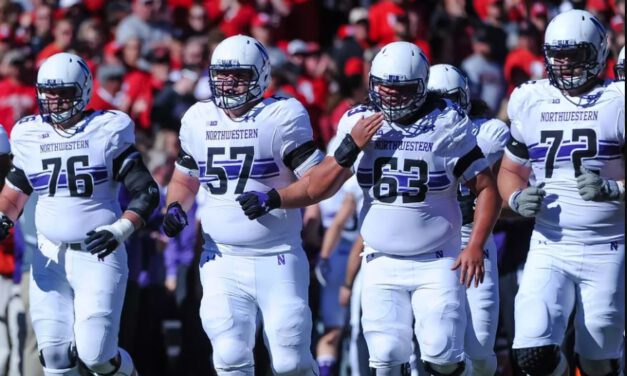
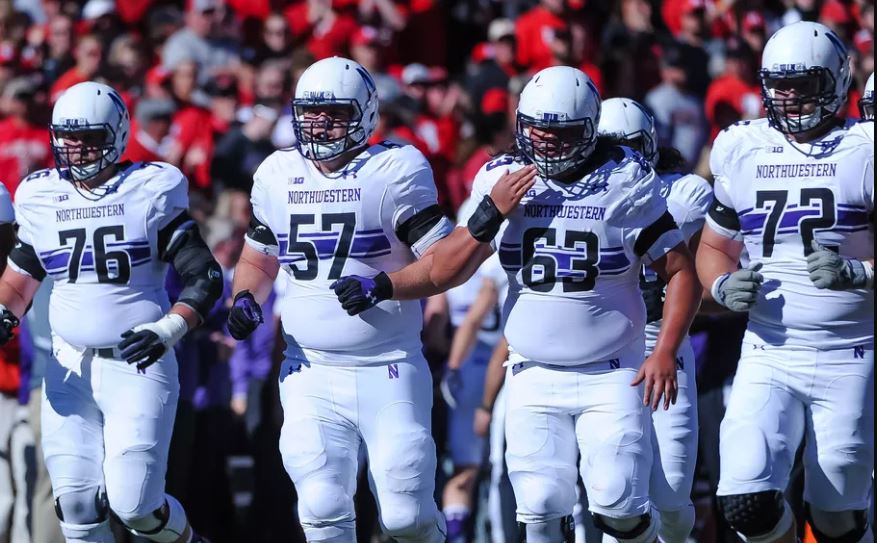 It was directly after the 2015 season when Northwestern offensive line coach Adam Cushing felt he needed a change. That season seven snaps negatively affected the outcome of the offensive play, including one that turned into a pick six. So he did what most good coaches do, scoured the earth to find better information on how to make the shotgun snap more efficient. So after consulting with offensive line coaches at all levels he decided to invest fully in the dead-snap shotgun technique, which compromises speed for accuracy by eliminating the wrist flick of the center.