


Zeeland East Counter Variations and GT Read Play
Head Coach
Zeeland East High School (MI)
Introduction:
Our Counter and Counter Trey (GT) variations represent two of our core gap scheme run concepts at Zeeland East High School. We utilize these two blocking schemes out of a variety of formations and backfield action. In some instances, we attach an RPO to the play to protect the box from second level defenders squeezing the play. Additionally, our GT read concept allows us to block one less defender in the box and also provides significant challenges to second level defenders that have been taught to read pulling lineman. This concept also slows defensive linemen that have been taught to chase pulling linemen down the line of scrimmage. These two schemes have been very successful for us as part of our spread run game and have continued to evolve over the last 8 seasons.
Quarterback GT Concept
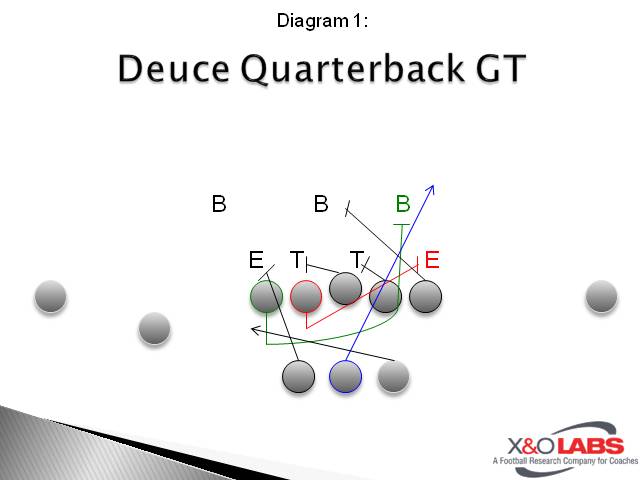
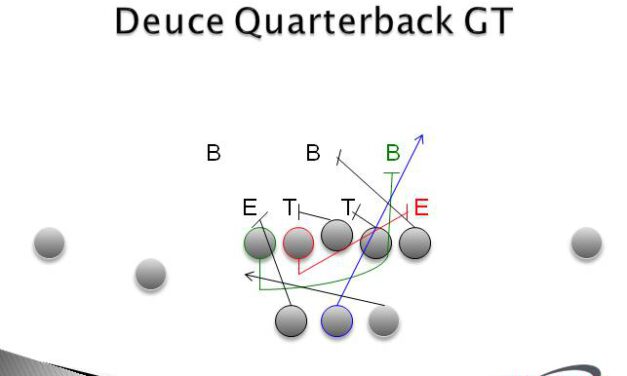
Our Quarterback GT play began as a pre-determined play with no read. Our backfield simply faked our stretch play to provide misdirection and the quarterback ran the ball on an A Gap track behind the pullers.
We have always felt two backs in the backfield allow us to run the ball more effectively and 20 personnel gives us a real advantage with this concept. We have evolved into more h-back sets because this allows us to add a hat wherever we want him to fit in the blocking scheme. We can cross flow him post snap or leave him on the side he aligns giving us more misdirection and, at times, pushing the QB to third in the order of threats in the backfield.
Deuce GT Read
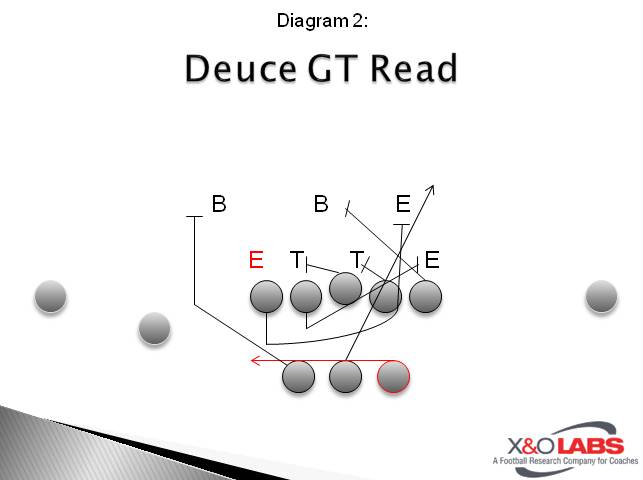
Over the past couple seasons, the quarterback GT play evolved into a read play in our offense. This helped combat defensive linemen chasing the pullers and second level defenders keying the pulling lineman. The quarterback reads the backside DE and either hands off the ball to the sweeping running back or carries the ball behind the pulling lineman into the A Gap. We tell the quarterback that he is to give the ball to the back unless the End gets up the field and can tackle the ball carrier. With that rule, any time a defense end squeezes or sits or does the surf technique would result in a give read. This is a quick read and the QB only gets one shuffle to either give or keep. He has limited time as he must stay behind the pulling lineman if he decides to keep the ball. The play has resulted in some big gains over the past couple seasons as it is especially tough on defensive ends that are taught to chase pullers and second level players reading pulling lineman.
H- Back GT Read
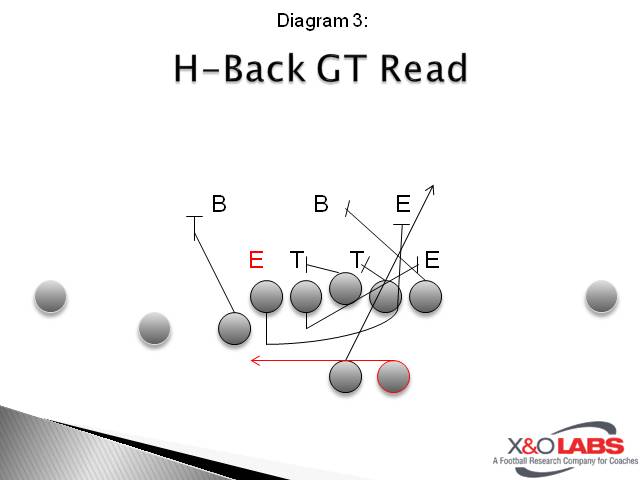
This is essentially the same premise as the concept above, but in this formation we use the H Back to arc block the second level for the sweep while still reading the defensive end. People often ask if we will ever have him slice away from the play side. While I am sure that could work, on this play we always have the H arc block for the second level defender to the sweep side of the play. Our change up has been to invert the play and the running back runs the trey and the quarterback runs the sweep. These plays represent our most effective ways we have utilized our GT blocking scheme
Counter w/ Sweep
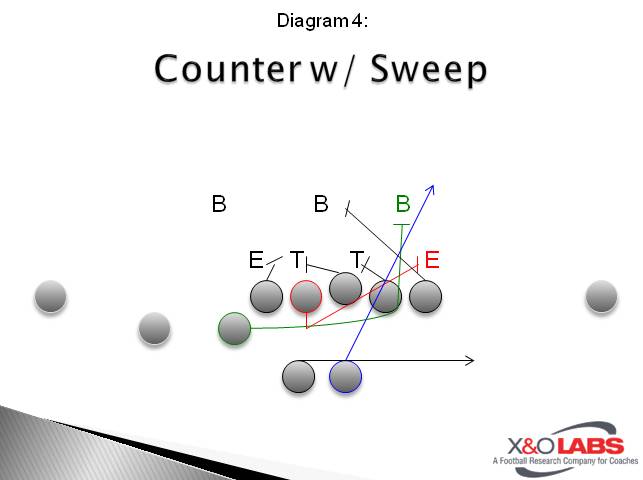
Our most effective way to utilize our counter scheme in 2015 was using the running back as a sweeper fake to put the Defensive End in conflict. On this play, the defensive end has a sweeping back approaching and a guard kicking him out for the counter scheme. The play looks very similar to our power read concept, but instead of reading the defensive end we are kicking him out. We averaged over 8 yards a carry with this concept in 2015.
Counter w/ Bubble
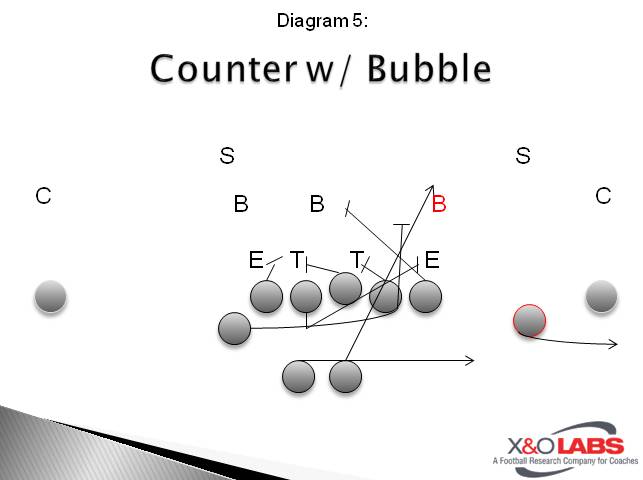
We will also use the bubble to protect the gap we are running in from heavy boxes and squeezing second level defenders. Week to week the quarterback is given a defender to key and read pre-snap. Since there is no run read on the counter scheme, the QB is able to focus on the bubble read even post snap if defenders squeeze the box.
Where we align to run the bubble depends on where we feel we will get a grey area defender that week. This is determined with film analysis. Sometimes it is to the side of the bubble as shown here, but we can also run it away (below).
Counter w / Bubble Away
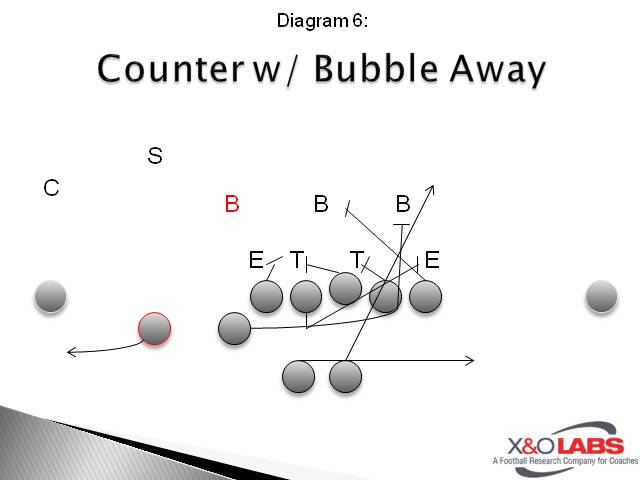
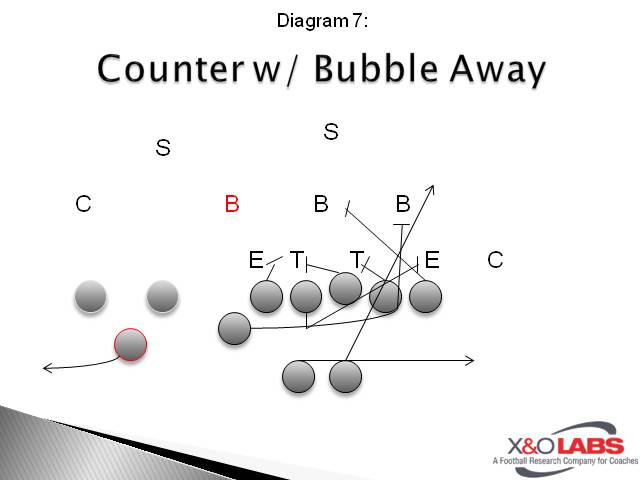
Another manipulation of the defense that we have liked is to overload the wide side of the field with 3 receivers and throw bubble away from the counter scheme . The quarterback counts hats and determines pre snap whether to give the ball on the counter or throw the bubble to the grass.
To study game film of these concepts, click on the link below:



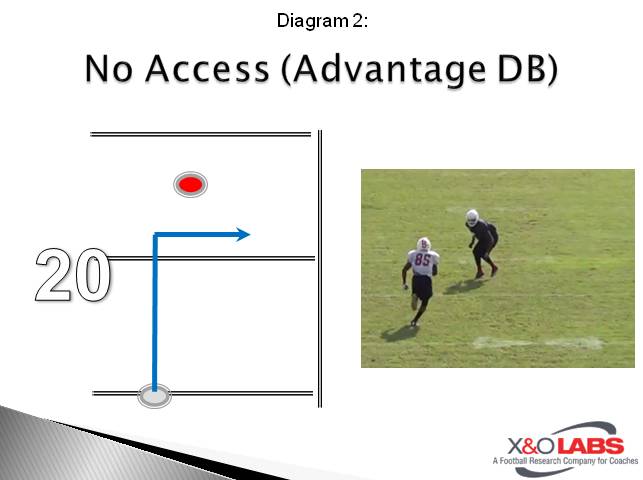
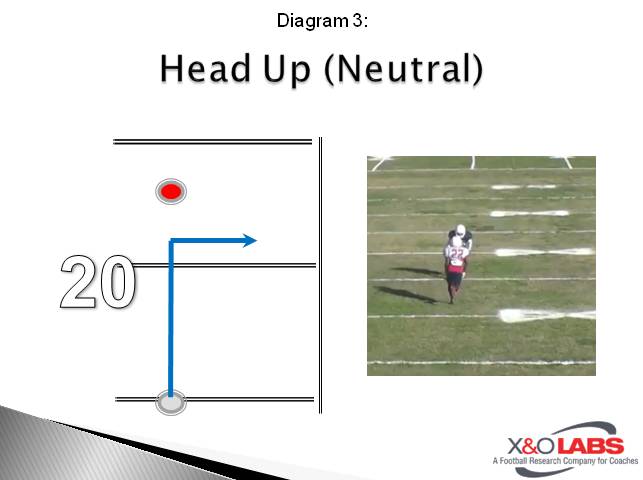
 Getting open or creating separation at the wide receiver position, in one form or another, is often relegated to three simple factors; size, strength, or speed (indeed, those do help). Unfortunately, all of us in the coaching world realize, you are not always fortunate enough to have guys that were born with, or have been able to create, those traits. Today we are going to discuss how coaches who may not have the personnel they desire can still have a chance to win with whoever, whenever by using my systematic approach.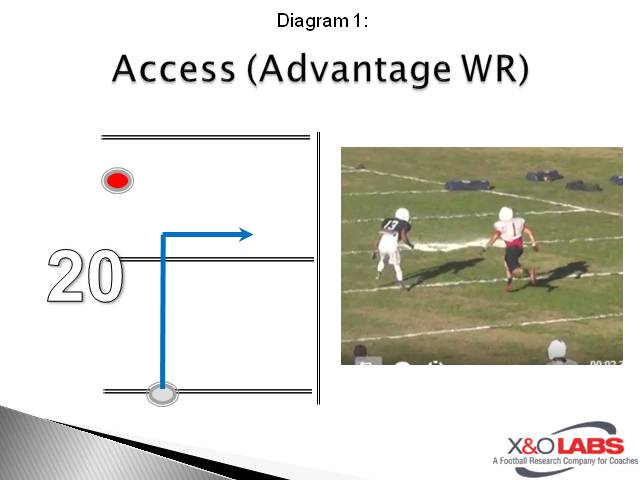
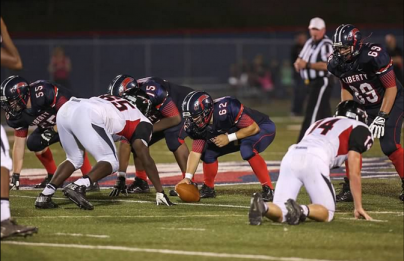
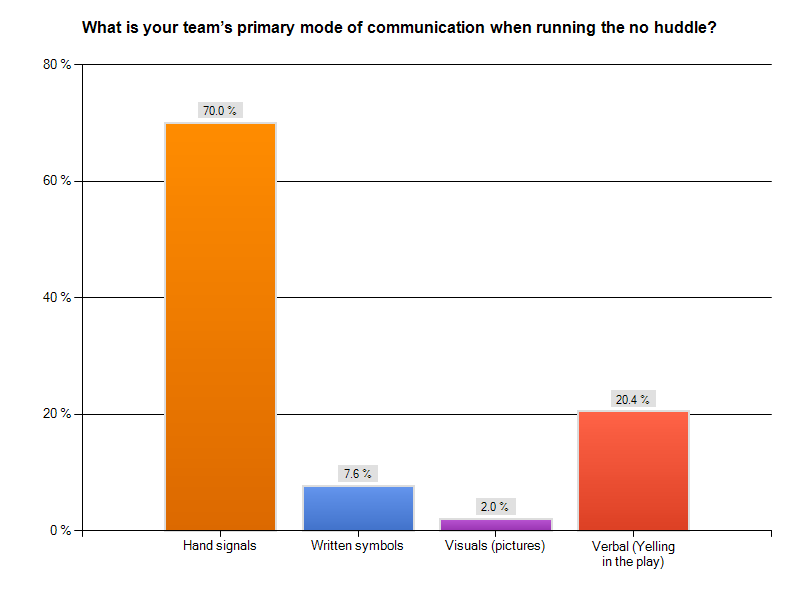
 One buzz word that came up repeatedly in the surveys and interviews we conducted for this report was the word “tempo.” Through that research, we found that this term has different layers of meaning to no huddle coaches depending on what they are trying to do. Here is the working definition we derived from the research: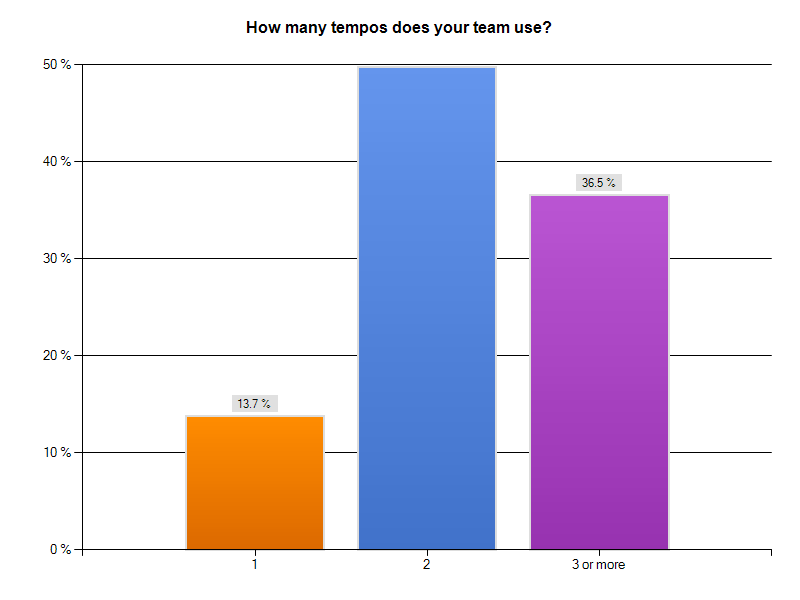


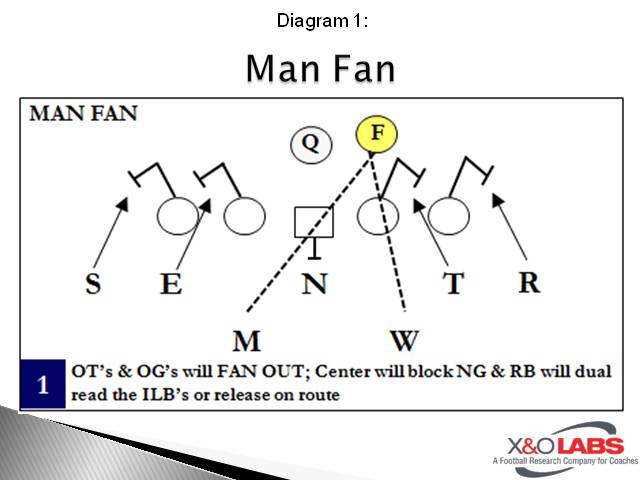
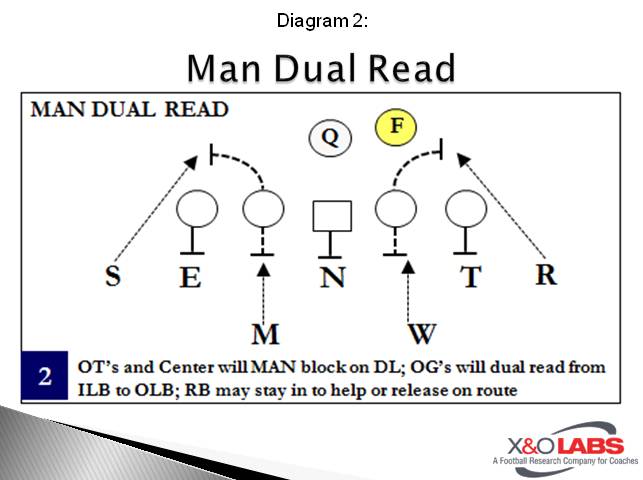
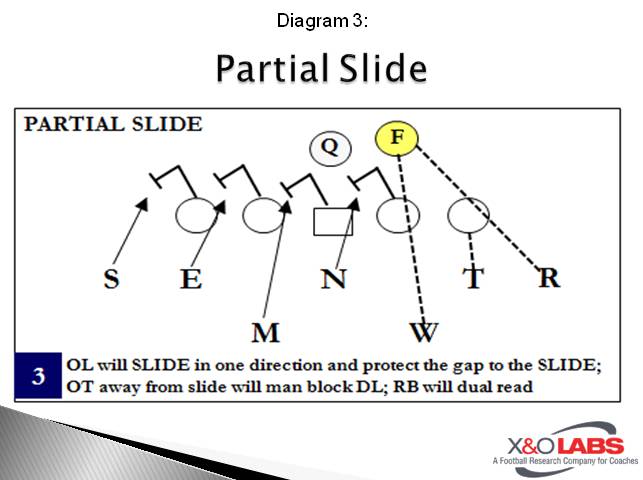
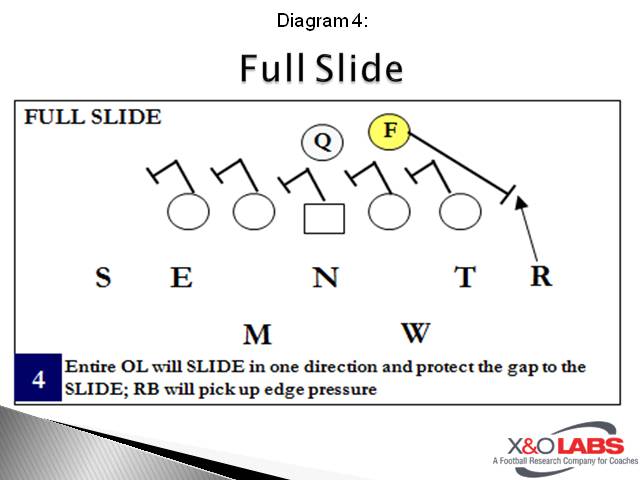
 We are a 3-4 multiple blitz scheme team which means that we will see subtle differences in pass protections to the standard even front static fronts that some teams employ. One of the challenges we have as an odd front defense is identifying the type of pass protection a team is going to use against us. I sat down with Tim Tulloch, the defensive coordinator at San Mateo CC (CA) and discussed this problem. It was after reading his material and discussion with him that we were able to better understand pass protection schemes and how to best attack them.