




By Mike Kuchar
Co-Founder & Senior Researcher
X&O Labs
@MikekKuchar
“It’s my favorite way to run wide zone because you have two gaps moving away from the play at the same time. The Nickel gets caught up looking at the motion, and the minus one defender is caught defending grass. Everywhere I’ve been, I’ve found that defenses can’t fit it.”
- one Big 10 Offensive Line Coach
If you’re reading any of the research I’ve been putting out on wide zone over the last few months, you would know that the play is most explosive when it hits behind the Center. That’s why so many coaches are teaching the back to “tempo the Center,” which means he has to track the backside hip of the Center. In fact, one FBS coach told me the other day that he will go as far as telling the back to wait until the quarterback receives the snap before starting his mesh. It helped the back get the right timing on the rhythm of the wide zone.
And in speaking to all of the coaches that I spoke with regarding wide zone, most of them will tell you that they want the ball to hit the front side. Because that’s where all the big hitters occur. And this week, I’m going to tell you what they are doing to almost ensure a front-side entry point for the back. But before I do, I have to provide some context by telling the story of two programs that have used what I’m about to show you with a great deal of success.
Exhibit A: The South Dakota State Story:
For nearly two decades, North Dakota State was the golden standard at the FCS level. Heading into the 2020 season, the Bison won 8 out of the last 10 FCS championships. So, when COVID pushed back the 2020 season into the spring of 2021, most people assumed NDSU would be crowned again after an abbreviated season. But its biggest rival, South Dakota State, was plotting otherwise. And driving this confidence was something that former offensive coordinator (and now New Mexico head coach) Jason Eck noticed about how the Bison were fitting the wide zone, particularly with motion.
“They couldn’t fit a double-swipe wide zone, and it was obvious,” one of the offensive coaches on staff remembered. “So, every time we played them after that, we would find a new way to run it.”
Simply, a double swipe is a combination of a jet motion by a receiver and a slice action by the tight end. It can be built to the boundary or to the field.
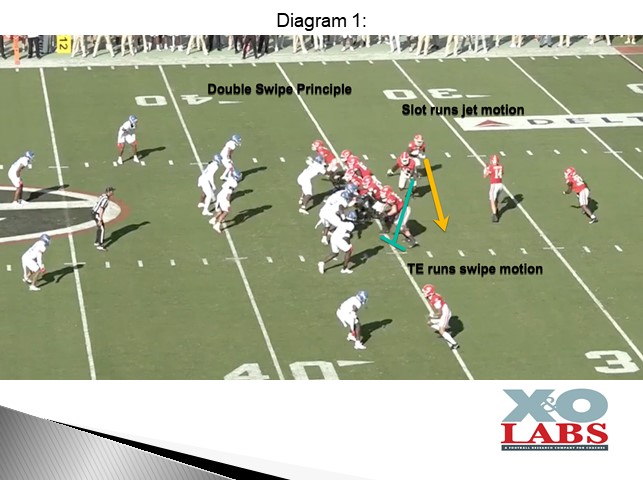
The movement of the slot forced second-level defenders to “rock back” away from the motion, while the cut action of the Y produced enough hesitation in backers for the ball to hit the front side. And if you already know that defenses are going to back-gap your wide zone, then adding the motion element will almost ensure the ball hits the front side. These two elements equate to a front-side entry point for the back, which most of the time equates to an explosive run.
The double swipe motion often forced the backside linebacker to misfit the play, allowing the ball to get pushed to the front side. Knowing this would happen, the Jackrabbits' mammoth offensive line was able to push the point out to a smaller Nickel linebacker, and SDSU rode the scheme to its first victory against NDSU since 2017.
Five seasons later, the “Double Swipe” principle has evolved to become the most explosive way to run a wide zone.
Exhibit B: How Lehigh Evolved It
Lehigh University (PA) has been playing intercollegiate football since 1884, and produced 12 wins last season, one of its best seasons in the history of the school. And it did so by generating over 230 yards a game on the ground. It was offensive line coach Mike Morita who saw the University of Utah carve up defenses using the same concept two seasons ago. So, Coach Morita decided to install these principles immediately in game one against Richmond, knowing full well the Spiders were going to back-gap the split zone action that Lehigh showed them the year before. It worked so well that they used it the rest of the season.
I worked with Coach Morita this past January and talked to him about how he was using these double swipes to put the minus one backer in conflict. Lehigh built in a quarterback run off the double swipe action to really mess with his reads.
Why Double Swipe? A couple of reasons:
Reason 1: The Data is the Data:
Most explosives occur when the ball is inserted from the play side B gap to the backside A gap. This was a completely different perspective than the “circle the defense” mantra that surrounded the philosophy in the wide zone. While it was proven that wide zone hits best when run north to south, the question became how coaches are getting that to happen. If you want to generate explosives in wide zone, you’re going to want the ball to insert from the play side B gap to the backside A gap. And…running double swipe significantly increases the chances of that happening! I analyzed 1507 total wide zone runs from the 2025 football season. Many plays came from the top 20 programs at the FCS and FBS level who were most efficient in the wide zone, including UCONN, Cincinnati, Montana State, Lehigh, Nicholls State, Notre Dame, South Dakota, etc. I found that 537 of those runs generated explosivity, which were runs of 10+ yards or more.
Reason 2: The Defense Only Has Two Options…And You Have an Answer for Both!
After studying all these cutups, there are only two ways a defense can defend it. And once you know how a defense will defend it, you can build your entire game plan around it. Such was the case with Lehigh last season, which knew that Richmond would back fit the motion. I found that even when defenses disguised the back end, it didn’t slow down the run.
These are the two options a defense has:
Option 1: Backfit the Second Level
When defenses bump or backfit their second level with motion, now the offensive line has to be prepared to “plus” out their count to the additional run fitter. But here’s the advantage: that additional run fitter is typically a Nickel Safety who may not have the wherewithal or size to fit the run game. It’s how many of the programs I talked with are designing these runs- by attacking that Nickel safety and forcing him to be in the fit. They are building these runs from 11 personnel groupings.
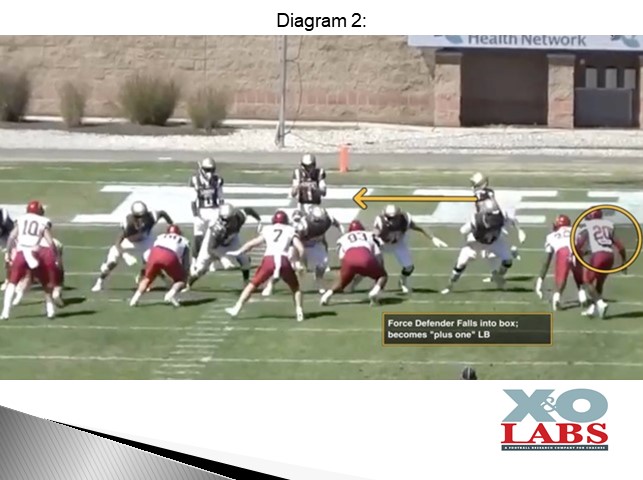
And when offenses build this out of 11 personnel groupings, you get the Will out of the fit and the Nickel (a more finesse defender) in the fit. It doesn’t fit his job description, and something he’s not comfortable doing or practicing.
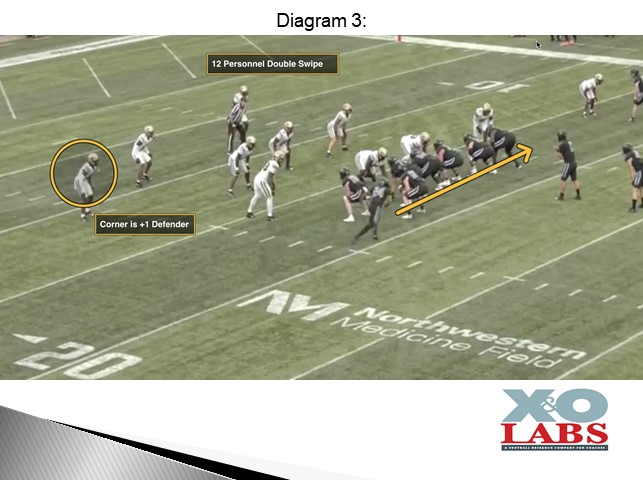
It gets even better when you build them from 12 personnel formations, where now that corner is in the run fit. It’s something that Northwestern did a great deal of.
Option 2: Lock the Box vs. Rock and Roll (or Rotation) Safeties
If a defense chooses to rotate safeties, this becomes an even cleaner picture for the offensive line. Now, they don’t need to “plus out” their point. They can block the box and be thicker on their double teams.
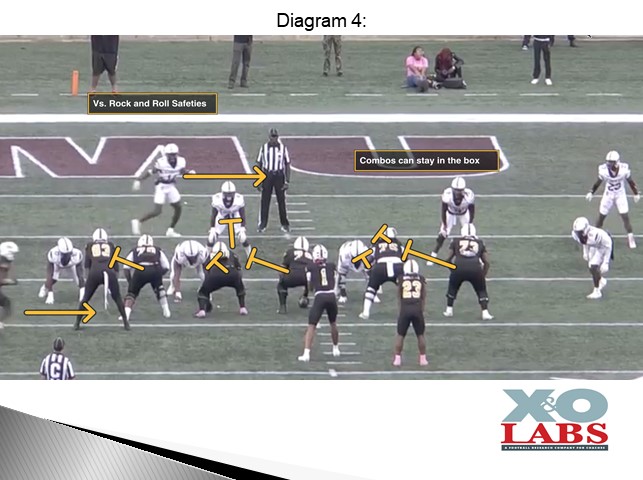
One coach told me, it’s the dream scenario because a defense is removing a support player and “we all love running the ball away from motion.” The safety cannot get involved in the fit.
Reason 3: The Minus One Backer (Will) Becomes Irrelevant:
Here’s where you are going to get the front-side creases that you need to make the play explosive. The combination of the swipe and jet motion forces the Will linebacker out of the fit and away from his gap responsibility in the run game. I’ve studied countless clips of this scheme, and in that Will’s gap is where the play hits.
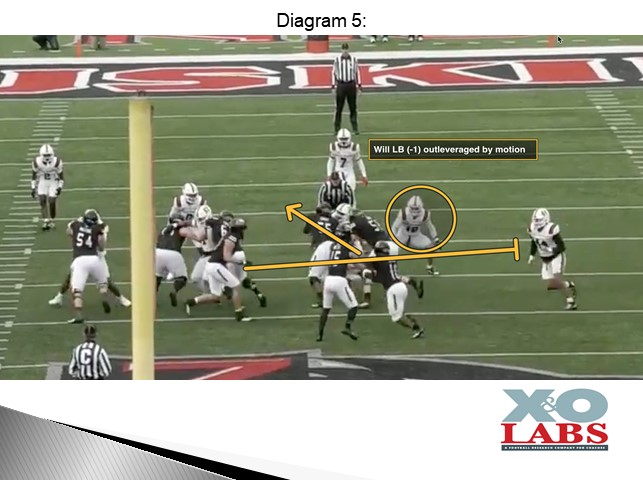
“The Will misfits every time, and your box is clean,” one FBS offensive line coach told me. “You got two gaps moving back at one time, and he’s usually caught defending grass. You don’t need to block him.”
But…there will be times when you can read him. That is something I will write about later in this study.
Reason 4: Greater Efficiency when Used with Formation into Boundary (FIB) Pictures:
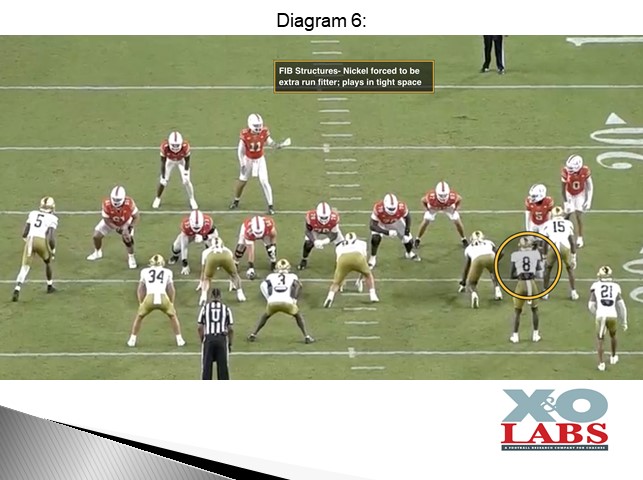
Now, when you go formation into boundary, most defenses will travel the Nickel to the formation strength. And when you swipe the Tight End and motion the slot, it creates more distortion in a smaller area of the field. So, he has no choice but to be involved in the fit.
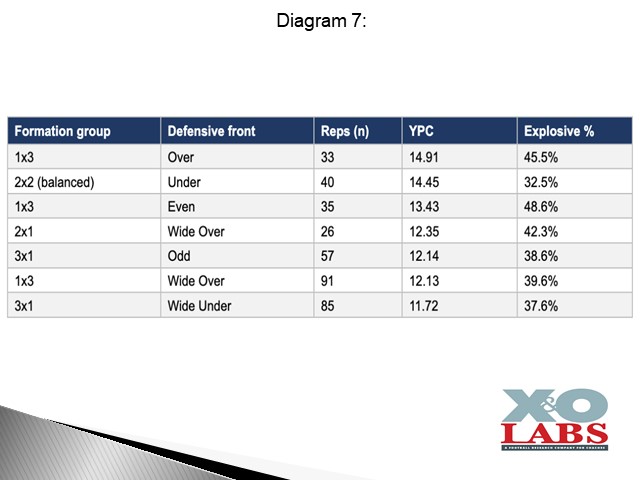
The research dictates that 3x1 wide zone into the boundary generated the highest explosivity rate (14.9 ypc), particularly against Over fronts.
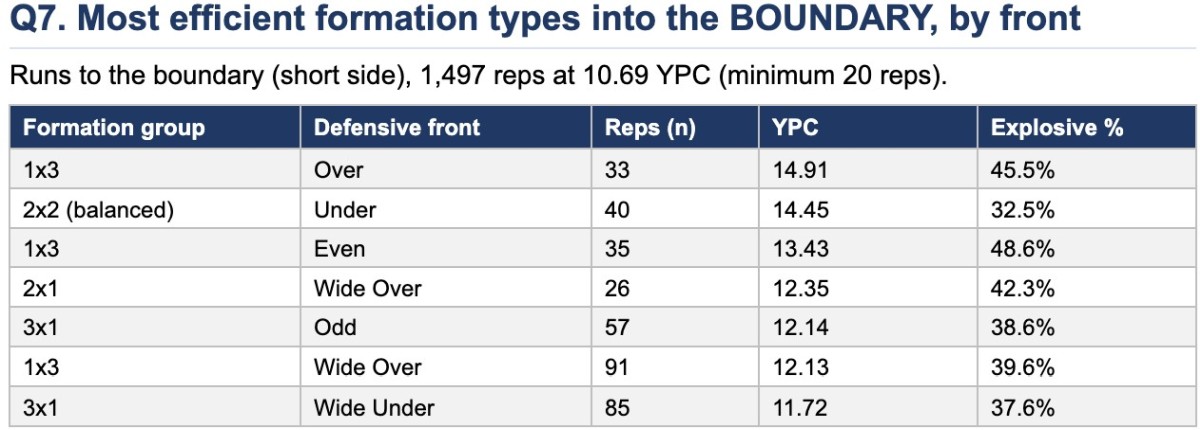
Now, I’m ready to show you exactly how these programs are building these double swipe wide zone runs into their offensive system and how they are accounting for the minus one linebacker so that he is not a factor in the run fit.
Introducing…X&O Labs Install Anthologies: Volume 1: Double Swipe Wide Zone
These Double Swipe principles- including the complementary RPOs built off of them- are included in our Wide Zone Anthology series. It’s a new series designed to prepare you with everything you need to know about installing and utilizing wide zone heading into this season, and it’s exclusive to our X&O Labs members.
You've seen why double swipe is the most explosive way to run wide zone. Now I'm going to show you exactly how the programs doing it are building it into their system — and how you can install it in yours without blowing up your practice schedule. Here's what's waiting for you in the rest of this report:
- The blocking adjustment that lets you account for the misfitting backer without ever blocking him. I'll give you the exact combination rules these staffs teach against both Even and Odd fronts — including the "never turn back" discipline that keeps your line playing fast when the second level rocks away from motion.
- How to deliberately put a "softer" defender in the run fit — and keep him there. There's a specific personnel-and-formation recipe these programs use to force a defender who doesn't want any part of the run game into the fit on every snap. Once I show it to you, you won't unsee it on your call sheet.
- A 6-phase menu of RPO and QB-run build-ins, each rated 1–5 for install cost. From a no-brainer QB run off the swipe (mobile and non-mobile QBs) to first-, second-, and third-level RPOs — you decide how deep to go based on your personnel, instead of buying the whole package and hoping it fits.
- The route progression that a Power 4 offense made its calling card — now trickling down to every level. I'll give you the three-man pattern, who reads what, and the "family" system one coordinator uses to teach his entire RPO tree so a quarterback can run it from memory.
- The two most "expensive" backside answers — and when they're worth it. Quick-game controls and a full triple-option package off wide zone, broken down by the coordinators who built them, so you know exactly what you're signing up for before you install.
- A 7-step installation progression you can hand your staff Monday morning. Base run first, then footwork, then motion as the trigger, then the reads layered by complexity — built from the interviews I did so you're teaching it the same way the programs that own it do.