




By Mike Kuchar
Co-Founder/Senior Researcher
X&O Labs
@MikekKuchar
I’ve been knee-deep in studying wide zone runs over the last two months to track where explosives occur. We’ve even built a self-scout tool that analyzes your data and generates a report shows how explosive your wide zone runs were (and where they were explosive). You can check it out here.
While there were some consistencies in formation design that I noticed- all of which I reported in our previous study - there was one thoroughfare that I kept coming across. Most explosives occur when the ball is inserted from the play side B gap to the backside A gap. This was a completely different perspective than the “circle the defense” mantra that surrounded the philosophy in wide zone. While it was proven that wide zone hits best when run north to south, the question became how coaches are getting that to happen.
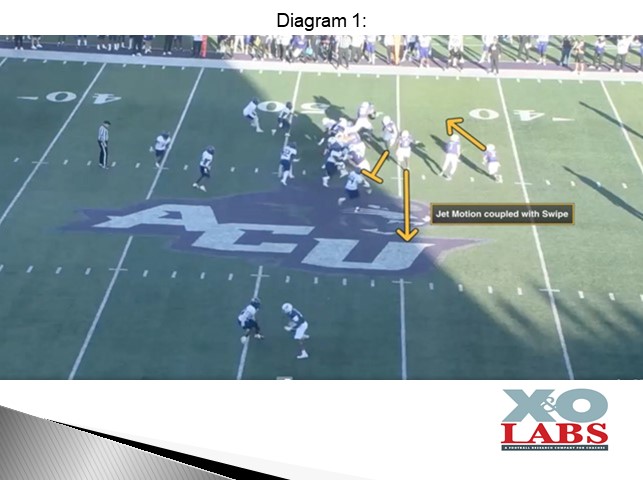
After much studying, I found the answer- it was combining wide zone principles with swipe and jet motion, thus the term “double swipe.” The movement of the slot forced second-level defenders to “rock back” away from the motion, while the cut action of the Y produced enough hesitation in backers for the ball to hit the front side. And if you already know that defenses are going to back gap your wide zone, then adding the motion element will almost assure the ball will hit front side. These two elements equated to a front-side entry point for the back, which most of the time equates to an explosive run.
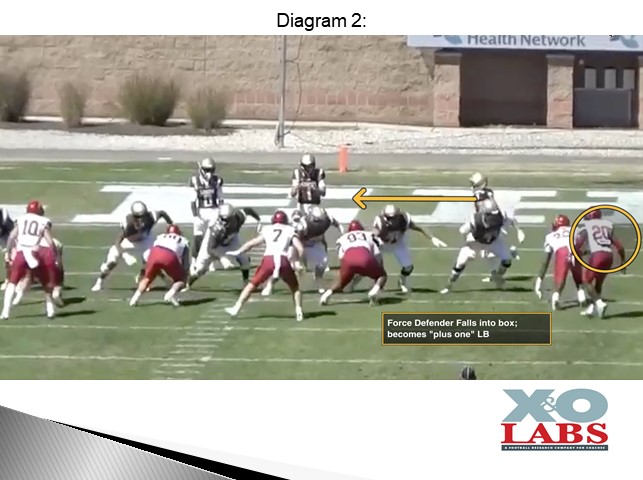
I also found that this principle works best against single gap control, one high defense, where second-level defenders are bumping back into the box against the jet motion. This way, you’re able to target a specific second-level defender to exploit.
I’m going to dive into how these principles are termed, how to teach the offensive line to identify and block past the point linebacker, and how to build in backside principles to make sure you are getting the stretch you need to get the ball to hit frontside. It was an easy build-in for Lehigh, who opened against Richmond this season, knowing full well the Spiders were going to back-gap the split zone action that Lehigh showed them the year before. It worked so well that they used it the rest of the season.