





By Mike Kuchar with Kegan Kennedy
Offensive Coordinator/Offensive Line Coach
Davidson University (NC)
@CoachKKennedy
“Our quarterbacks weren’t burners; but were smart kids who can read the number three receiver. In 3x1 it was a clean and easy read for him.”
- Keegan Kennedy (former) offensive line coach, University of Richmond
If you watched the Richmond Spiders compete for (and win) a Colonial Athletic Association Championship last season, chances are you seen plenty of QB run game. But the difference between the Spiders QBR and others was that there was rarely any forced post-snap reads built in for the QB. Richmond muscled its way to a CAA championship by building off its QB draw concept from 10 personnel open formations. It became away to utilize two-back runs from one-back formations.
The concept was as simple as it gets and with a possible RPO attachment built in, it gave the quarterback the relief he needed if he didn’t like the picture. Day one install formations the concept in 3x1 open sets. This typically puts the Mike linebacker in a minused alignment in the box, giving the quarterback the six vs. five numbers he needs to run the draw.
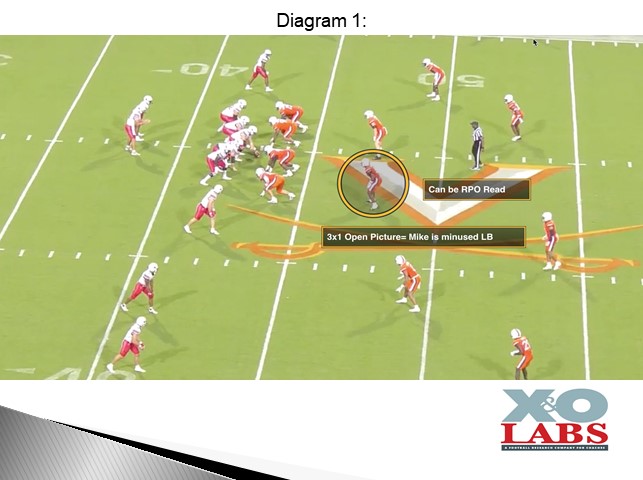
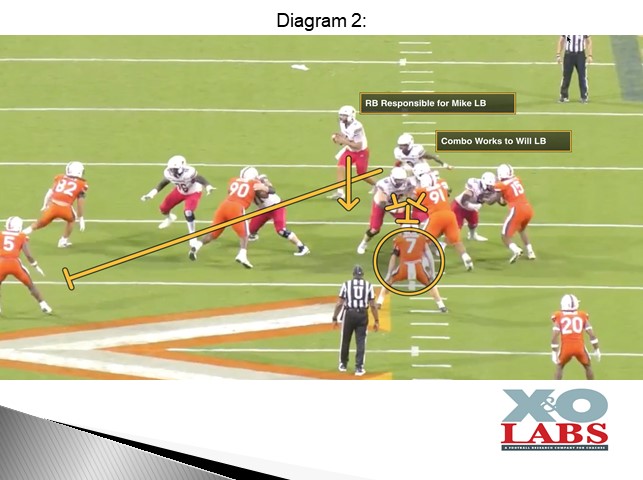
The post snap contours for the number three receiver can be a true stick or hitch to the field where the quarterback- if asked- can read the Mike vs. two-high defense. The quarterback will execute a two-step drop at the snap and then execute his read. If the Mike relates to number three in anyway post-snap, the QB runs the draw. The beauty of the concept is that even if the quarterback chooses not to read the Mike, he is accounted for in the blocking scheme by the running back. The blocking scheme is as simple as it can get. The field side blocks the play side down defenders while the boundary side works its combo to the Will LB into the boundary.
Editor’s Note: While these QB draw concepts can be packaged with RPO elements, this report will focus solely on the run element of the scheme.