





By Mike Kuchar with Manny Rojas
Defensive Coordinator
University of Delaware
@Coach_Rojas_UD
Coach Rojas pressure package from his three-high safety look is quite extensive, as detailed previously when I worked with him. While in previous clinics, Coach Rojas detailed his man pressure and 3-deep, 3-under pressure concepts, this time around he was gracious enough to talk about his Two-Deep, Four Under zone pressures which he utilized a high percentage of times this season, typically in the red zone where his hard corners were able to set hard edges and get players on the ground. It was also a good answer against condensed splits where corners can be activated quickly.
It became an early down call for Coach Rojas where the edges were secured. “We got more athletic, so it gave us the ability to play some wall, match two technique,” he told me. The benefit of the three-high structure allowed for different inverted patterns by those safeties to either play deep half or his Wall (cut two) technique.
Coach Rojas base personnel operate like an Odd Stack consisting of the following:
- Nose- No lag player, pure zero tech vertical player
- End- mainly to the field or offensive strength
- Tackle- mainly to the boundary
- Mike- Middle linebacker
- Will- Weak side linebacker
- Bandit– Strong side linebacker
- Rover– Middle safety (glorified linebacker in this system)
- Field Safety– Best cover safety
- Kat– Weak side safety
- Field Corner– can play left and right based on tempo
- Boundary Corner- can play left and right based on tempo
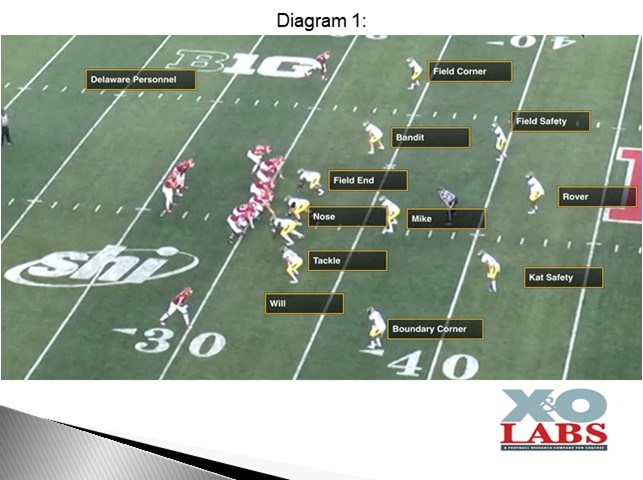
Coach Rojas can either insert the Rover inside out to play the cut two technique or walk down the safety, who can help both ways. It can change from game to game. The difference is that the Rover has to be athletic enough to play a half-field technique, which sometimes it’s very difficult to do.
Terming Pressure:
There may not be any rhyme or reason to how Coach Rojas terms his pressure package, but they are centered around the following patterns:
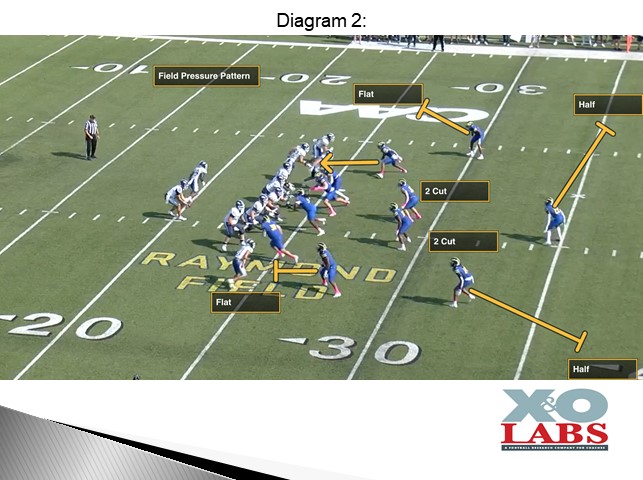
Field Pressure
Field Pressure activations typically include the Bandit and Mike as the fourth and fifth rusher. In most cases, the Rover inverts to play cut technique with the Will while the Kat and Field safety are the hash defenders.
Middle Pressure
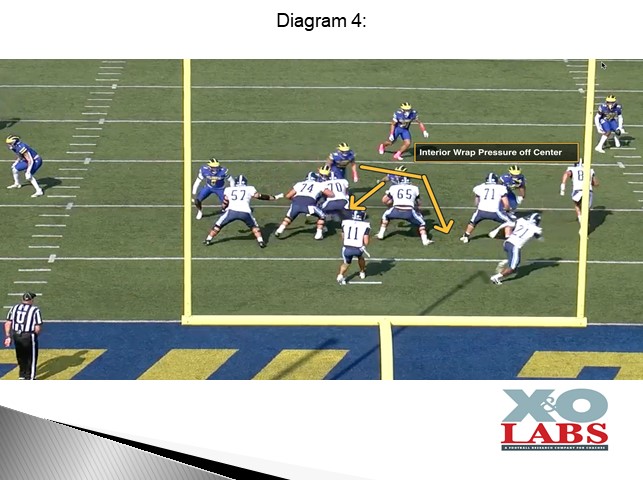
The middle pressure pattern includes both the Mike and Will who will face read the Center on their activations.
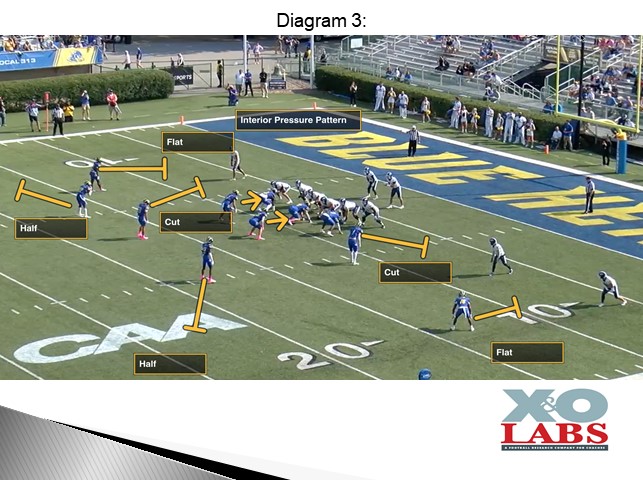
Coach Rojas will continually change up the pressure angles with these two defenders to the point where players actually will create their own adjustments during the course of the game based on the slide of the Center. The intention is to get a one-on-one with the back in these protections. In these activations, the Rover and Bandit are the two-cut defenders.
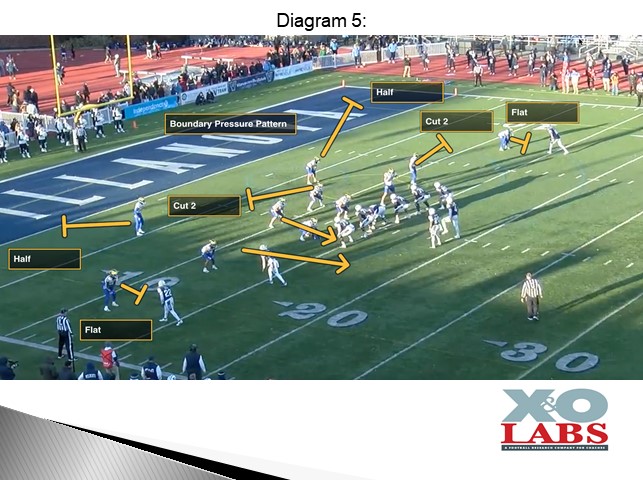
Boundary Pressure:
Boundary pressure patterns typically include the Will and the Kat safety on the pressure. The Bandit and Mike play the cut two technique, while the Rover and Free Safety are deep half defenders. Coach Rojas mentioned these are better calls in the red zone than in the open field.
How these pressures can be tagged and adjusted based on formation structures will be the purpose of this report.
Editor’s Note: In this report, Mike reveals the details of how this works, and best practices, and he identifies who else is using it. And, as always, Mike includes a lot of video and diagrams—as well as shares where to find more game film in X&O Labs’ Film Room. Login below to get unlock the full report (and if you’re not a member, click the ‘Join’ button in the upper right-hand corner of this page).