





By Mike Kuchar with Travis Niekamp
Defensive Coordinator
Illinois State University
@CoachNiekamp
“We would show four down and then move to an overload to create as much confusion as we can.”
- Travis Niekamp, Defensive Coordinator, Illinois State University
“Where’s the Weak Links?”
We’re all designing these “tilt” or overload fronts for one reason- to attack protections. But It’s my belief that defensive coaches are spending too much time concerned about protection structures than protection personnel. When talking to Coach Niekamp about his tilt presentation protocols, I’ve found that the best way to go about designing these presentations is to pinpoint specific weaknesses in player personnel, not protection structure.
The Weak Link Checklist:
Here’s what I mean by this: if you’re trying to single out a particular lineman or back because of his protection vulnerabilities, then do so with your rush pattern. Coach Niekamp told me about a particular offensive tackle this season who struggled with up and under rush moves. So, what did he do? He designed his overload rushes away from that player to force him into a one-on-one with his best rusher. The result produced several hurries and a sack.
“It’s all about who can we find the weak links and how can we take advantage of that,” he told me. “There were some games we ran overloads a good deal, and some games we didn’t. It depends on how mobile the quarterback was.”
Typically, he’ll follow the following checklist in putting together his overloads:
- Are they a mobile quarterback with the ability to escape the pocket? If so, then design rushes to flush him away from his throwing hand.
- Are the non-mobile quarterbacks who stay in the pocket? If so, design more north and south rushes that hit downhill to get him off his platform
I’m going to get into exactly how these overload presentations are designed and enacted based on this checklist. But before I do so, there is something that Illinois State does on the backend with its overloads that I think is really creative. They use what they call “sticks” coverage alignments, particularly on third down. This will alert every coverage defender to align with their heels one yard before the first down so that no rotation in coverage is exposed.
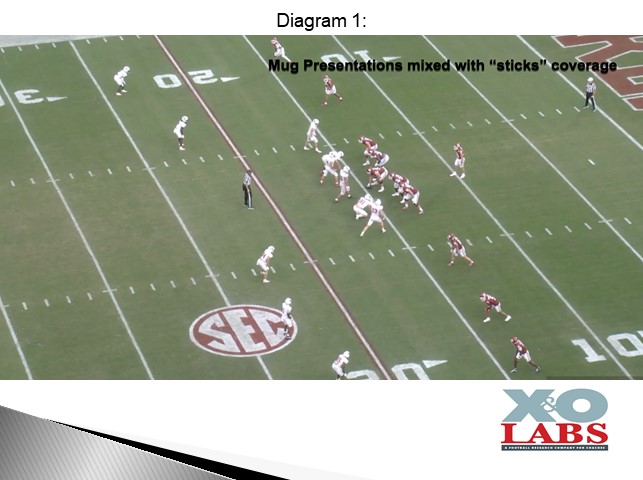
This way, the quarterback cannot decipher what the coverage rotation will be on the snap. “We can disguise sticks a lot easier than other coverages,” Coach Niekamp told me. “We can play man or zone, and post-snap, the QB has to figure it out. We force him to throw the football in front of the sticks, and we tackle it and win the down.”
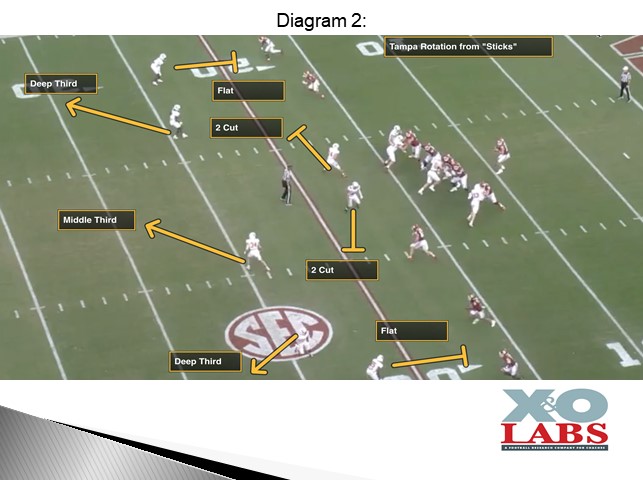
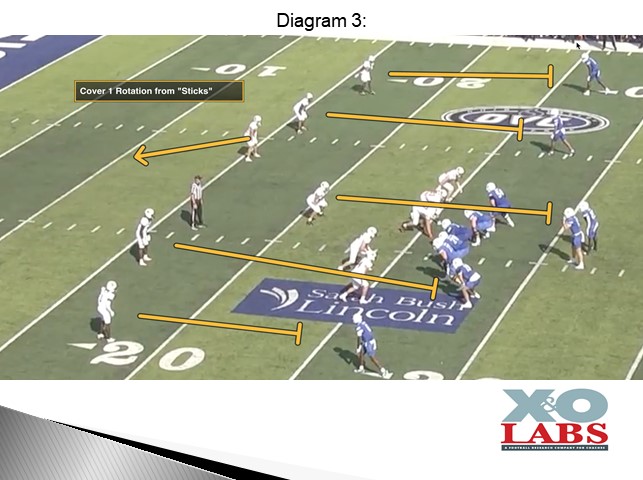
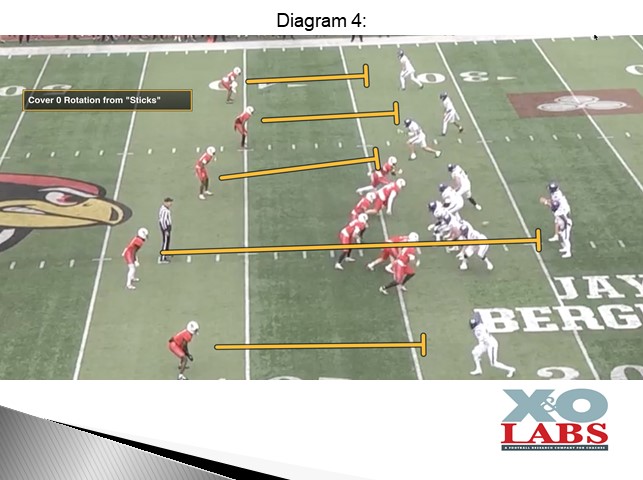
Essentially, these are the base coverages where “sticks” disguise is used:
Tampa Coverage
Man Free Coverage
Cover 0 Coverage
Here’s what Coach Niekamp shares with you in this report:
- How Illinois State builds overload and tilt fronts to attack specific protection weaknesses.
- A simple process for identifying the weakest protector and isolating him with rush design.
- How overload fronts are paired with “sticks” alignment to disguise coverage and kill pre-snap tells.
- Clear rules for adjusting pressure based on quarterback mobility.
- Why Illinois State teaches face-read techniques when movement and stems are built into the front.
- How overloads are used to consistently force 4-man and 3-man slides in protection.
- When simulated pressure replaces 5- and 6-man rushes—and why.
- How presentation and subtle rush path changes keep pressure aggressive without tipping tendencies.
Login now (or join X&O Labs) to access the full report with game film.