




By Mike Kuchar with Rich Nagy
Head Football Coach
Lehigh University (PA)
@CoachRichNagy
“For two years, we tried to figure out how to help number three on benders without taking our dynamic boundary safety out of the fit. This was our answer.”
- Rich Nagy, defensive coordinator, Lehigh University (PA)
If you’re a Quarters outfit, then you know how important the boundary safety is in your defense. Against 11 personnel offenses, he’s usually the extra run fitter, which means he’s also the target of the RPO game. He’s continually placed in run/pass conflict and expected to diagnose his read quickly and be a factor in both run/pass situations. That’s why that boundary safety is often a dude, such was the case at Lehigh this season, where the Mountain Hawks were blessed with a specimen that was strong enough to play in the box and athletic enough to handle helping the boundary corner with any conflicting routes.
“Quarters coverage became very expensive for the boundary corner against the X’s we were seeing in this league year after year,” Coach Nagy told me. “So, we wanted to figure out how we can manipulate the coverage to help out the corner. In traditional quarters coverage, that boundary safety would be tied to the number three receiver. We wanted to get him off number three and into the run fit.”
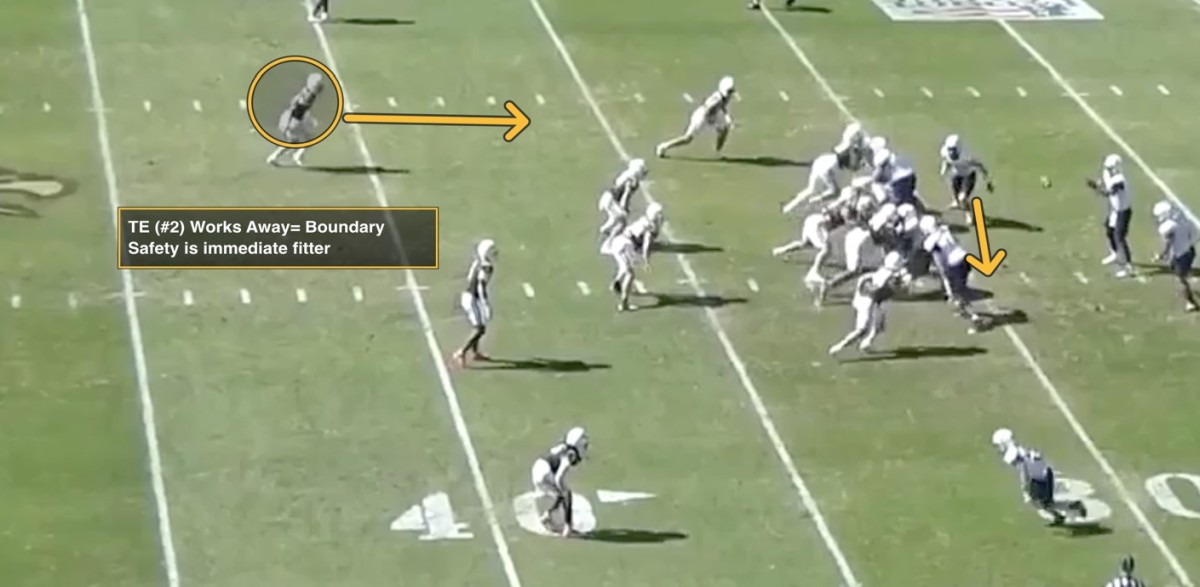
So, defensive coordinator Rich Nagy and safeties coach Mike Kashurba spent the better part of a year grooming their boundary safety to be the key cog in their quarters defensive structure. The answer became what the staff termed “Solo” coverage, which alleviated the boundary safety off the number three receiver and into the weak side run fit. Sure, it was somewhat expensive, but then again so is the responsibility of the boundary safety in Quarters' defense. And if you have a safety as Lehigh did- and chances are you do if you play quarters- then you may want to invest in it. It paid off exponentially as he tallied 56 tackles, many of which were either at or around the line of scrimmage- we have the film to validate that. It propelled Lehigh into a top 5 defense at the FCS level in several categories- including rushing defense (70 ypg), scoring defense (13.9 ppg), and total defense (278 ypg).
This report will give you a ready-to-install system — built in three distinct pieces — for getting your boundary safety into the run fit without sacrificing your coverage structure. Here's what Coach Nagy details in this report:
- The "Solo" Coverage concept itself — how Lehigh removed the boundary safety from his #3 vertical read and handed that responsibility to the Mike linebacker, freeing the safety to be a fast, downhill run fitter against 3x1 formations.
- Why the Mike linebacker is the key unlock — the specific assignment he takes on (carrying #3 vertical to the high safety), and the one exception (the late bend) that brings the boundary safety back into the pass picture.
- Surface reads over lineman reads — Coach Nagy's explanation of why Lehigh abandoned reading offensive linemen entirely in the RPO era ("they lie now") and how they replaced it with a surface-based read system that gets the safety triggered faster.
- Two-surface vs. three-surface formation adjustments — exactly how the safety's gap assignment shifts when a tight end enters the formation, and how a releasing tight end becomes an instant green light to trigger downhill.
- The Hang vs. Fold read for RPOs — a simple two-word framework that tells the safety whether to be "slow to go" and help on inside breaking routes, or to immediately attack his gap in the run fit based on backfield flow.
- Overlap backer fits — how Lehigh's second-level defenders shift one gap away from the fold-fitting safety to maintain run integrity, and how the Will linebacker stays in the box against 2x2 open formations.
- Full game film — raw cut-ups of Lehigh's Quarters run fits vs. 3x1 formations so you can see every concept above in game situations before you install it.