




This is a scouting tool for defensive coordinators—it finds offensive play caller’s tendencies and tells in 22nd & 10 situations.
Upload your opponent's offensive scouting data (CSV or Excel) below and instantly get a five-phase scouting report — overall tendencies, tendencies in context, and if the data reveals a pre-snap tell, you’ll know exactly what it is, how strong it is, and where in the game you can trust it. [NOTE: This tool is available below. Just login to get started.]
What is a 22nd & 10?
It’s when the offense is in 2nd & 10 AFTER throwing an incomplete pass on 1st down.
The OC has a decision to make. He just threw an incomplete on first down — now he’s behind the chains, facing pressure to either double down and pass (to pick up those lost yards) or get conservative and grind out any positive yards he can get. It’s one of the most telling decisions every OC faces, and it’s the exact decision where defensive coordinators can find actionable tendencies and tells.
This concept comes from a veteran FBS Power 4 defensive coordinator — an old-school craftsman with decades of experience leading defenses. We will not reveal his name for obvious reasons.
What Your 22nd & 10 Scouting Report Provides:
This scouting tool follows the exact thought-process of our FBS defensive coordinator, but its built for high school and small college coaches.
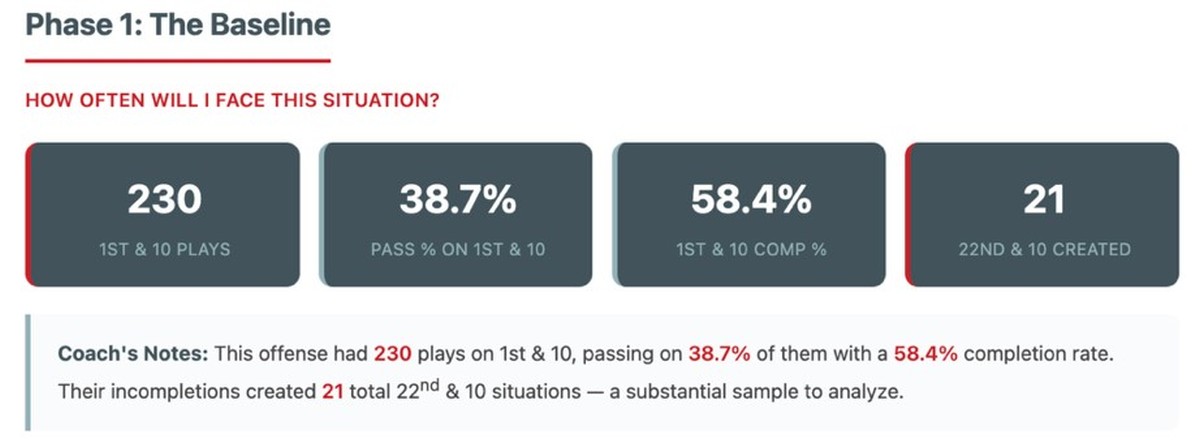
Phase 1: The Baseline — How often will you face this situation?
Establishes context: how often this offense passes on 1st & 10, their completion rate, and the total number of 22nd & 10 situations the data contains. Tells you immediately how large and trustworthy your sample is. Note: 22nd & 10 are defined as any 2nd & 10 play following an incomplete pass on 1st & 10. It does not include scrambles, sacks or penalties.
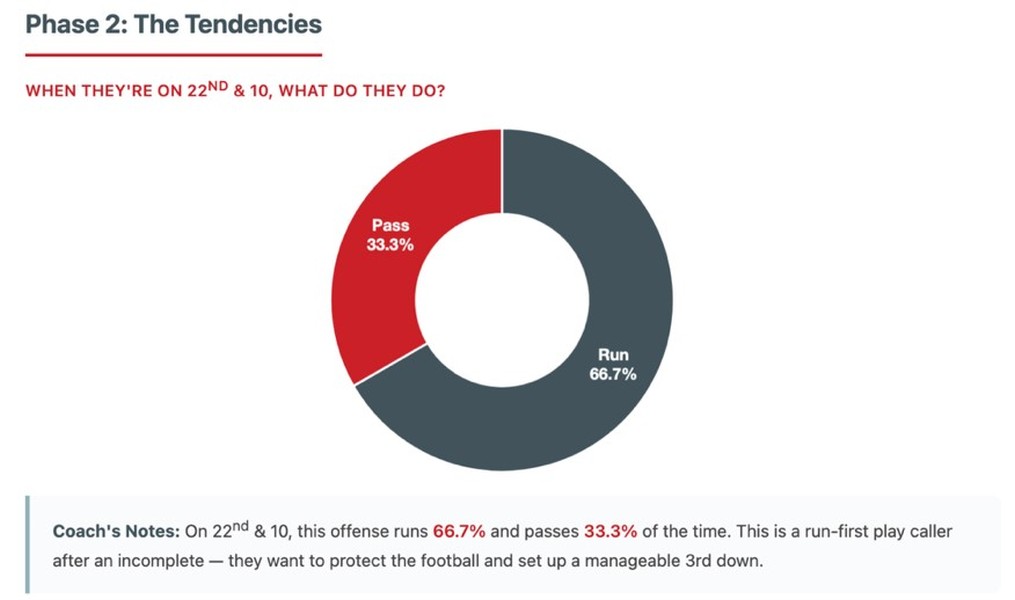
Phase 2: The Tendencies — What does this offense do on 22nd & 10?
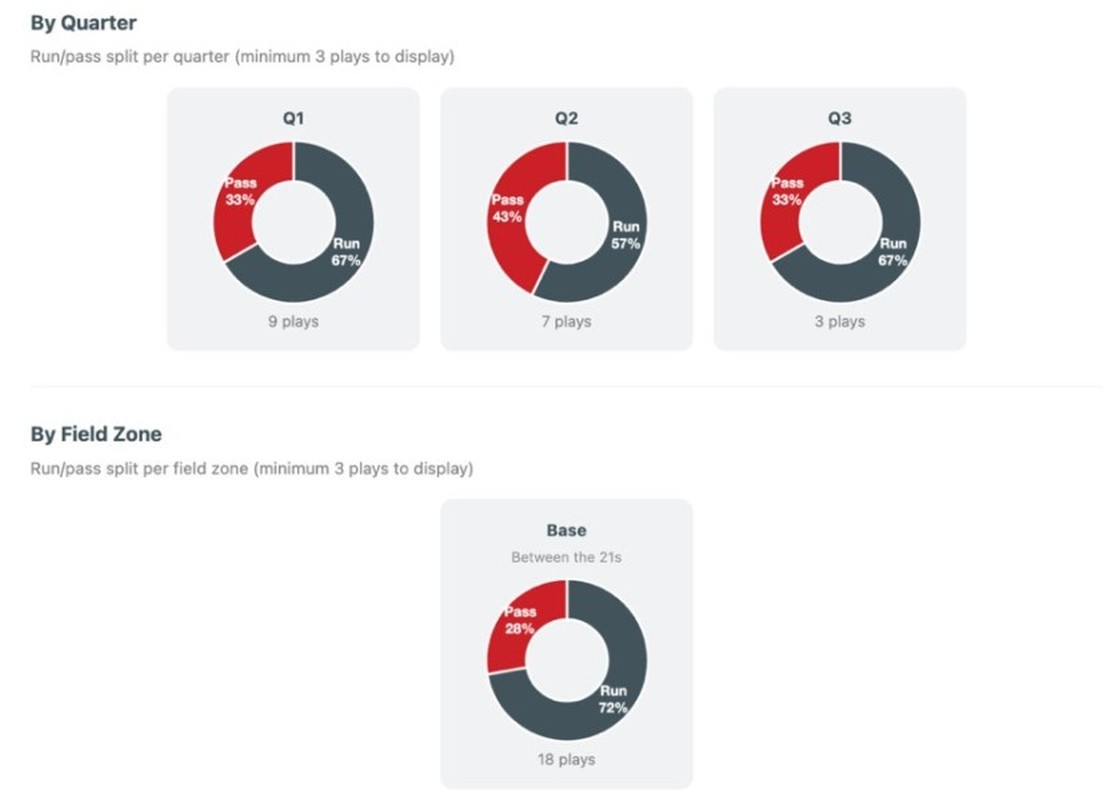
Overall run/pass split — then broken down by quarter and by field zone. A play caller who runs 65% overall may run 80% in the second half. A play caller who looks balanced between the 20s may become pass-heavy in the red zone. Putting these tendencies in context reveals what overall tendency analysis hides.
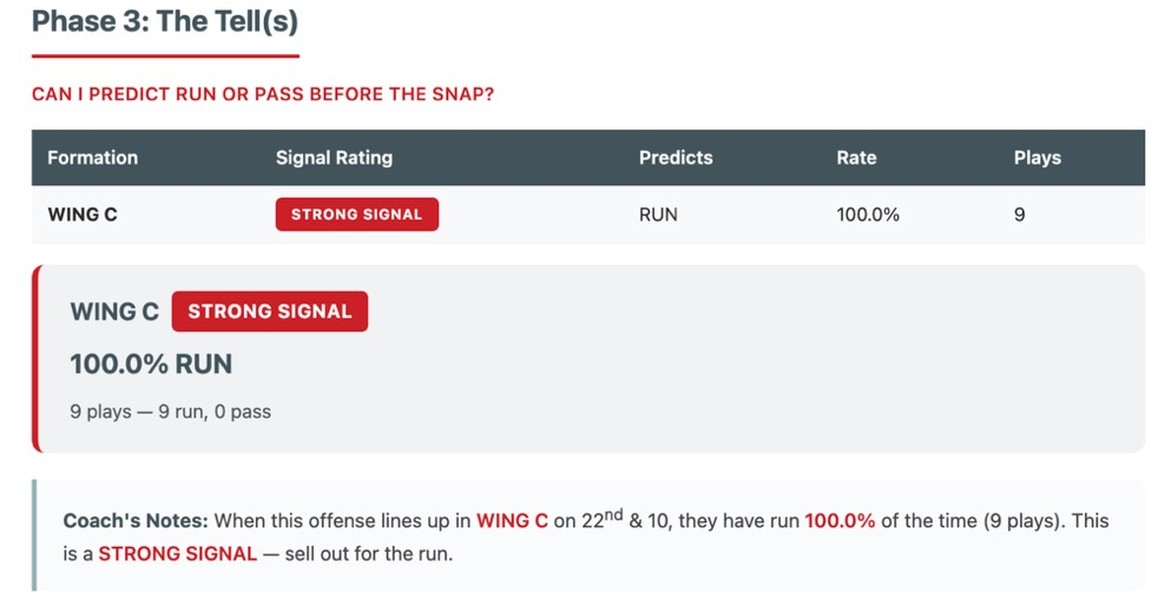
Phase 3: The Tell(s) — Can you predict run or pass before the snap?
The tool scans every formation used on 22nd & 10 and identifies formations that predict run or pass at 70% or higher. When a tell is found, it is assigned a Signal Rating:
- Strong Signal (90%+) — Sell out.
- Solid Signal (80–89%) — Key on this formation.
- High Tendency (70–79%) — Stay disciplined, expect it.
If no formation clears the threshold, the report tells you that too. No guessing.
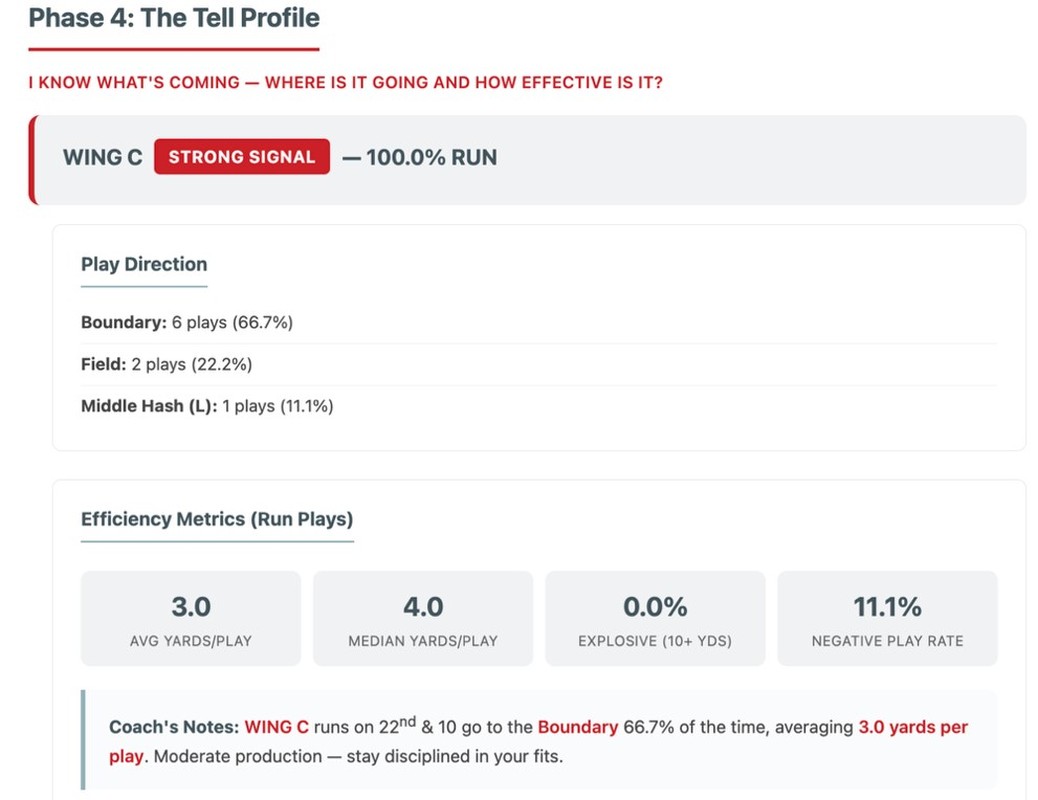
Phase 4: The Tell Profile — You know what’s coming. Now where is it going?
Every identified tell is profiled by play direction (field, boundary, middle), plus full efficiency metrics: average yards per play, median yards, explosive rate, and negative play rate. Now you can align to the most likely direction, not just the most likely play type.
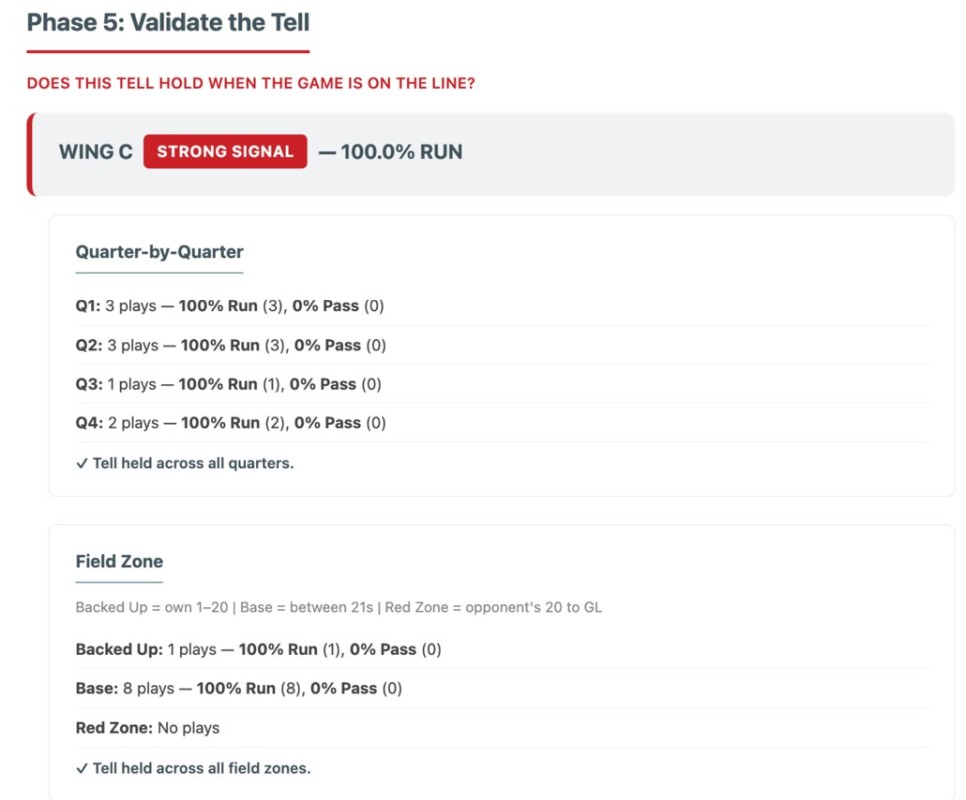
Phase 5: Validate the Tell — Does it hold in predictable game situations?
The tell is stress-tested quarter by quarter and field zone by field zone. If it held consistently across all four quarters and all field positions, the report confirms it. If it broke down in specific situations, the report flags it with a warning. You’ll know exactly when to trust it and when to factor in the exceptions.
Ready to find your opponents’ offensive tendencies and tells in 22nd & 10 situations?
Login below, the page will expand and you’ll see the 22nd & 10 Scouting Report. Just upload your opponent's offensive data, and your report is ready in seconds.